Remember:
You must be an envelope from the above picture that hasn’t been opened yet.
Include your name, phone, and envelope number with Venmo payment.
If prompted- the last 4 numbers for Venmo are 1710.

Your Custom Text Here

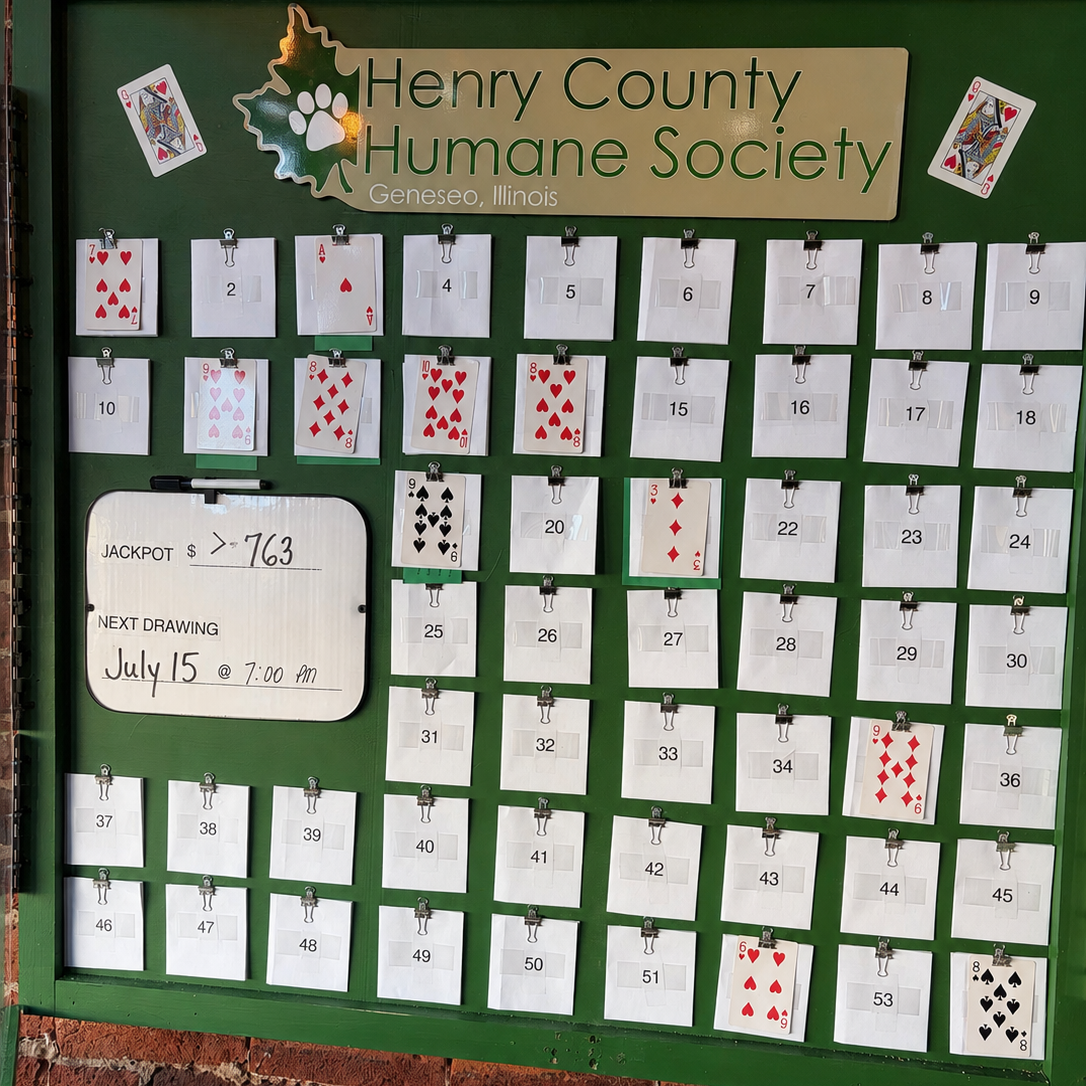

Remember:
You must be an envelope from the above picture that hasn’t been opened yet.
Include your name, phone, and envelope number with Venmo payment.
If prompted- the last 4 numbers for Venmo are 1710.

You don't have to spend hundreds of dollars to create a yard that turns heads this Fourth of July. Most of these projects can be completed with supplies from Dollar General, Dollar Tree, Walmart, or a local craft store. Grab a few basic tools, set aside an afternoon, and you'll have decorations that look custom-made for a fraction of the cost.
3–5 pool noodles
Red duct tape or red plastic tablecloth
Blue duct tape or blue plastic tablecloth
White star stickers or adhesive foam stars
Thick rope or twine
Wooden stakes or ½-inch PVC pipe
Zip ties or heavy-duty tape
Hot glue gun (optional)
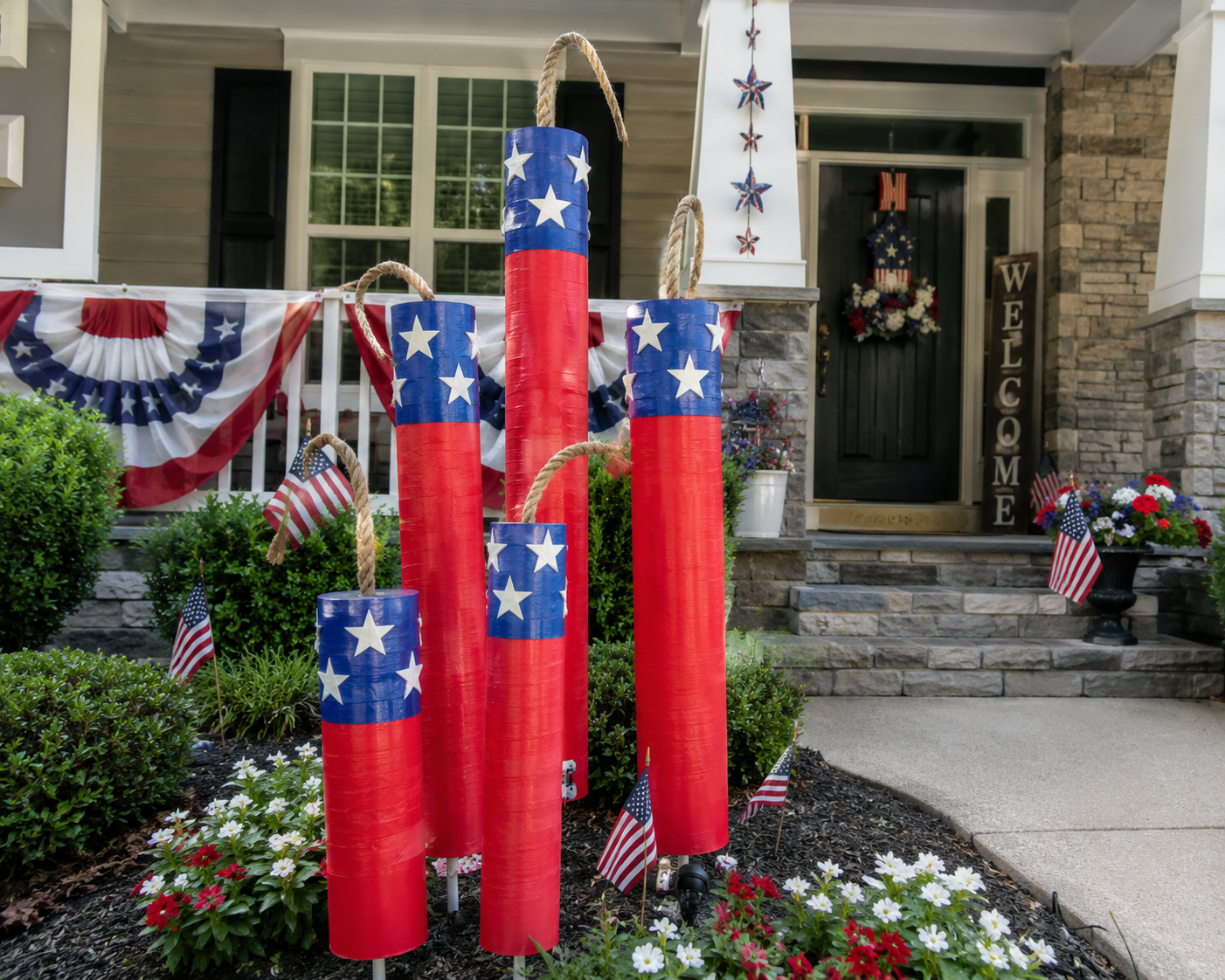
Step 1: Wrap each pool noodle in red duct tape or red plastic tablecloth.
Step 2: Cover the top 8–12 inches with blue tape or blue plastic.
Step 3: Apply white stars to the blue section.
Step 4: Glue or tape a short piece of rope into the top to create the fuse.
Step 5: Attach each firecracker to a wooden stake or PVC pipe with zip ties.
Step 6: Arrange three or five together beside your porch or driveway at varying heights for maximum impact.
Estimated Cost: $20–40
Tomato cages
Red plastic tablecloths
Blue construction paper or plastic tablecloth
White star stickers
Metallic streamers
Zip ties
Battery-operated fairy lights (optional)
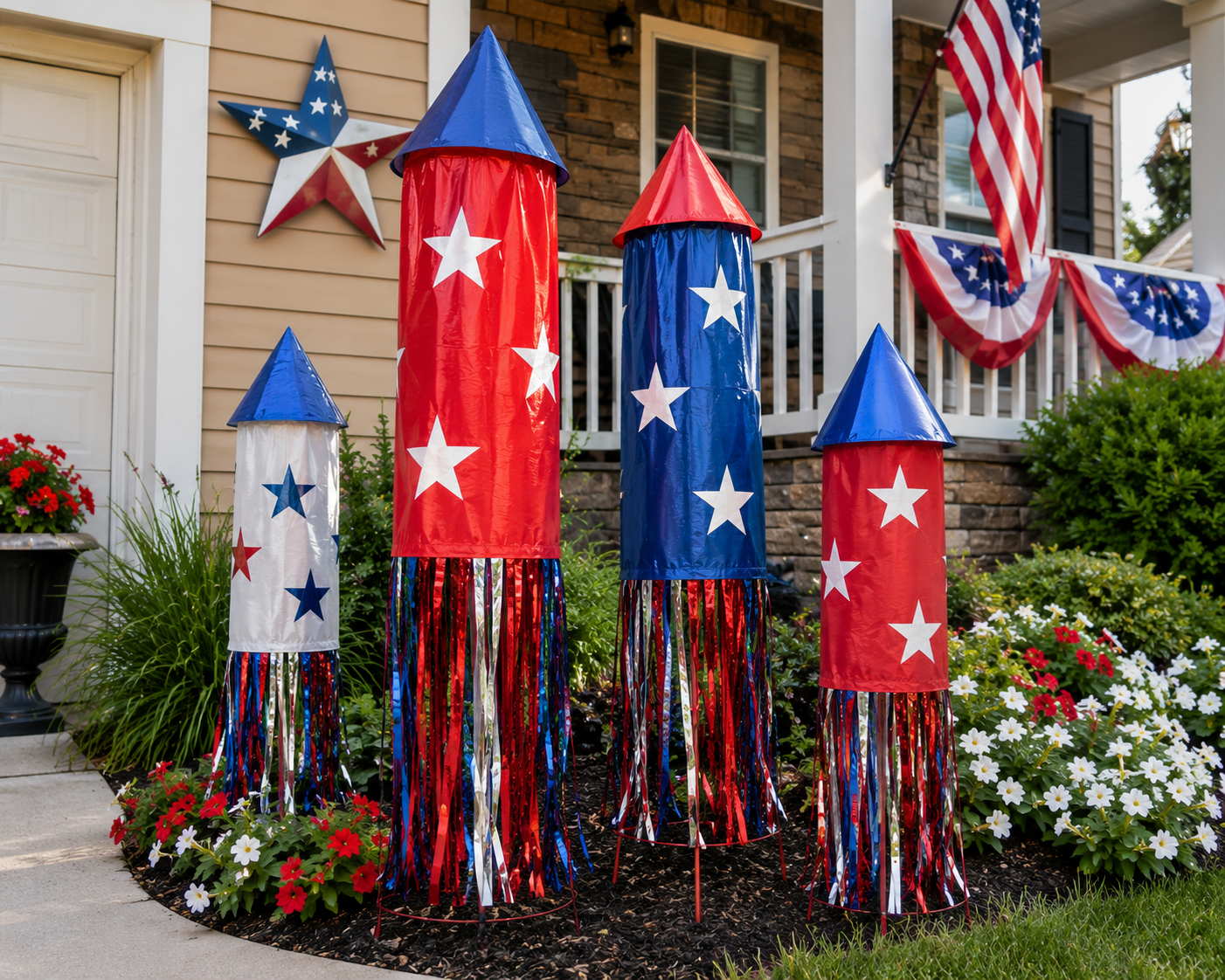
Step 1: Turn each tomato cage upside down.
Step 2: Wrap the cage tightly with red plastic tablecloth material.
Step 3: Add a blue band around the top.
Step 4: Decorate the blue section with white stars.
Step 5: Attach metallic streamers to the top so they flow in the breeze.
Step 6: Push the legs into the ground throughout flower beds or near the sidewalk.
Estimated Cost: $10–20 each
7–8 red plastic tablecloths
6–7 white plastic tablecloths
1 blue plastic tablecloth
White star stickers or cut-out stars
Packing tape
Zip ties

Step 1: Lay the red and white tablecloths side by side to create stripes.
Step 2: Tape the seams together from the back.
Step 3: Attach the blue tablecloth in the upper-left corner.
Step 4: Add white stars.
Step 5: Secure the finished flag to a garage door, fence, or porch using tape or zip ties.
Estimated Cost: $10–15
Red ribbon
White ribbon
Blue ribbon
Scissors
(Plastic tablecloths cut into strips work just as well.)
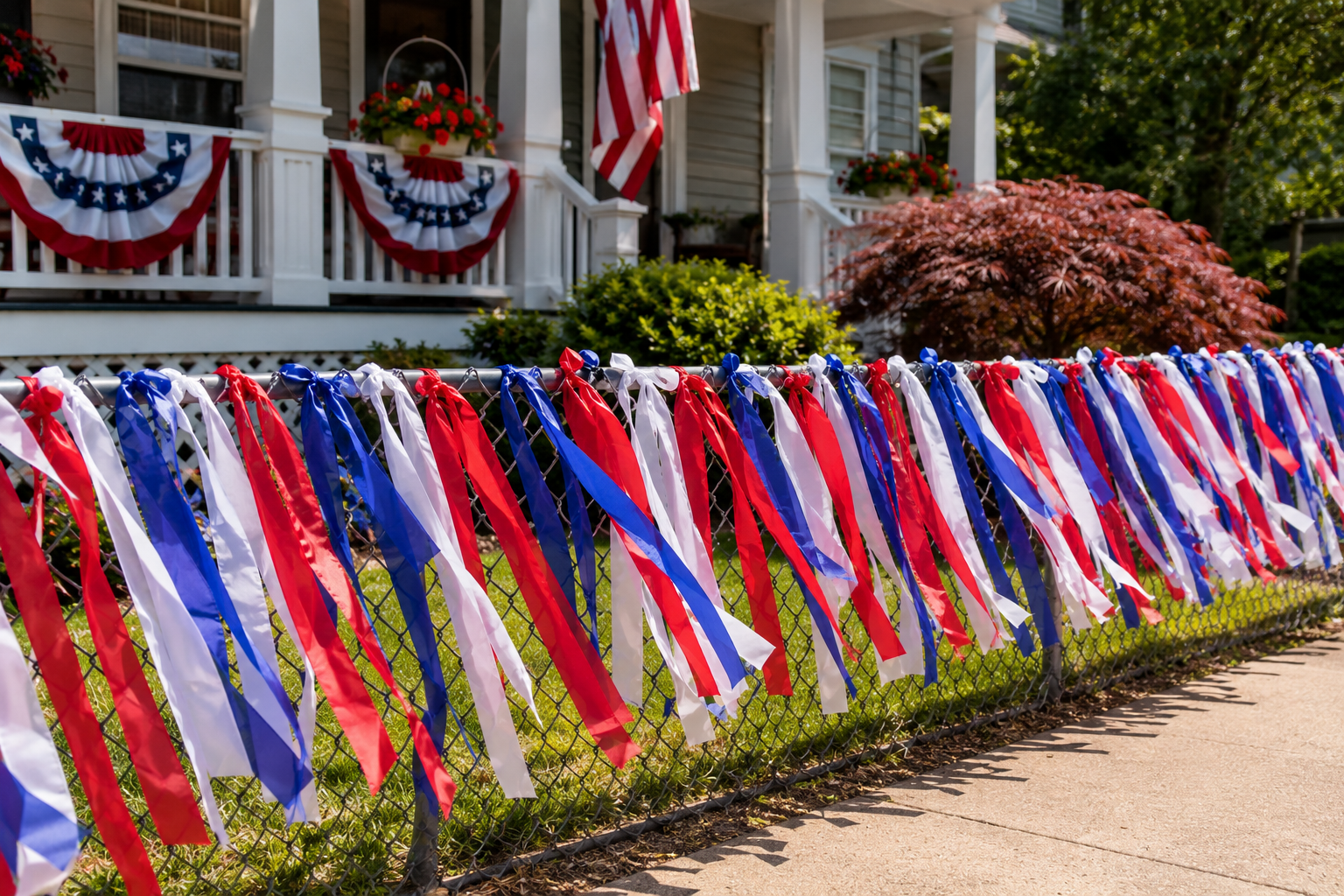
Step 1: Cut ribbon or plastic into 18–24 inch strips.
Step 2: Tie one strip every 4–6 inches along a chain-link fence, porch railing, or deck.
Step 3: Alternate colors as you work.
Step 4: Fluff each ribbon so it catches the breeze.
Estimated Cost: $10–20
Red, white, and blue plastic tablecloths or fabric
Patriotic ribbon or bunting
Double-sided tape
Zip ties
Battery-operated string lights (optional)

Step 1: Starting at the bottom, wrap each porch column with alternating patriotic colors.
Step 2: Secure the material with tape or zip ties as you work upward.
Step 3: Add patriotic ribbon or bunting around the top and bottom of each column.
Step 4: Wrap battery-powered lights around the columns for nighttime visibility.
Estimated Cost: $15–40
Foam insulation board, corrugated plastic, or ½-inch plywood
Pencil
Jigsaw or utility knife
Red, white, and blue paint
Paintbrushes
Wooden stakes
Screws or construction adhesive
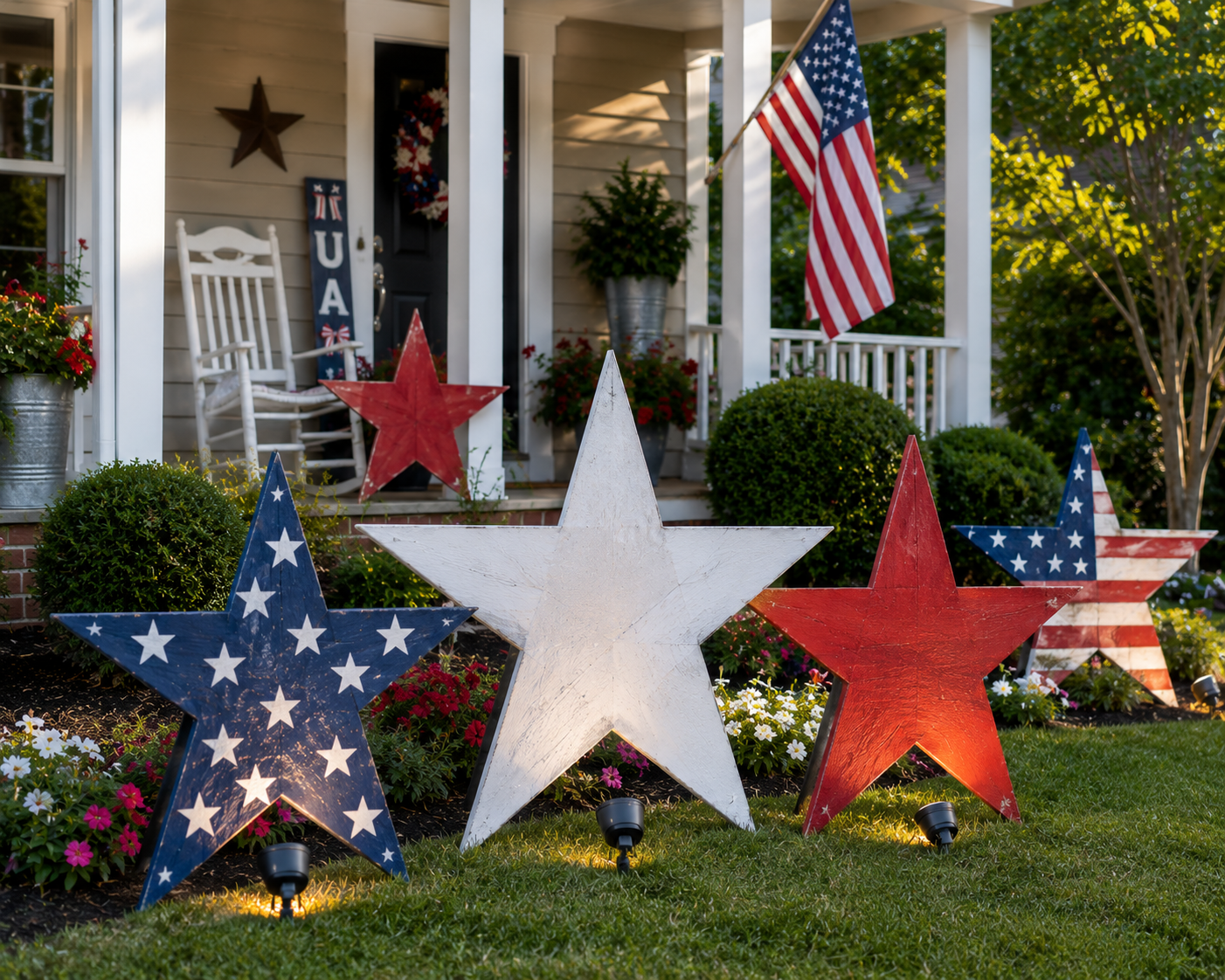
Step 1: Draw a large five-point star (3–6 feet wide).
Step 2: Cut out the star.
Step 3: Paint it using patriotic colors or a distressed Americana finish.
Step 4: Attach stakes to the back.
Step 5: Place the stars throughout your landscaping or lean them against your porch.
Step 6: Add landscape spotlights for a dramatic nighttime display.
Estimated Cost: $15–40 each
Three wooden crates
Red, white, and blue paint or stain (optional)
Mini American flags
Pinwheels
Battery lantern
Faux flowers or potted plants
Small patriotic sign (optional)
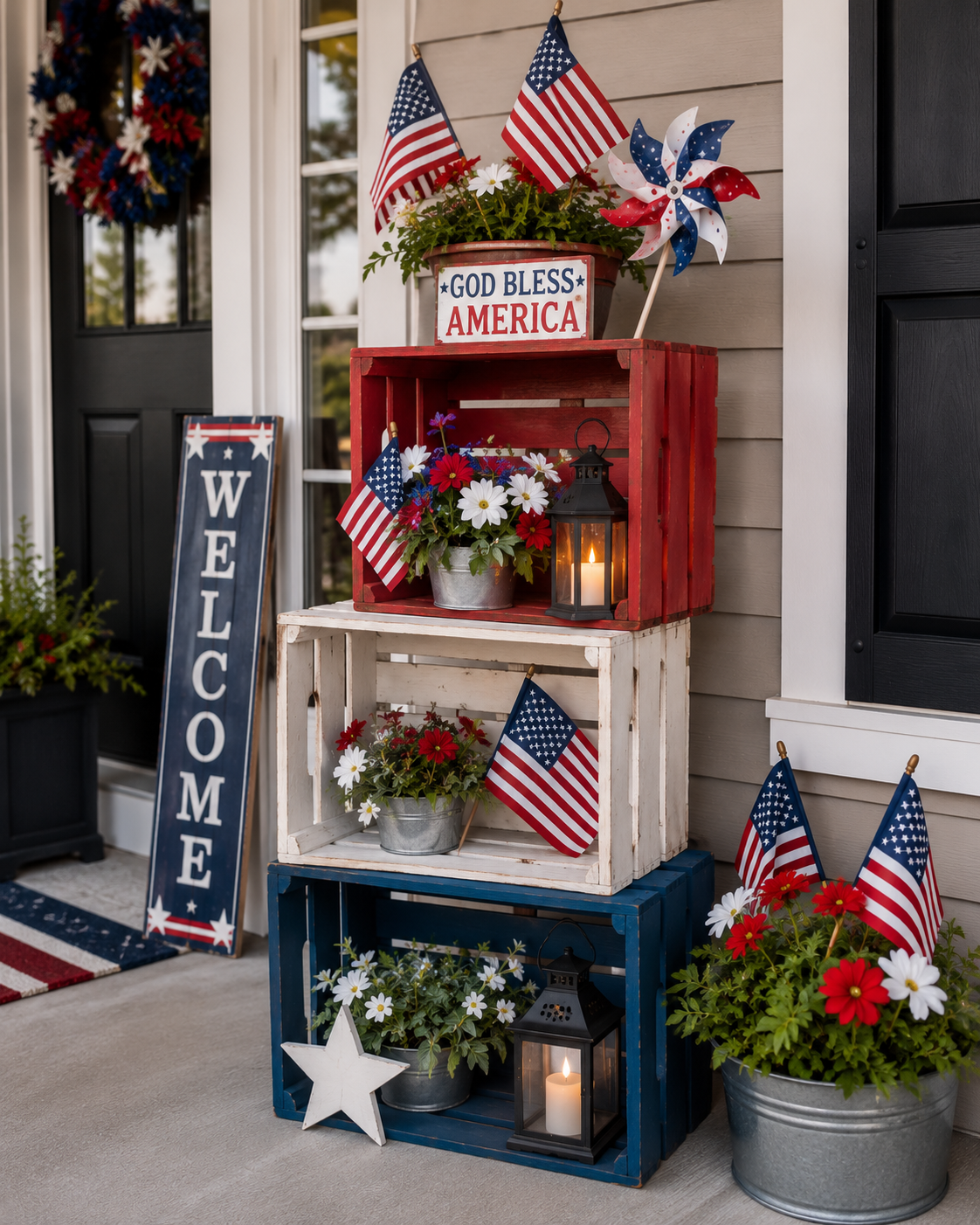
Step 1: Paint or stain the crates if desired.
Step 2: Stack the crates in a staggered arrangement near your front door.
Step 3: Secure them together with screws or zip ties if they'll be outside for several days.
Step 4: Fill the openings with flowers, lanterns, flags, or pinwheels.
Step 5: Add a patriotic welcome sign or wooden star to complete the display.
Estimated Cost: $25–50
Most eye-catching patriotic displays have one thing in common—they're big. Instead of filling your yard with dozens of small decorations, choose two or three oversized projects and spread them throughout your front yard. A giant firecracker display paired with wrapped porch columns and a massive American flag backdrop will make your home stand out from down the block without breaking the budget.

We saw you—long before caps and gowns and graduation announcements.
We saw you when your feet barely touched the floor at the elementary lunch tables. We saw you at Green Machine games under Friday night lights, in packed gyms, on stages, in uniforms, in band tees, in work shirts with name tags. We saw you behind the counter at Culver’s, walking State Street with your friends, driving the same few roads over and over again— because for a while, this was your whole world.
We saw you grow up in a place where people still wave when they pass you. Where your last name means something. Where somebody always knows your parents. Or your grandparents. Or your story.
A place that quietly carried you long before you understood what that meant.
And now—just like that—you’re stepping out of it.
Out of the routines. Out of the familiar. Out of the place that, whether you realized it or not, has been shaping you this whole time.
Geneseo is not a loud place.
It doesn’t demand attention. It doesn’t try to be something it’s not. It shows up in steady ways. Quiet ways. The kind that don’t always feel important until you leave and realize not everywhere works like this.
Not everywhere rallies for its own the way this town does. Not everywhere fills the streets for a parade, packs the stands, or builds something together just because it matters. Not everywhere feels like people are paying attention.
But here— they were.
People noticed the effort you put in, even in the small moments. When you stayed late. When you did something small that turned out to mean something bigger.
This town carried belief in you during moments when you struggled to find it yourself. And that stays with you.
You carry the rhythm of this place. The expectations without words. The understanding that being part of something means showing up for it— event when it’s inconvenient, even when no one asks you to.
You carry the sidewalks of State Street. The noise of a game night. The stillness of a Sunday morning. The feeling of walking into a place and being known without having to explain yourself.
That experience changes you. And it doesn’t leave.
No matter where you go next—whether it’s five miles away or five states away—this place goes with you.
In how you treat people. In how you work. In what you expect from a community—and what you’re willing to give back to one.
And someday—maybe sooner than you think—you’ll find yourself in a place that doesn’t feel quite right yet.
Too fast. Too impersonal. Too unfamiliar.
And without even realizing it, you’ll start looking for pieces of this.
For eye contact. For consistency. For people who mean what they say. For something that feels a little slower, a little steadier, a little more real.
That’s when you’ll understand it: Geneseo didn’t just raise you.
It rooted you.
It gave you something to measure the rest of the world against.
Because this isn’t just where you’re from. It’s part of how you move through the world.
So go—build something, chase something, become something. Go make a life that stretches beyond these streets.
But when you do, carry this place with you—not just in memory, but in how you show up wherever you land.
Because that’s how it lasts.
Not in the buildings. Not in the streets. But in you.
And no matter how far you go, no matter how much changes, no matter how long it’s been—
There will always be a place where your name still means something. Where someone will say, “Oh, I know them,” and smile.
We’ll be here—same streets, same corners, same quiet pride—watching the next group grow up the way you did. And there will always be a place for you here.
Because once a place helps shape you like this, it never fully leaves.
And neither do you.
—Geneseo

Geneseo Eats brings local restaurants into one easy place—menus, hours, locations, social links, and online ordering all organized and clickable. No guessing who’s open. No outdated PDFs. No scrolling Facebook at 5:27 p.m.
Whether you’re juggling practice schedules, hosting out-of-town guests, planning a date night, or just trying to feed hungry kids fast, this flipbook saves time and decision fatigue. Compare options quickly. Discover somewhere new. Order with confidence.
It’s built for real life in Geneseo—busy weeknights, spontaneous lunch breaks, and “what sounds good?” moments.
Find your next meal. Support local. And when you try somewhere new, tell them you found them in Geneseo Eats.
Coming March 2.
by Sarah DeMaranville
When school calendars list a Professional Development (PD) Day, students are not in attendance — but teachers and staff are still working.
Professional development days are typically used by school districts across the country for training, planning, and collaboration that helps support student learning.
Here are some of the common activities that happen on PD days in many districts:
Teachers often:
Review state standards and pacing guides
Align lesson plans across grade levels
Develop common assessments
Plan upcoming instructional units
Coordinate cross-curricular initiatives.
This helps ensure students experience consistency from classroom to classroom and year to year.
Staff may:
Analyze assessment results and benchmark data
Identify students who need intervention or enrichment
Plan targeted small-group instruction
Adjust teaching strategies based on performance trends
Review Individualized Education Plans (IEPs) and support plans
Many districts use this time to make instructional decisions grounded in student data.
Professional development often includes:
Learning new teaching methodologies
Literacy and math improvement initiatives
Classroom management strategies
Differentiated instruction practices
Technology integration and digital tools
Updates to curriculum programs
Education standards and instructional research evolve, and PD days allow educators to stay current.
Some professional development is legally required and may include:
School safety and crisis response training
Mandated reporter updates
Special education law updates
Equity and inclusion training
CPR, first aid, and emergency response procedures
These sessions help schools meet state and federal requirements.
PD days also give staff structured time to:
Grade-level or department meetings
Reviewing school improvement goals
Planning family engagement initiatives
Coordinating testing schedules
Refining grading or assessment policies
Strategic planning for long-term district initiatives
Because teachers have limited collaborative time during the regular school week, PD days often serve as dedicated planning time.
District leaders emphasize that investing in educator development directly supports students.
“When we invest in our teachers’ learning, we directly invest in our students’ success,” said Superintendent Dr. Laura Delgado. “Ongoing professional development ensures our educators stay current with best practices, strengthen their instructional strategies, and collaborate in meaningful ways that elevate outcomes for every learner. In Geneseo, we value growth, and that means creating time, space, and support for our teachers to continually refine their craft. Their commitment to learning is what keeps our district strong, innovative, and student-centered.”
While students are not in class on PD days, the focus remains on strengthening instruction, meeting state requirements, and improving outcomes across the district.
There’s something deeply satisfying about snipping a few fresh herbs from your own kitchen garden. Growing your own seasonings doesn’t just elevate your cooking — it adds color, fragrance, and life to your home.
Begin with herbs that thrive indoors or in small spaces: basil, parsley, chives, mint, thyme, and oregano. These herbs grow well in containers and don’t need much more than sunlight and steady watering.
Most seasonings love 6–8 hours of sunlight a day. A bright kitchen window or patio planter works perfectly. If light is limited, a small grow light can help herbs stay lush year-round.
Use well-draining soil and pots with holes at the bottom. Water when the top inch of soil feels dry — too much moisture can cause root rot. Trim herbs regularly to encourage new growth and prevent flowering, which can dull flavor.
Snip leaves as needed and dry extras for winter use. Crumble them into soups, marinades, or homemade spice blends. A single windowsill garden can replace dozens of store-bought jars — fresher, cheaper, and infinitely more rewarding.
Your meals will taste better, your kitchen will smell incredible, and you’ll have a daily reminder that good things really do grow at home.
January often arrives quietly.
After weeks of movement, noise, and expectation, the calendar turns and everything slows down. Schedules return. Decorations come down. The days are short. The routines are familiar again — but they don’t always feel easy right away.
If January feels heavier than you expected, you’re not alone. And you’re not behind.
Here are a few things that often feel more difficult this time of year, even when life itself hasn’t changed much.
December is full, but it’s full with purpose. January is steadier — and that shift can feel surprisingly draining.
There are fewer natural breaks. Fewer milestones to look forward to. Days can blend together, and even simple tasks can take more energy than usual. That doesn’t mean you’re unmotivated; it means your body and mind are adjusting.
Winter isn’t new by January — it’s just persistent.
The cold, the gray skies, and the lack of daylight can quietly affect mood and energy. Getting out the door takes more effort. Staying in can feel isolating. Both are valid responses to a season that asks more from us physically and emotionally.
January often brings clarity around money — not always comfort.
Statements arrive. Budgets reset. The generosity and flexibility of December gives way to responsibility again. Even when finances are stable, this awareness can feel stressful. It’s okay to acknowledge that without judgment.
January doesn’t always bring a surge of motivation. For many people, it brings a need for rest.
Your energy may come in waves. Your focus may drift. This isn’t failure — it’s a natural response to a long season of doing, giving, and managing. Productivity doesn’t have to be constant to be meaningful.
January carries a quiet pressure to improve.
To reset. To fix. To plan. To feel refreshed.
If you don’t feel any of that yet — or at all — that’s okay. Growth doesn’t require urgency. Sometimes it starts with stability, not change.
January isn’t meant to be inspiring every day. Sometimes its role is simply to be steady.
If all you’re doing right now is showing up, keeping routines moving, and taking care of what’s in front of you — that’s enough.
There is time ahead. There will be lighter days. For now, it’s okay to move slowly and give yourself some grace.