
By Curt Jacobs
Geneseo Current
At some point, nearly everyone who grows something hears the same advice.
“Have you tested your soil?”

It’s standard guidance for lawns, gardens, food plots, and full-scale production agriculture. And it’s absolutely good advice. Still, despite how common this recommendation has become, soil testing remains one of the most misunderstood tools in plant management.
A big part of that confusion comes down to expectations.
Many people treat a soil test like a diagnostic answer sheet. Pull a sample. Send it to a lab. Get numbers back. Apply fertilizer. Problem solved.
Simple. Clean. Logical.
Reality tends to be a little messier.
Testing is not a solution.
Testing is a measurement tool.
And like any measurement tool, its value depends entirely on how the information is interpreted and applied.
A soil test provides a snapshot of nutrient levels, pH, and certain soil characteristics at the moment the sample was taken. It estimates what is present within the soil environment, not necessarily what will remain accessible to the plant throughout an entire growing season.
That distinction matters more than most people realize.
Soil nutrients exist in multiple forms. Some are immediately available. Others are tied up in mineral structures, organic matter, or chemical complexes that release slowly over time. Moisture conditions shift. Temperatures fluctuate. Microbial activity changes. Roots expand and contract.
A soil test cannot perfectly predict how all of those moving parts will influence nutrient availability weeks or months later.
Which explains something growers and homeowners alike eventually run into.
Strong soil test values do not always guarantee strong plant performance.
The test measures potential.
The plant experiences reality.
Sampling technique adds another layer of variability. Depth, timing, and consistency all influence results. A shallow sample may overlook deeper nutrient reserves or subsoil limitations. A poorly mixed sample can distort what’s actually happening across a field or landscape. Even seasonal timing can shift numbers as nutrients cycle through the soil system.
The data itself is only as reliable as the sampling behind it.
This is where plant tissue testing enters the picture from a different angle.
While soil tests measure what exists in the soil environment, tissue tests measure what the plant has actually absorbed.
That shift in perspective is incredibly important.
A soil test asks, “What is available?”
A tissue test asks, “What is being used?”
Together, they begin telling a much more complete story.
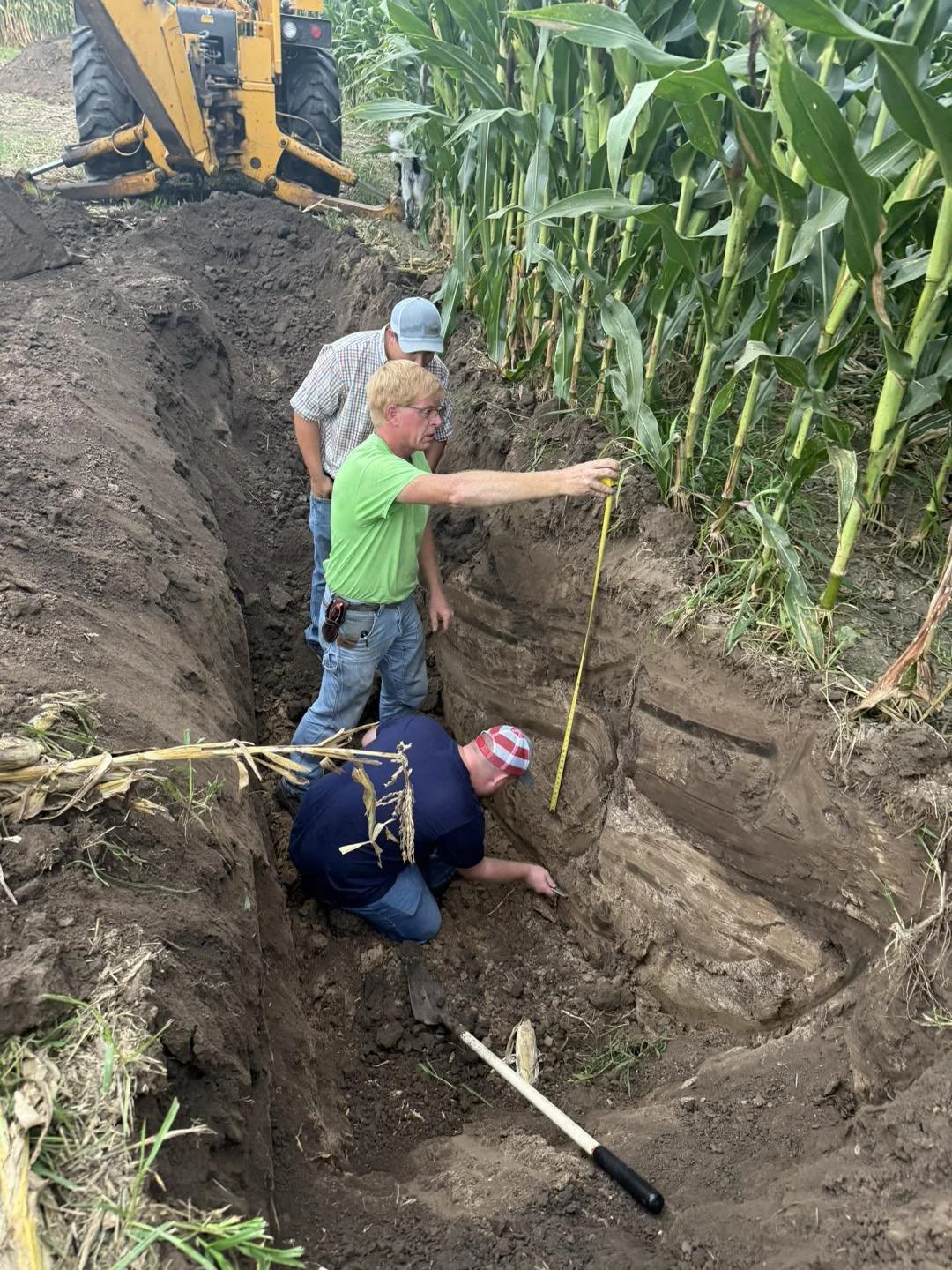
For example, a soil may test adequate in potassium, yet tissue analysis may reveal deficiency during peak demand. That gap often points toward uptake restrictions, placement challenges, moisture stress, root limitations, or nutrient interactions rather than simple absence.
Similarly, elevated nutrient levels in soil do not automatically translate into elevated levels within the plant. Availability, mobility, balance, and biological processes continuously influence what the crop or plant can actually access.
Numbers alone rarely explain performance.
Interpretation connects the dots.
Another common misunderstanding involves target levels. Many assume soil testing is about reaching specific universal numbers. In practice, optimal ranges often depend on crop type, soil characteristics, yield goals, and environmental conditions.
There is no single “perfect soil test.”
There is only context.
Viewed properly, testing becomes less about chasing values and more about identifying constraints, trends, patterns, and imbalances. It becomes a decision-making tool rather than a prescription generator.
For homeowners, this often explains why repeated fertilizer applications sometimes produce diminishing returns. Nutrient levels may already be sufficient while other limitations restrict growth.
For growers, testing frequently explains why yield response varies across fields that receive very similar fertility programs. Soil variability, structure, drainage, biology, and balance all influence outcomes.
Testing reduces assumptions.
But it does not eliminate interpretation.
Understanding what the numbers truly mean, what they do not reveal, and how they connect to real-world performance is where testing delivers its greatest value.

Because ultimately…
Measurements only matter when they guide better decisions.
Which naturally leads to the next piece of the puzzle.
Even when nutrients are present and measurable…
Why do balance and ratios still influence plant performance so heavily?
Next Article in This Series:
Nutrient Balance & Soil Conditions: Why Ratios Matter More Than You Think