Downtown Geneseo has felt noticeably different lately.
From Art Walk crowds and an inaugural Wine Walk, there’s growing momentum behind a summer many businesses, organizers, and residents hope becomes a turning point for downtown energy and activity.
And perhaps most notably, it no longer feels tied to just one event.
Instead, there’s a sense that multiple groups, businesses, and organizations are working toward the same goal at the same time: creating a downtown people want to spend time in.

That collaboration has become increasingly visible in recent months.
The Geneseo Chamber of Commerce has hosted multiple retail and restaurant roundtables, Lunch & Learn sessions, and after-hours networking events focused on bringing business owners together to share ideas, challenges, and opportunities. According to several participants, the conversations have been energetic, collaborative, and solution-oriented.
That same spirit is showing up in events like Saturday’s Wine Walk, which now stretches throughout downtown with more than 15 participating stops, restaurants, retailers, pop-ups, food vendors, and live music locations working together to create a larger shared experience rather than isolated destinations.
For small towns today, that matters.
Downtowns are no longer simply competing with neighboring communities. They are competing with online shopping, streaming entertainment, social media, convenience culture, and the growing ease of staying home.
Experiences have become one of the few things that still reliably draw people together physically.
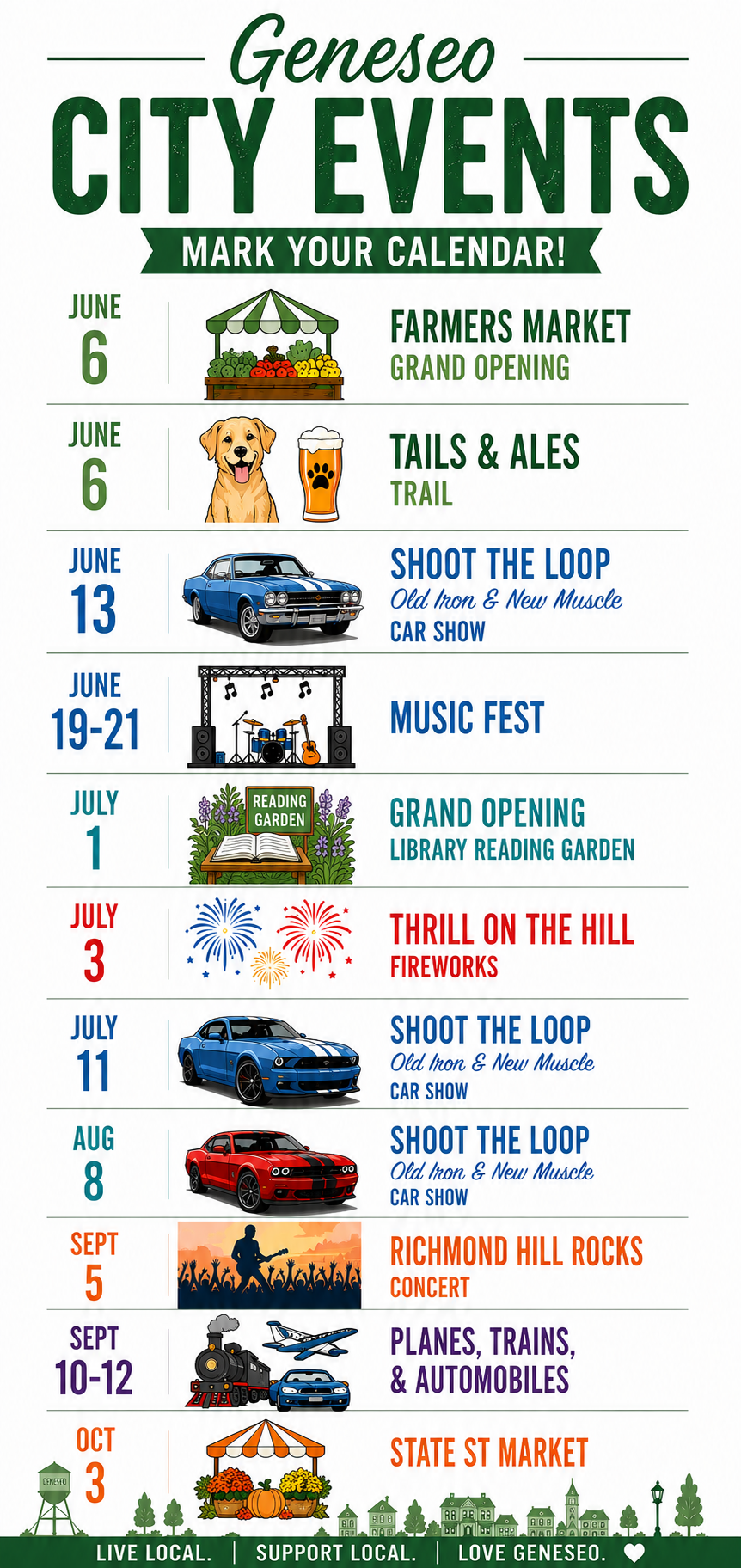
Events like Wine Walk, Art Walk, concerts, and markets do more than create a busy evening. They introduce people to businesses they may not have visited otherwise. They create repeat customers. They increase foot traffic. And they help shape the perception people have about the health and energy of a community.
A crowded downtown changes how people feel about a town.
That’s part of why so many businesses continue investing in storefronts, renovations, expanded offerings, and community events despite the challenges many small businesses still face nationally.
There’s also a growing recognition that downtown momentum does not happen accidentally.
It takes business owners willing to stay open later. Volunteers organizing events. City departments coordinating logistics. Musicians performing. Restaurants adapting. Organizations collaborating. Residents choosing to show up.
This summer, many of those efforts appear to be aligning at the same time.
That doesn’t mean every challenge facing downtown disappears. Long-term sustainability remains the bigger question. One successful event weekend does not automatically translate into year-round foot traffic or long-term economic growth.
But for now, there is a noticeable sense that people want downtown to succeed — and are actively trying to make that happen.
And in many ways, that may be the most important momentum of all.
