By Sarah DeMaranville
A phone rings.
The caller says they're calling about your Medicare coverage. Or a prescription drug plan. Maybe they claim to be from Social Security, your bank, or even a utility company.
They already know your name.
They sound professional.
They tell you they just need to "verify a few pieces of information."
That's often how financial exploitation begins.
Across the country, criminals are increasingly targeting older adults with sophisticated scams designed to steal money, personal information, or both. While anyone can become a victim, seniors are often singled out because they may have retirement savings, established credit, and decades of trusting institutions that once communicated primarily by phone.
"Financial exploitation is an extremely common issue, particularly amongst vulnerable populations. Financial exploitation can be perpetrated by individuals known to older adults who have access to them and a standing of trust, or it can be perpetrated by strangers through a plethora of scams, crime and other fraud."
— Alternatives for You
Financial institutions are also seeing the effects firsthand.
"At Central Bank Illinois, we believe protecting older adults from financial exploitation goes beyond safeguarding accounts. Our role is to educate, empower, and support seniors and their families by providing the tools, resources, and awareness needed to recognize scams, make informed financial decisions, and confidently seek help when something doesn't seem right."
— Kendra England, BSA Officer, Central Bank Illinois
Medicare Scams Are Becoming More Common
One of the most common scams today involves callers claiming to represent Medicare, a Medicare Advantage plan, or another health insurance provider.
The caller may ask for:
Your Medicare number
Your Social Security number
Your date of birth
Banking information
Insurance policy information
They often claim they need the information to:
Verify eligibility
Send a new Medicare card
Confirm prescription coverage
Update your records
Enroll you in additional benefits
In reality, scammers may be attempting to steal your identity, bill Medicare fraudulently, or gain access to your financial accounts.
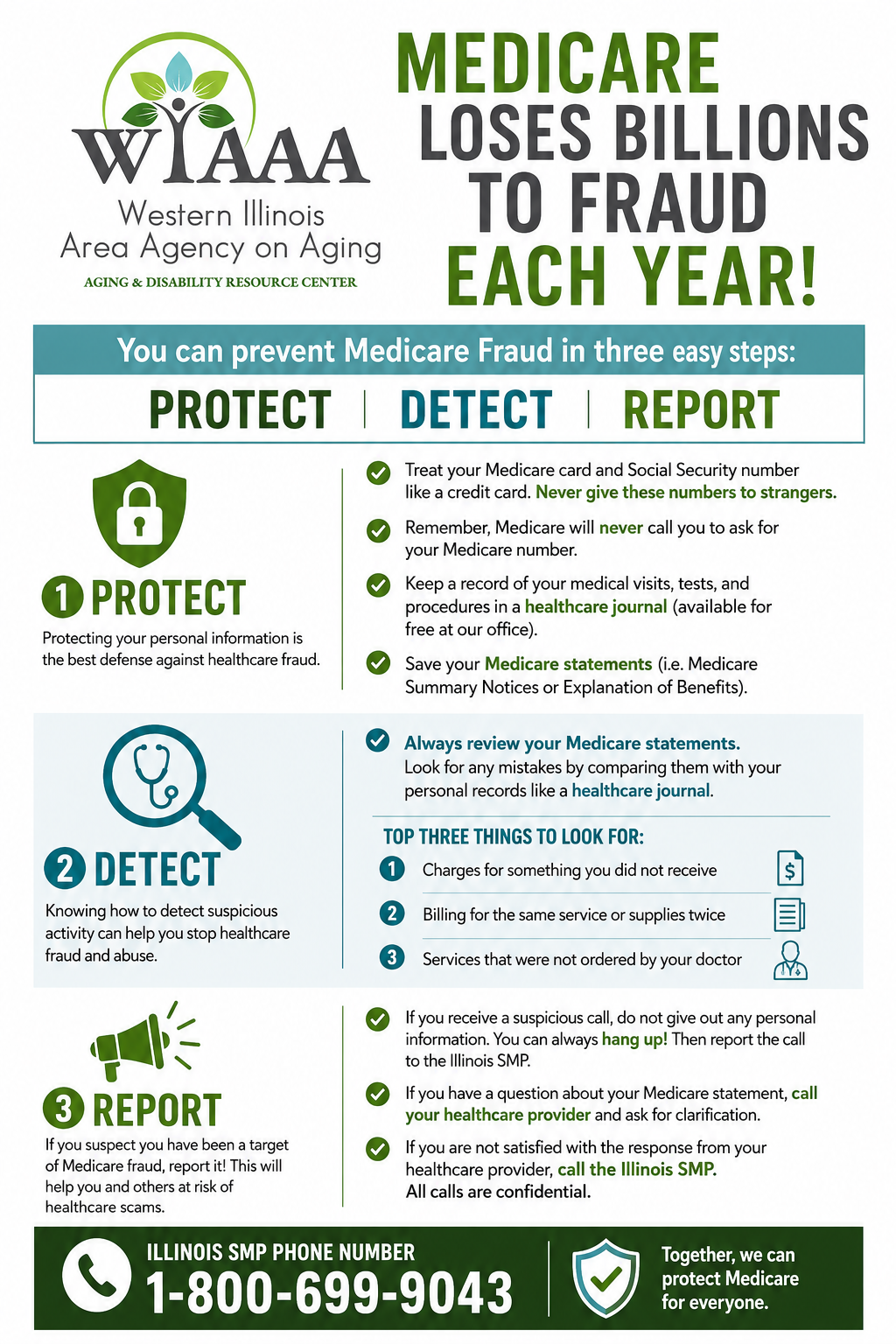
Remember: Medicare will never call you and ask for your Medicare number or other sensitive personal information.
Other Scams That Frequently Target Seniors
Financial exploitation comes in many forms. Some of the most common scams include:
Medicare impersonation scams
IRS and Social Security impersonation calls
Fake bank fraud alerts
Grandparent scams claiming a loved one is in trouble
Computer tech support scams
Utility shutoff threats
Romance scams
Investment fraud
Cryptocurrency investment scams
Sweepstakes or lottery scams
Charity scams
Fake package delivery notifications
Many scammers use caller ID spoofing, making it appear that a call is coming from a local number, government office, financial institution, or legitimate business.
According to Central Bank Illinois, impersonation scams remain among the most common fraud schemes they encounter. Criminals frequently pose as banks, the FBI, the IRS, or other trusted organizations, creating urgency in an attempt to convince victims to reveal personal information or transfer money.
The bank also reports seeing an increase in technology support scams, where callers or pop-up messages claim a computer has a virus and request remote access, and cryptocurrency investment scams, which promise guaranteed returns before directing victims to transfer money into fraudulent investment platforms.
Romance scams continue to be another growing concern. Fraudsters often spend weeks or months building online relationships before requesting money for fabricated emergencies, travel expenses, or investment opportunities.
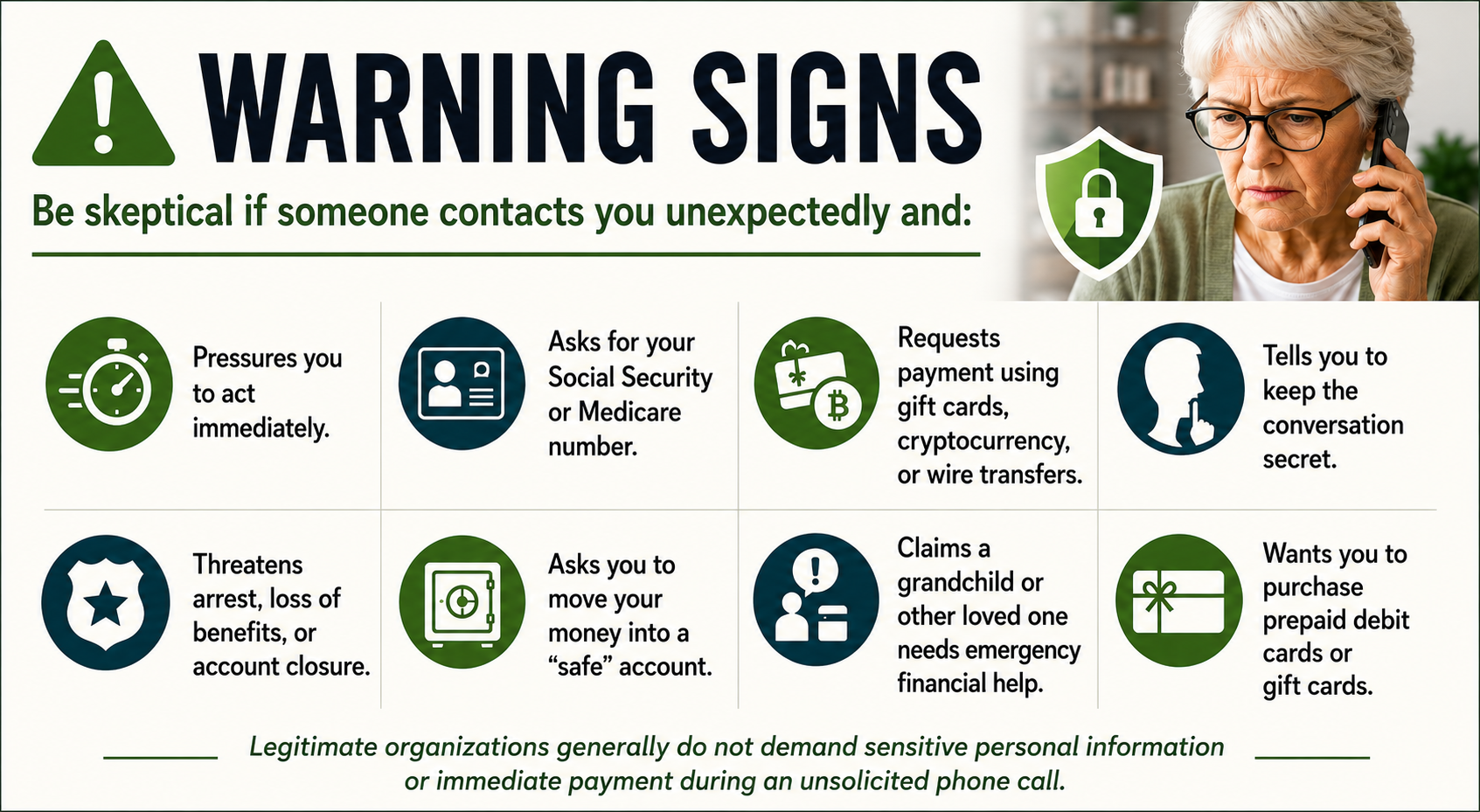
Warning Signs
Be skeptical if someone contacts you unexpectedly and:
Pressures you to act immediately.
Asks for your Social Security or Medicare number.
Requests payment using gift cards, cryptocurrency, or wire transfers.
Tells you to keep the conversation secret.
Threatens arrest, loss of benefits, or account closure.
Asks you to move your money into a "safe" account.
Claims a grandchild or other loved one needs emergency financial help.
Wants you to purchase prepaid debit cards or gift cards.
Instructs you to stay on the phone while visiting your bank.
Requests that you wire money to someone you've never met.
Promises guaranteed investment returns with little or no risk.
Families should also pay attention to changes in an older adult's financial habits.
Central Bank Illinois recommends watching for:
Difficulty paying routine bills.
Collection notices for unfamiliar accounts.
Unusual or frequent cash withdrawals.
Early closure of certificates of deposit or other accounts without concern for penalties.
Sudden transfers of money to unfamiliar individuals.
A new acquaintance, caregiver, or relative unexpectedly taking control of finances.
Sending money to someone the senior knows only through the internet.
Legitimate organizations generally do not demand sensitive personal information or immediate payment during an unsolicited phone call.
How to Protect Yourself
Experts recommend several simple precautions:
Never provide personal or financial information to someone who contacts you unexpectedly.
Hang up if something doesn't feel right.
Call the organization back using a phone number from an official website, your insurance card, or recent statement—not a number provided by the caller.
Don't rely on caller ID alone.
Pause before acting on urgent financial requests and consult a trusted family member, financial advisor, or your bank.
Stay socially connected. Isolation can make people more vulnerable to scams and financial exploitation.
Review your bank, credit card, and Medicare statements regularly.
Compare your Medicare Summary Notice or Explanation of Benefits with your own records.
Watch for unusual financial activity, including unfamiliar purchases, increased ATM withdrawals, or purchases of gift cards.
Never respond to text messages from numbers you don't recognize.
Keep antivirus and malware protection current on your computers and devices.
Shred financial and personal documents before throwing them away.
Protect your Medicare card and Social Security number as carefully as you would a credit card.
Consider using a low-limit credit card for online purchases.
If You Think You've Been Scammed
If you think you've been targeted, don't let embarrassment prevent you from asking for help.
Many victims hesitate to report scams because they fear losing their independence or feel ashamed they were deceived. Reporting the incident early can help limit financial losses and protect others from becoming victims.
If you've shared sensitive information or believe you've become a victim:
Contact your bank or credit card company immediately.
Report suspected Medicare fraud if your Medicare information was involved.
Place a fraud alert on your credit file if identity theft is suspected.
Report the incident to your local law enforcement agency.
Monitor your financial and insurance statements for unauthorized activity.
Illinois residents can also seek assistance through:
Adult Protective Services: 1-866-800-1409
Illinois Attorney General Consumer Fraud Hotline (Chicago): 1-800-386-5438
Springfield Consumer Fraud Hotline: 1-800-243-0618
Carbondale Consumer Fraud Hotline: 1-800-243-0607
Spanish Language Hotline: 1-866-310-8398
Senior Citizen Scams & Elder Fraud Hotline: 1-800-243-5377
Identity Theft Hotline: 1-866-999-5630
Community Education Makes a Difference
Helping older adults avoid scams requires more than responding after fraud occurs.
Alternatives for You offers Adult Protective Services, Care Coordination, the Volunteer Money Management Program, and community education initiatives designed to help older adults remain financially independent while recognizing warning signs before exploitation occurs.
Central Bank Illinois also provides fraud awareness and safe banking presentations for senior groups and community organizations. The bank regularly shares scam alerts, fraud prevention tips, and educational resources through its community outreach efforts and social media channels to help consumers recognize emerging threats before they become victims.
A Community Effort
Financial scams succeed because they create urgency, fear, and emotional pressure—not because victims are careless.
Family members, friends, neighbors, caregivers, financial institutions, healthcare providers, and community organizations all play an important role by encouraging conversations about scams and helping older adults verify unexpected requests before sharing personal information or sending money.
The best protection is often the simplest:
If an unexpected caller asks for personal information or money, hang up. Then contact the organization directly using a phone number you know is legitimate—not one provided by the caller.call.
How to Protect Yourself
Experts recommend several simple precautions:
Never provide personal or financial information to someone who contacts you unexpectedly.
Hang up if something doesn't feel right.
Call the organization back using a phone number from an official website, your insurance card, or recent statement—not a number provided by the caller.
Don't rely on caller ID alone.
Talk with a trusted family member or friend before making financial decisions involving unexpected requests.
Stay socially connected. Isolation can make people more vulnerable to scams and financial exploitation.
Review your bank, credit card, and Medicare statements regularly.
Compare your Medicare Summary Notice or Explanation of Benefits with your own records to ensure you actually received the services billed.
Watch for unusual financial activity, including unpaid bills, unfamiliar purchases, increased ATM withdrawals, or purchases of prepaid gift cards.
Never respond to text messages from numbers you don't recognize. Even replying "wrong number" lets scammers know your number is active.
Keep antivirus and malware protection current on your computers and devices.
Shred financial and personal documents before throwing them away.
Protect your Medicare card and Social Security number as carefully as you would a credit card.
Consider using a low-limit credit card for online purchases.
Register your phone number with the National Do Not Call Registry at donotcall.gov or by calling 1-888-382-1222.
If You Think You've Been Scammed
If you think you've been targeted, don't let embarrassment prevent you from asking for help.
Many victims hesitate to report scams because they fear losing their independence or feel ashamed they were deceived. Reporting the incident early can help limit financial losses and protect others from becoming victims.
If you've shared sensitive information or believe you've become a victim:
Contact your bank or credit card company immediately.
Report suspected Medicare fraud if your Medicare information was involved.
Place a fraud alert on your credit file if identity theft is suspected.
Report the incident to your local law enforcement agency.
Monitor your financial and insurance statements for unauthorized activity.
Illinois residents can also seek assistance through:
Adult Protective Services: 1-866-800-1409
Illinois Attorney General Consumer Fraud Hotline (Chicago): 1-800-386-5438
Springfield Consumer Fraud Hotline: 1-800-243-0618
Carbondale Consumer Fraud Hotline: 1-800-243-0607
Spanish Language Hotline: 1-866-310-8398
Senior Citizen Scams & Elder Fraud Hotline: 1-800-243-5377
Identity Theft Hotline: 1-866-999-5630
A Community Effort
Locally, Alternatives for You offers several programs designed to help older adults remain independent while reducing the risk of financial exploitation. Adult Protective Services investigates allegations of abuse and financial exploitation involving known perpetrators, while Care Coordination, the Volunteer Money Management Program, and community education initiatives help older adults strengthen financial independence and recognize warning signs before fraud occurs.
Financial scams succeed because they create urgency, fear, and confusion—not because victims are careless.
Family members, friends, neighbors, caregivers, financial institutions, and healthcare providers all have a role to play by encouraging open conversations about scams and helping older adults verify unexpected requests before sharing personal information.
The best protection is often the simplest:
If an unexpected caller asks for personal information or money, hang up. Then contact the organization directly using a phone number you know is legitimate—not one provided by the caller.
Information for this article was provided by:
Alternatives for You
Western Illinois Agency on Aging
Central Bank