
by Sarah DeMaranville
When schools close due to extreme cold, the decision often raises questions—particularly when roads are clear and snowfall is minimal. However, temperature and wind chill alone can create safety risks that affect transportation, outdoor exposure, and emergency response, especially in rural districts.
Geneseo School District officials note that their goal is always to keep students in school when conditions allow. Superintendent Dr. Laura Delgado explained in a recent blog post, “The ultimate goal is to keep our students safely in school whenever possible,” while acknowledging that “when you live in the Midwest, there will be days when the roads, snow, ice, wind, and temperatures will prevent us from doing that.”
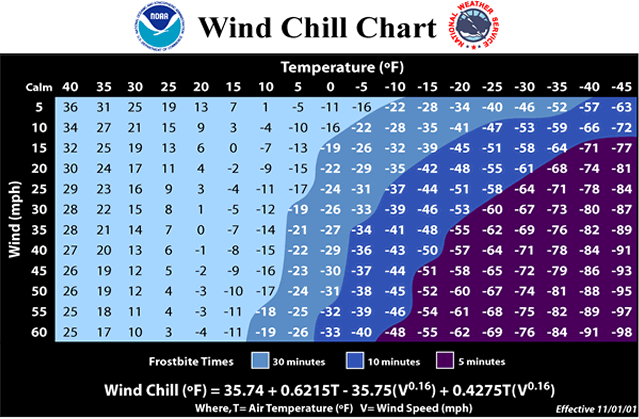
Image from NOAA and National Weather Service
Safety concerns become more pronounced as temperatures reach extreme levels. At wind chill readings near −35°F, exposed skin can freeze in as little as ten minutes. Children are particularly vulnerable because they lose body heat more quickly than adults, often have exposed skin on the face, ears, and hands, and may not recognize or communicate early signs of frostbite.
The greatest risk during severe cold does not occur inside heated school buildings, but during routine transitions throughout the day. Waiting at bus stops and walking from drop-off areas to school entrances require outdoor exposure. In temperatures this low, even minor delays can significantly increase the risk of hypothermia.
Transportation safety is another key factor. The Geneseo School District spans more than 260 square miles, much of it rural, which means longer bus routes and increased exposure time. At temperatures near −35°F, buses are more likely to experience mechanical issues such as difficulty starting, frozen doors, or battery and fuel system failures. A stalled bus can leave students waiting in dangerous wind-chill conditions while assistance is arranged.
Extreme cold can also stress the respiratory system. Very cold air can trigger bronchospasm in children with asthma and cause coughing, chest tightness, or breathing discomfort even in otherwise healthy students. While scarves or face coverings can help reduce airway irritation, consistent and proper use cannot be guaranteed, particularly among younger children.
Emergency response considerations also play a role. In extreme cold, response times may increase, and providing care may involve additional outdoor exposure. Minor injuries can escalate more quickly when temperatures are dangerously low, reducing the margin for safe response during the school day.
District leaders closely monitor forecasts and wind-chill advisories from the National Weather Service when making closure decisions. Dr. Delgado has acknowledged that closures are disruptive, stating, “It’s not a fun part of the job… Closing school for a day means families adjusting plans and teachers pivoting lessons.” However, she emphasized that “it will always come down to the safety of all our students.”
At −35°F, the risks associated with school attendance are not theoretical. They are predictable and tied to normal school operations, including transportation, arrival, transitions, and emergency response. District officials say closures in these conditions are made to ensure student safety, even when that decision is difficult.
Quotes attributed to Superintendent Dr. Laura Delgado sourced from a Geneseo School District blog post explaining weather-related closure decisions.
