
Why Does the World Suddenly Need So Many Data Centers?
If you've followed recent discussions at the Henry County Board, you've probably heard the term data center more times in the past few months than ever before.
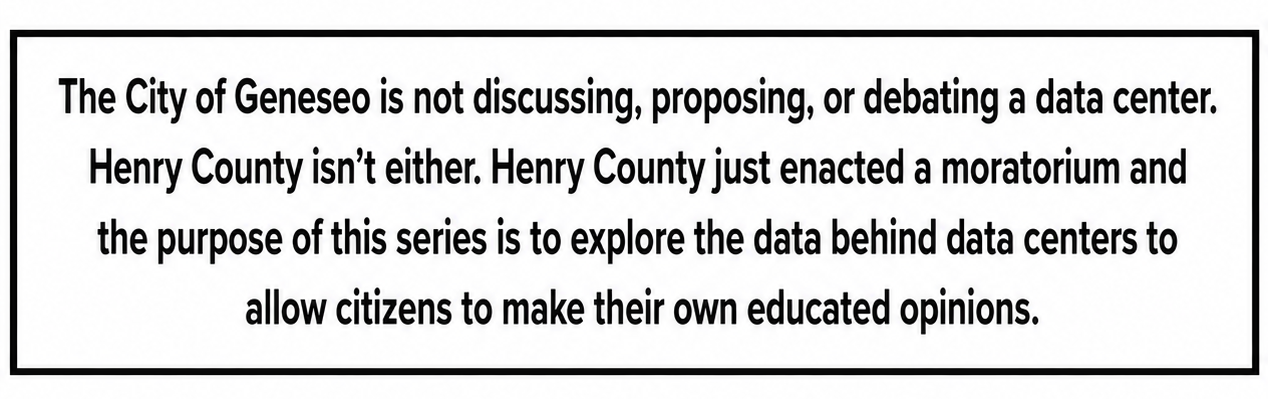
Communities across Illinois—and across the country—are being approached about the possibility of hosting large data centers. Though there is no proposed project at the moment, Henry County will be no exception. County leaders recently approved a temporary moratorium to give themselves time to study the issue, learn more about the industry, and determine what regulations, if any, should be in place before considering future projects.
But before asking whether a data center belongs in Henry County, there's an even more basic question worth answering:
Why does the world suddenly need so many of them?
The Internet Has to Live Somewhere
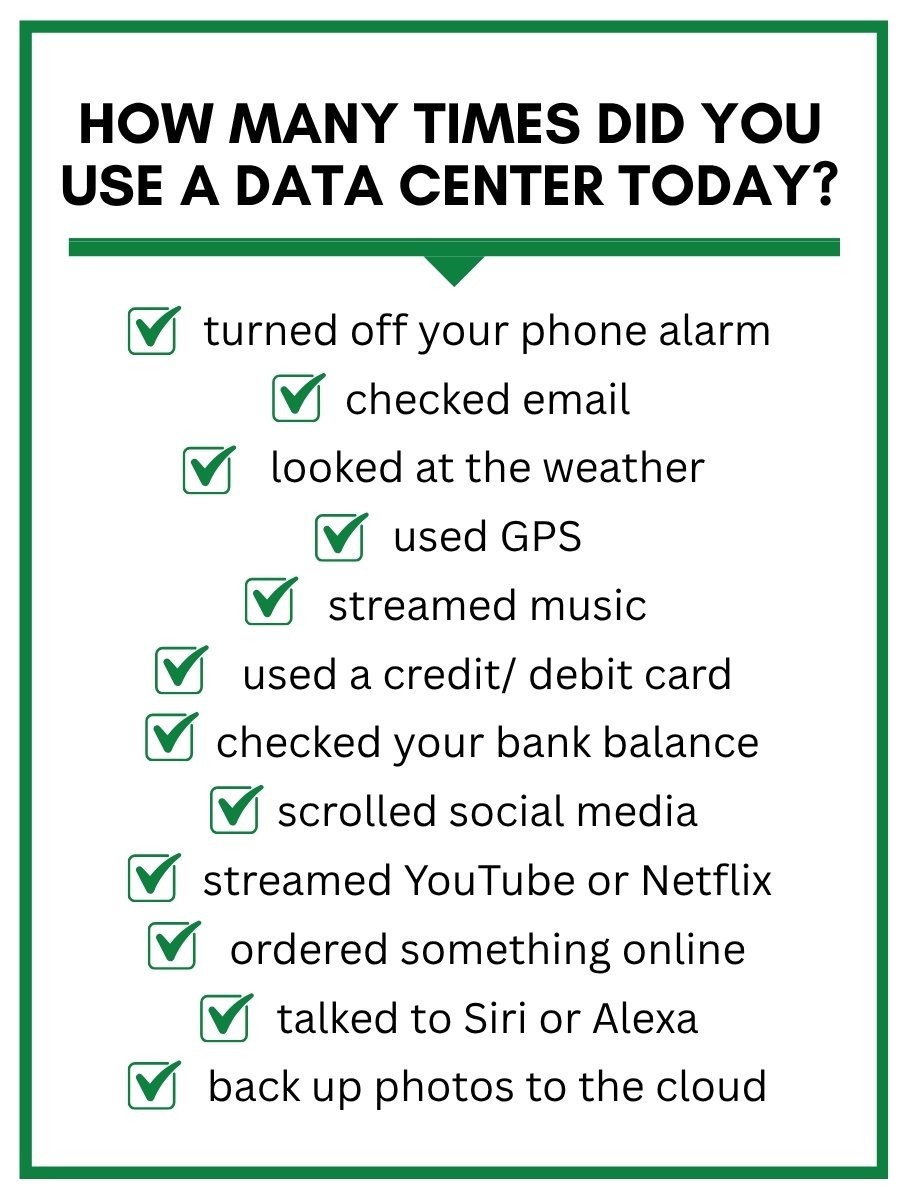
It's easy to think of the internet as something that exists "in the cloud." In reality, every email, every online purchase, every Netflix movie, every Google search, every Facebook photo, and every AI conversation is processed by physical computers located inside secure buildings known as data centers. The fact that you’re reading this right now is due to data centers.
Imagine a warehouse—but instead of storing boxes, it stores thousands upon thousands of powerful computers. Those computers work around the clock to store information, process requests, and keep the digital services we rely on running every second of every day.
Most of us interact with data centers dozens—if not hundreds—of times each day without realizing it.
That description isn't just theoretical. In its August 2026 member newsletter, JCE Co-op described data centers as "the physical backbone of many services we use every day," citing online banking, medical records, school systems, farm technology, local business software, weather tools, emergency communications, streaming services and artificial intelligence as examples of services that depend on them.
Why Are We Building More Now?
Data centers aren't new. The internet has depended on them for decades.
What has changed is how much computing power the modern world demands.
Twenty years ago, most people used the internet to browse websites and send email.
Then came smartphones.
Then streaming movies and music.
Then cloud computing, where businesses began storing files and running software online instead of on office computers.
Then remote work and virtual meetings.
Now comes artificial intelligence.
Each wave has dramatically increased the amount of information that must be stored, transmitted, and processed. AI is the latest jump.
Why AI Is Different
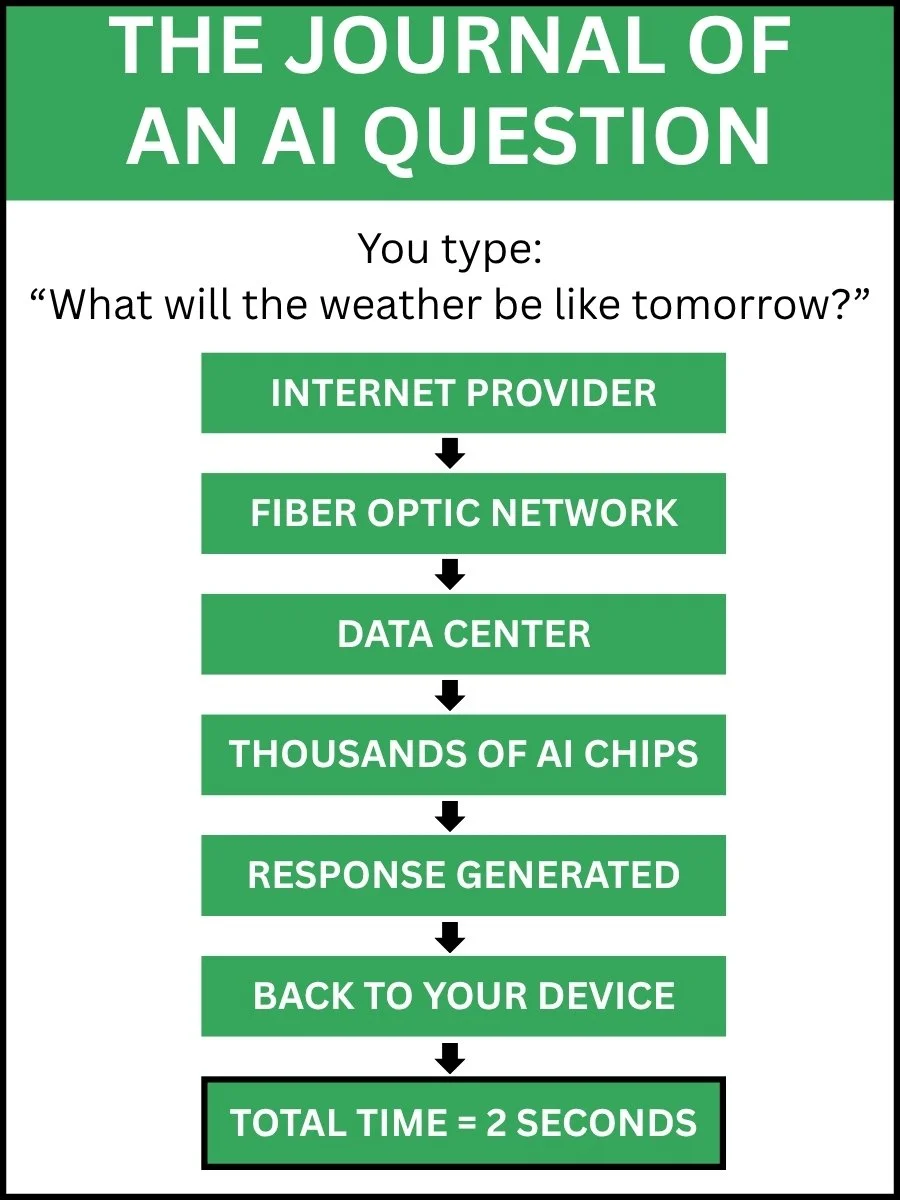
Traditional internet activity is relatively straightforward. You search for a restaurant. You stream a song. You check your bank balance. It’s a simple match of your query to indexed keywords or transmission of data.
Artificial intelligence works differently.
Instead of simply retrieving existing information, AI systems analyze enormous amounts of data to generate text, create images, write computer code, summarize documents, answer questions, and perform increasingly complex multi-step tasks in real time.
That requires enormous computing power.
While the exact amount varies depending on the task and the technology involved, AI workloads can require substantially more computing resources than many traditional internet searches. Multiply that by millions of users around the world, and the need for additional computing capacity grows quickly.
Why Not Use the Data Centers We Already Have?
Many existing facilities were designed years ago for different kinds of workloads.
Today's AI servers consume more electricity, generate more heat, and require more advanced cooling systems than many previous generations of computer equipment.
Some existing facilities can be upgraded. Others cannot.
In many cases, companies find it more practical to build entirely new facilities designed specifically for modern computing needs.
Why Are Companies Looking Beyond Major Cities?
If demand is growing so quickly, why not simply build more facilities in Chicago or other major metropolitan areas?
The answer often comes down to infrastructure.
Large data centers require vast amounts of electricity, extensive fiber-optic connectivity, hundreds of acres of land, and room to expand over time. In some areas, suitable sites are increasingly difficult or expensive to develop.
As a result, companies are looking beyond traditional technology hubs and evaluating communities that have the land, infrastructure, and long-term potential to support these projects.
That has placed more rural communities—including some in Illinois—into conversations that would have seemed unlikely just a few years ago.
Why Henry County?
That naturally leads to the next question.
What characteristics make Henry County attractive—or not attractive—for a project like this?
Does the county have the electrical infrastructure?
Is there enough available land?
How important are fiber-optic networks?
What role do local zoning regulations play?
And perhaps most importantly, what would a data center actually mean for the people who live here?
Those are the questions we'll begin exploring in the next installment of this series.
Next in the series: Data centers promise jobs, tax revenue, and economic investment—but they also require land, power, and infrastructure. In Part 2, we'll examine the potential benefits and challenges communities consider before approving a data center.
The goal of this series isn't to persuade readers that data centers are good or bad. It's to provide the information needed to have an informed conversation.
Sources:
U.S. Department of Energy – Data Centers and Servers
Uptime Institute – Data Center Fundamentals
Uptime Institute – Research & Reports
U.S. General Services Administration – Cloud Basics (NIST-based)
JCE Co-op, "Powering Growth, Keeping Members First," HI-LINES, August 2026.