by Sarah DeMaranville
Geneseo Current
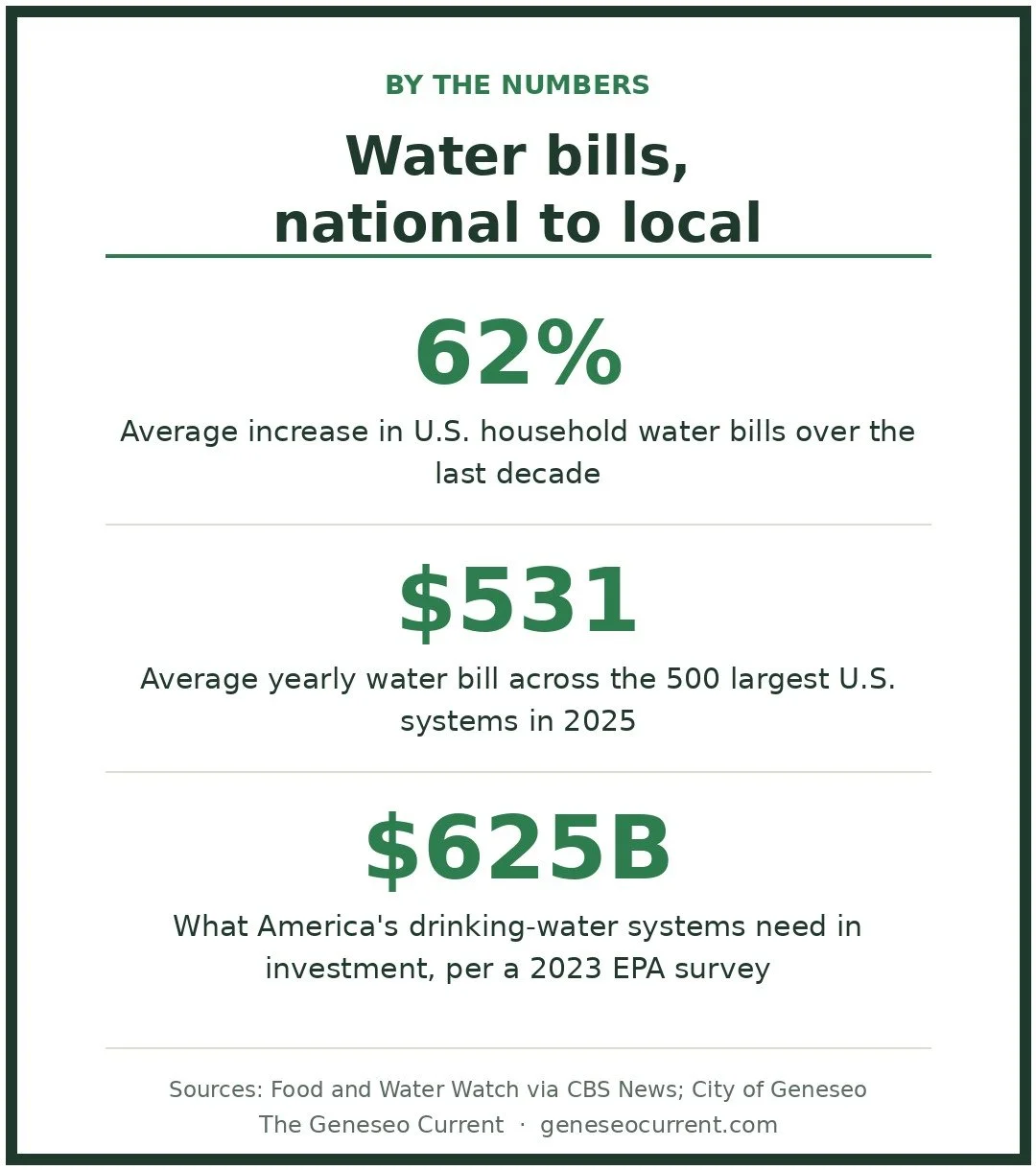
Americans are paying 62% more for water than they did a decade ago, according to a national study reported Friday. In Geneseo, where the city council is discussing utility rate increases for 2027, the reasons behind that number will sound familiar.
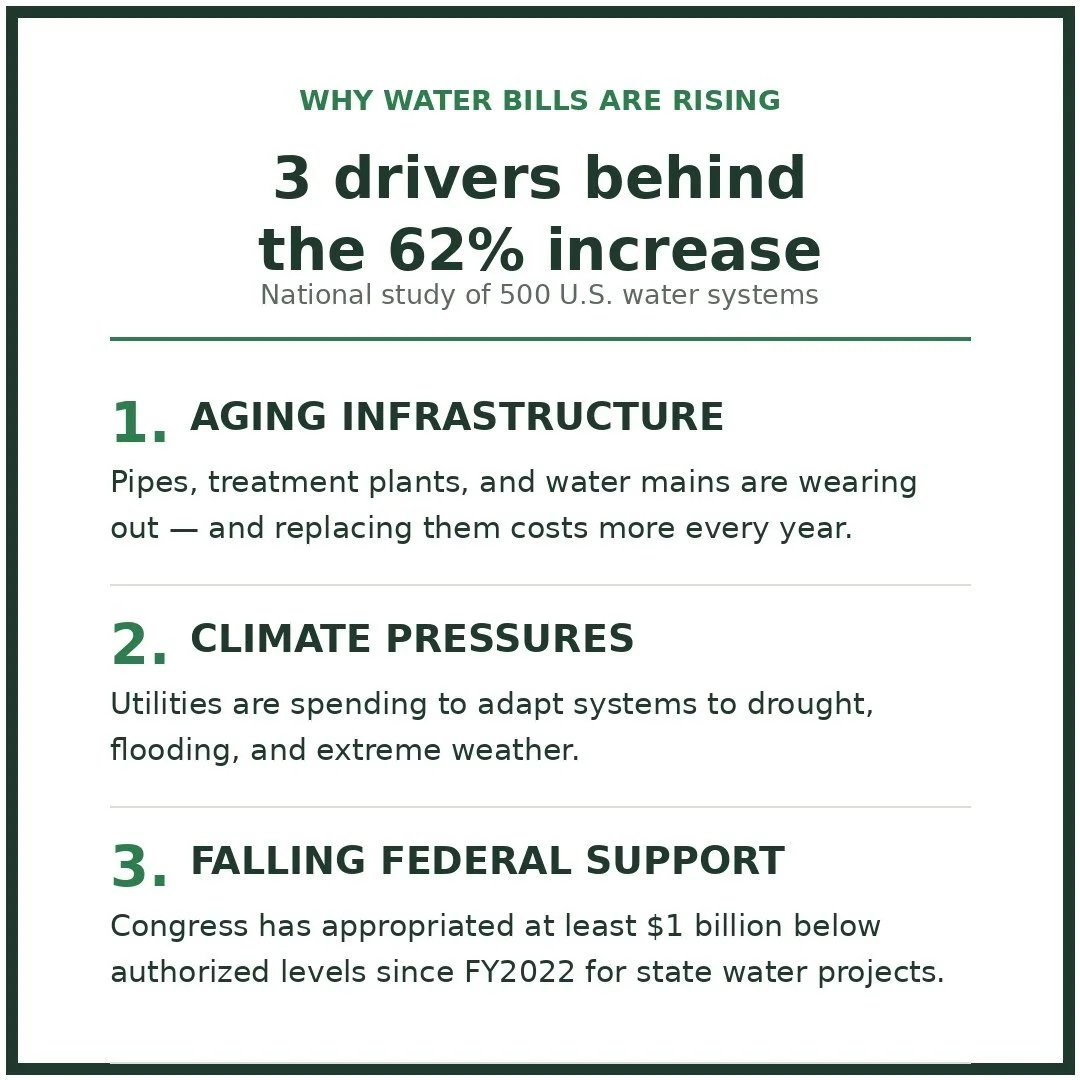
The study, conducted by the nonprofit Food and Water Watch, looked at 500 of the largest community water systems in the country — serving 155 million people combined — and found the average household water bill hit $531 a year in 2025. The drivers: aging infrastructure, the cost of adapting systems to climate pressures, and federal support falling short. The American Society of Civil Engineers reported this year that Congress has appropriated at least $1 billion below authorized levels since fiscal year 2022 for a federal fund backing state water projects, while a 2023 EPA survey put the country's drinking-water investment needs at $625 billion.
That last point is the one that lands hardest locally. Much of what is pushing Geneseo's projected costs upward is federally mandated: lead service line replacement required by the EPA, and a phosphorus-removal upgrade at the wastewater plant with a 2030 federal deadline. The mandates arrive from Washington; the bills get paid in Geneseo. (The Current covered the city's full rate modeling after the Sept. 22 Committee of the Whole meeting — the details are here for anyone who missed it.)
There is a meaningful bright spot for Geneseo in the national data. The study found that systems run by for-profit companies charged an average of $823 last year — $329 more than publicly operated systems. Geneseo's utilities are publicly run, so the city starts on the cheaper side of that divide.
The broader pattern is also worth noting for what it suggests about strategy. The cities hit hardest in the study tended to be places where investment was deferred until it couldn't be anymore. Geneseo's council has been explicit about preferring the opposite approach — as Councilman Craig Arnold put it at the September meeting, "I'd rather eat it small, in little chunks, and still be above board." Small, steady increases now are the alternative to the kind of deferred-maintenance shock the national numbers describe.
No rates have been approved. The council will take up actual rate decisions at a later meeting — and when it does, residents will be looking at a local version of a national story: the infrastructure has to be built, the federal help is thinning, and the question is how gradually Geneseo wants to pay for it.
Source: "Surging Water Costs amid the US Affordability Crisis," Food & Water Watch, October 2026.