
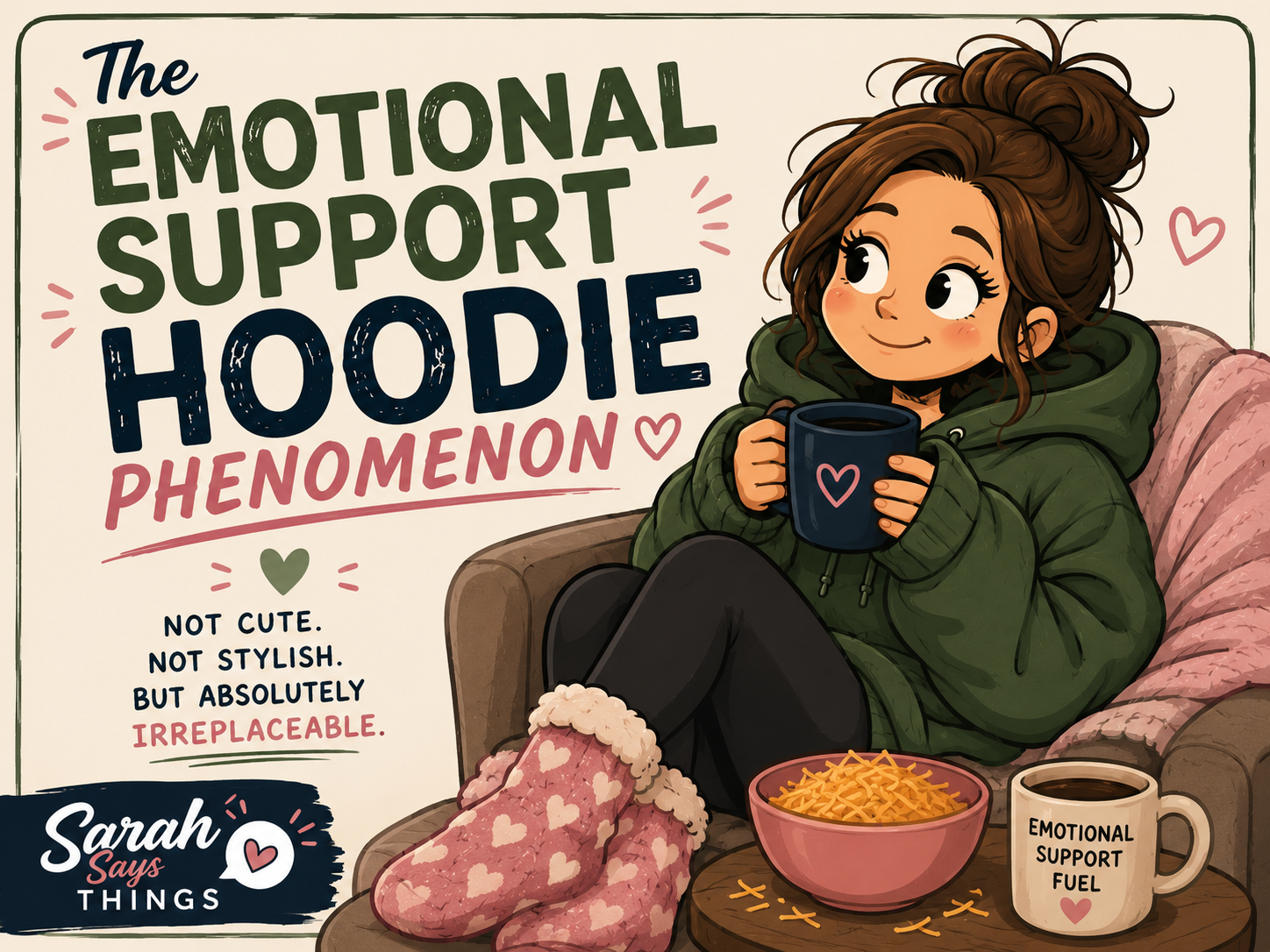
Every adult owns one hoodie they are emotionally incapable of throwing away.
It’s not the nicest hoodie. Or the newest hoodie. It’s just THE hoodie.
Usually it’s slightly stained, aggressively faded, mysteriously stretched out, and carrying the structural integrity of wet cardboard.
But psychologically? That baby is priceless.
It has survived breakups, illnesses, cold football games, grocery store runs, road trips, emotional spirals, random midnight drives, and at least one era of your life where you genuinely believed a nap might fix everything.
At some point, it stops being clothing and becomes emotional infrastructure.
You don’t even consciously choose it anymore. The second you get home, that hoodie appears on your person like a medically prescribed treatment plan.
Because THE HOODIE isn’t about fashion.
It’s about familiarity.
It smells faintly like your laundry detergent, old memories, winter air, and psychological safety. The sleeves fit exactly right. The hood sits correctly. The pockets are shaped to your hands. Every rip, stretched cuff, and faded logo feels weirdly reassuring.
New hoodies never stand a chance.
You can spend $140 on premium athleisure. Buy an entire stack of trendy sweatshirts. Own fifteen perfectly acceptable jackets.
Doesn’t matter. Your nervous system has already bonded with one ratty emotional support fabric tube from 2011.
And they always have the weirdest origin stories.
A college bookstore purchase.
An ex’s forgotten sweatshirt.
Company apparel from a job you quit six years ago.
A clearance rack panic-buy during an unexpectedly cold vacation.
Nobody ever ordains THE HOODIE. It chooses you.
And the panic when it goes missing? 100% unmatched.
Entire households suddenly mobilize like a search-and-rescue operation. People lift couch cushions. Check cars. Call spouses. And retrace timelines like detectives investigating a disappearance.
“When’s the last time you saw it?”
“Did you leave it at the game?”
“Check the dryer again.”
Because losing THE HOODIE feels less like losing clothing and more like temporarily losing emotional regulation. Scientists probably should study this.
I think as exhausted adults we just start attaching comfort to small, repeatable things because life itself is so mentally loud all the time.
Some people meditate.
Some journal.
Some wake up at 5 a.m. and do breathwork.
Others wear a 14-year-old hoodie while standing barefoot in their kitchen stress-eating shredded cheese directly from the bag.
And, I gotta say, that’s a completely valid survival strategy too.