
Property taxes are one of the most visible costs of local government, and public schools typically account for a significant portion of an Illinois property tax bill.
But is Geneseo CUSD #228's school tax rate unusually high?
To answer that question, The Geneseo Current compared Geneseo with four Illinois K-12 districts with similar characteristics, including enrollment, student demographics, funding adequacy and property wealth.
The comparison includes Highland CUSD 5, Manteno CUSD 5, Eureka CUD 140 and Waterloo CUSD 5.
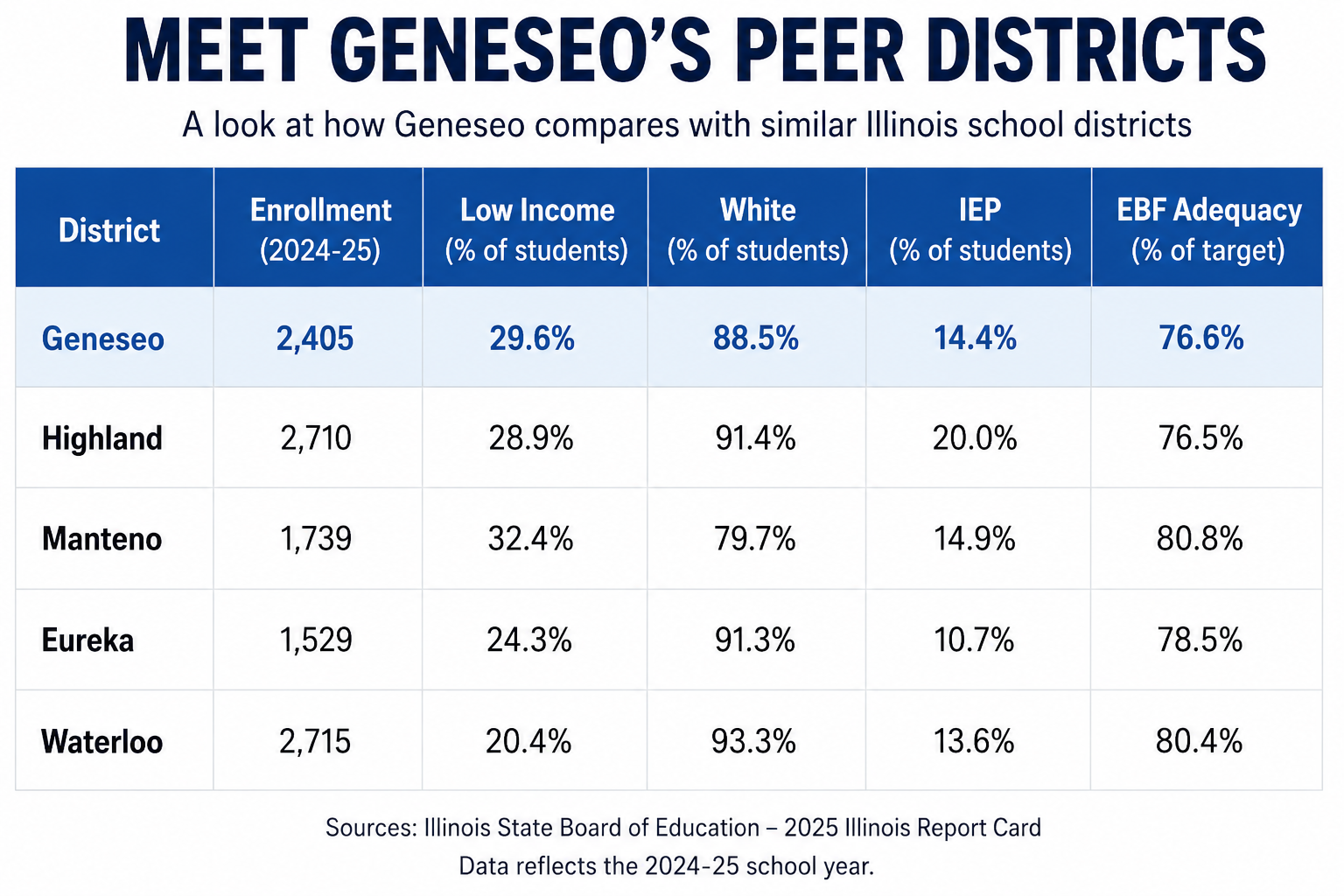
No two school districts are identical, but comparing districts with similar characteristics provides more context than comparing Geneseo with Illinois districts as a whole.
Among these five districts, Geneseo has the second-lowest total school tax rate.
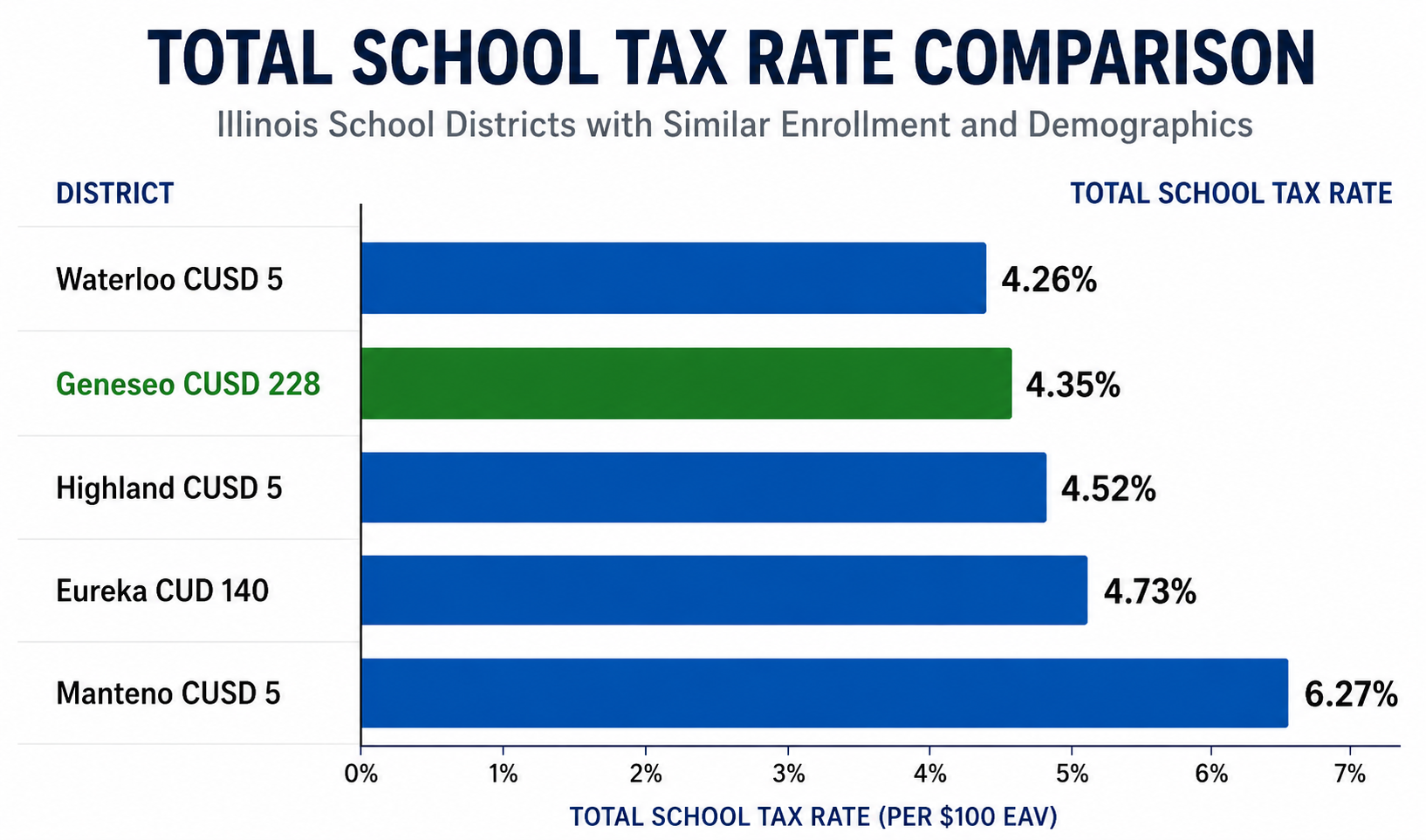
The median rate among the five districts is 4.52%. Geneseo's 4.35% rate is 0.17% below that midpoint.
What Does That Mean for a Homeowner?
Illinois property taxes are based on Equalized Assessed Value, or EAV. Outside Cook County, residential property is generally assessed at approximately one-third of its market value before exemptions and other adjustments.
For illustration, a $200,000 home would have an assessed value of approximately $66,667 before exemptions.
Applying each district's school tax rate to that amount produces the following approximate school-tax amounts:
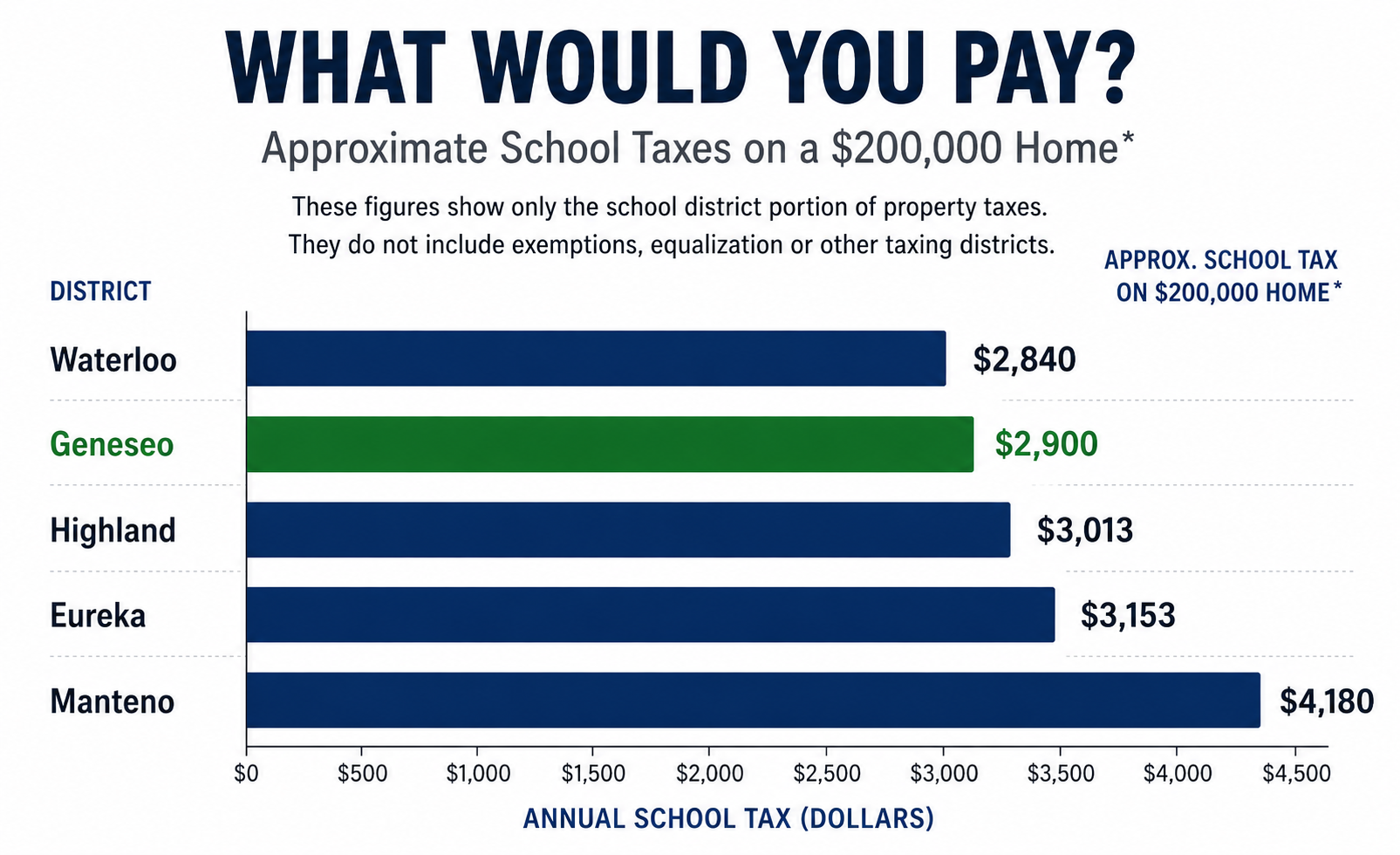
These are examples, not actual tax bills. They don't account for exemptions, equalization or other adjustments, and they represent only the school district portion of the property tax bill.
Why Property Taxes Matter So Much in Illinois
Illinois schools are funded through a combination of local, state and federal money, with local property taxes remaining an important part of that system.
Illinois' Evidence-Based Funding formula estimates how much each district needs to adequately educate its students and considers how much of that need can be supported through local resources.
Property wealth is part of that calculation.
In simple terms, districts with greater taxable property wealth generally have more capacity to raise money locally. Districts with less property wealth generally require greater state support to reach their calculated adequacy target.
That is why a school district's tax rate can't be viewed entirely separately from Illinois' broader school-funding system.
How Much Property Wealth Does Geneseo Have?
One useful measurement is EAV per pupil — essentially, the amount of taxable property value in a district for each student enrolled.
Among the five districts examined, Geneseo again falls near the middle.
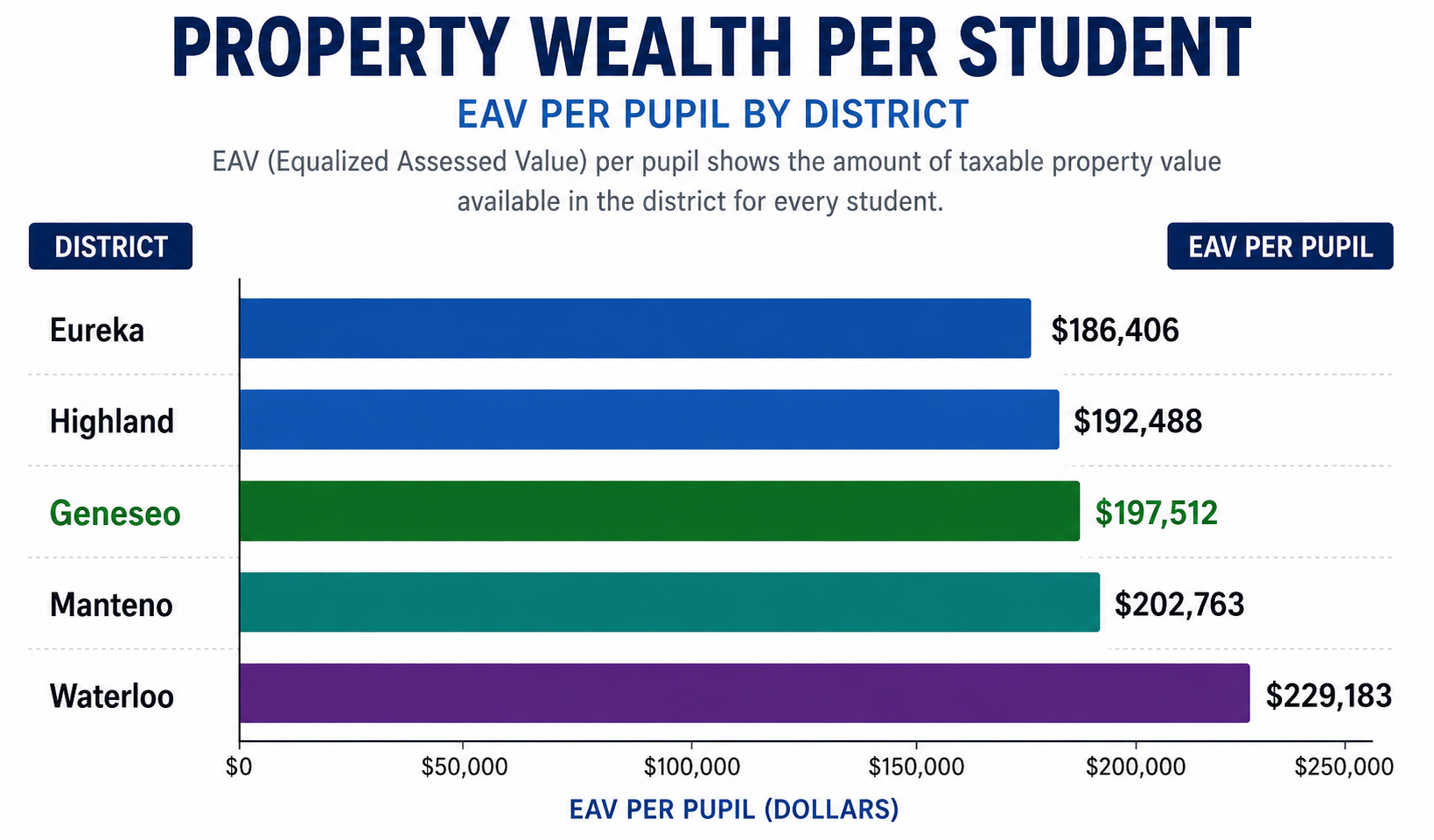
Geneseo has more taxable property wealth per student than Eureka and Highland, but less than Manteno and Waterloo.
That distinction matters because tax rates and property values work together.
A district with a larger tax base can generate more revenue at the same tax rate than a district with a smaller tax base. For that reason, comparing tax rates alone doesn't provide a complete picture of school finances.
Tax Rates Don't All Pay for the Same Things
There is another complication when comparing school tax rates: the money does not necessarily pay for exactly the same things in every district.
School tax rates can include levies supporting education, building operations, transportation, special education and other purposes. Debt can also affect a district's overall rate.
A district repaying bonds from previous construction projects, for example, may have a higher total school tax rate than another district without comparable debt.
That does not necessarily mean the district is spending more on everyday classroom operations.
Likewise, a lower tax rate alone does not establish that one district operates more efficiently than another.
So, Are Geneseo's School Taxes High?
Based on this comparison, Geneseo's school tax rate does not stand out as unusually high among the similar Illinois districts examined.
At 4.35%, Geneseo has the second-lowest rate of the five districts, above Waterloo's 4.26% but below Highland, Eureka and Manteno.
Its rate is also below the group's 4.52% median.
Geneseo's taxable property wealth per student falls almost exactly in the middle of the comparison, ranking third of the five districts.
That doesn't answer whether the district spends every dollar as efficiently as possible. Spending and efficiency are separate questions.
It also doesn't determine whether an individual homeowner considers their property taxes affordable.
What the comparison does provide is context: Geneseo's school tax rate falls within — and toward the lower end of — the range found among these four comparable Illinois districts.
Why This Matters Now
The comparison comes as Geneseo faces increasing financial pressure.
The district's tentative FY27 budget projects a nearly $976,000 Education Fund deficit. Healthcare and special-education costs are increasing, enrollment has been declining and district officials project cash reserves will fall.
The district has said it intends to maintain its current educational programs.
Those pressures could eventually lead to decisions involving spending, staffing, reserves, borrowing or additional revenue.
If those discussions occur, understanding Geneseo's current position will be important.
The comparison shows Geneseo entering that conversation with a 4.35% school property-tax rate — second-lowest among the five similar Illinois districts examined — and a property-tax base per student that falls near the middle of the group.
Sources
Illinois State Board of Education — Illinois Report Card
Illinois State Board of Education — Evidence-Based Funding
Illinois General Assembly — Evidence-Based Funding for Student Success Act
Illinois Department of Revenue — Illinois Property Tax System
Henry County — Property Tax Records