
When residents see a city budget totaling tens of millions of dollars, it can be difficult to tell whether local government is actually expensive.
One problem is that Geneseo's total budget includes its electric, water and sewer utilities. Comparing that total with cities that operate different services can be misleading.
A more useful comparison comes from the Illinois Comptroller's Fiscal Responsibility Report Cards, which provide standardized financial information for municipalities across the state.
Using fiscal year 2024 data, The Geneseo Current compared Geneseo with Princeton, Mendota and Monmouth — three Illinois communities of similar size.
The results show Geneseo spending less on general government services than all three.
Spending per resident
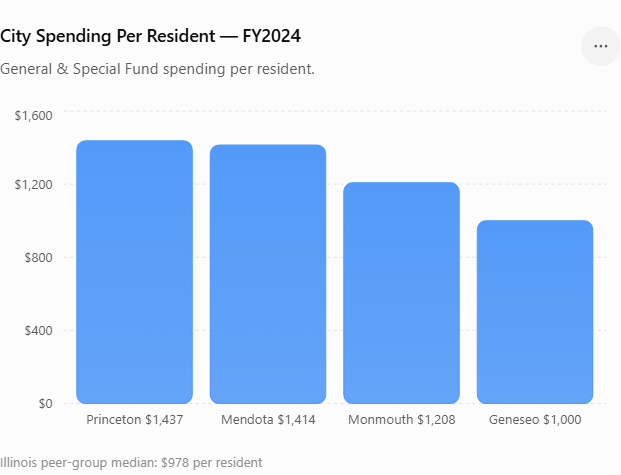
Geneseo's $1,000 per resident was approximately 17% below Monmouth, 29% below Mendota and 30% below Princeton.
The Illinois Comptroller reports an average of $1,191 per resident and a median of $978 among municipalities in the same broad population category.
That puts Geneseo about 16% below the statewide group average but very close to the median.
But among these three regional comparison communities, its governmental spending is clearly the lowest.
Geneseo also finished with substantial reserves
Spending tells only part of the story.
Geneseo began fiscal 2024 with approximately $10.89 million in General and Special Fund balances and ended with approximately $12.23 million.
That equals $1,870 per resident.
The city's ending fund balance represented approximately 187% of annual General and Special Fund expenditures.
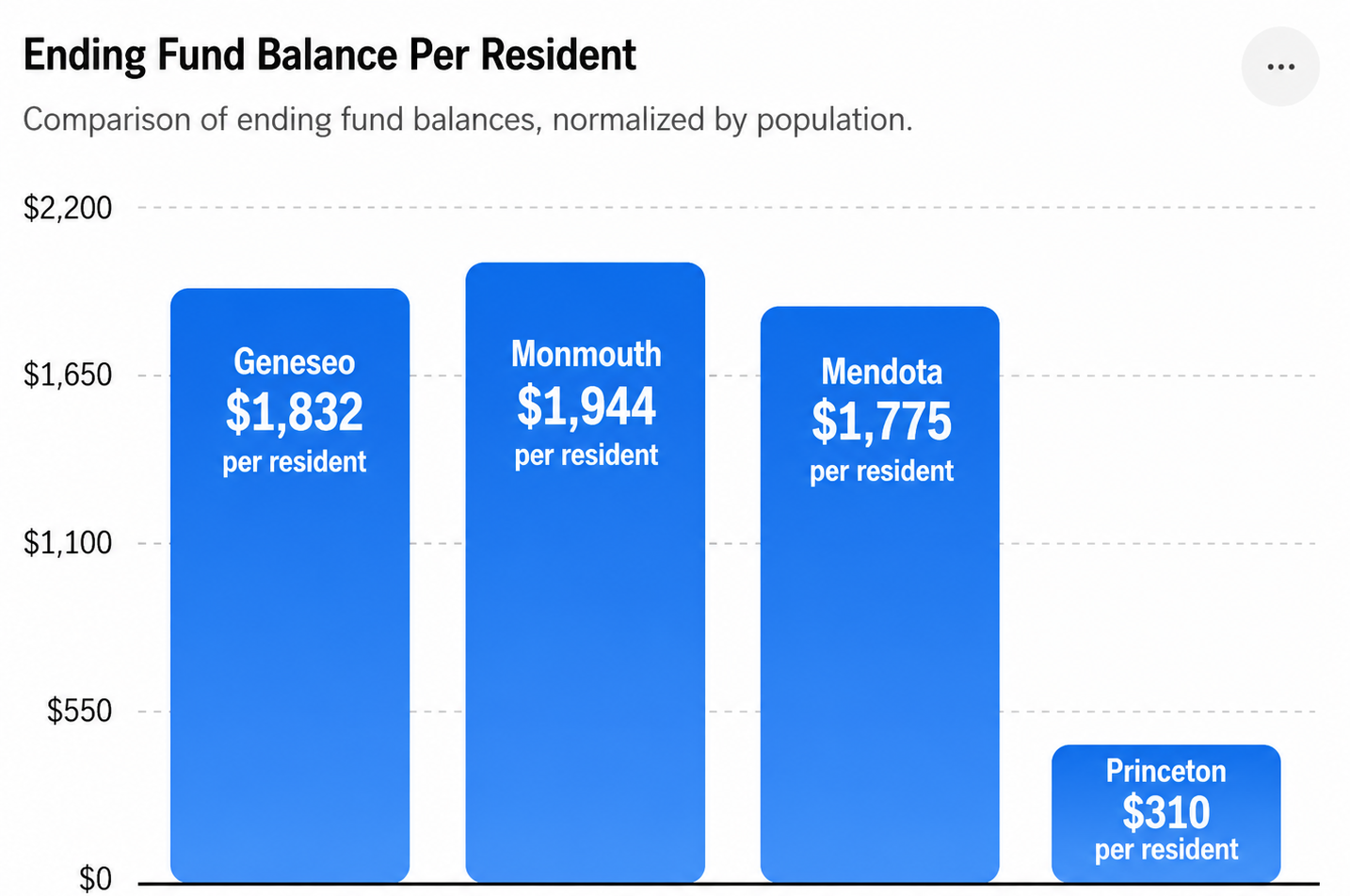
Fund balances aren't necessarily money available for immediate spending. They can include restricted or committed funds, reserves and money intended for future expenses.
Geneseo doesn’t simply have fewer employees
Geneseo reported 60 full-time and 24 part-time employees, with approximately $4.98 million in salaries paid.
That's about 9.2 full-time employees for every 1,000 residents.
Princeton had a nearly identical ratio, with 70 full-time employees serving a larger population.
That suggests Geneseo's lower General and Special Fund spending isn't simply the result of maintaining a smaller workforce.
Utilities make the overall budget look much larger
This is where municipal comparisons become complicated.
In addition to its General and Special Funds, Geneseo reported approximately $12.10 million in enterprise-fund expenses.
These funds include business-like operations such as municipal utilities, which are largely supported by charges for services.
Geneseo's enterprise operations generated approximately $13.05 million in revenue during FY2024.
Because cities don't all own and operate the same utilities, comparing their total budgets can create a distorted picture of how much ordinary city government costs.
Debt tells a different story
Geneseo reported approximately $22.66 million in outstanding debt, or about $3,465 per resident.
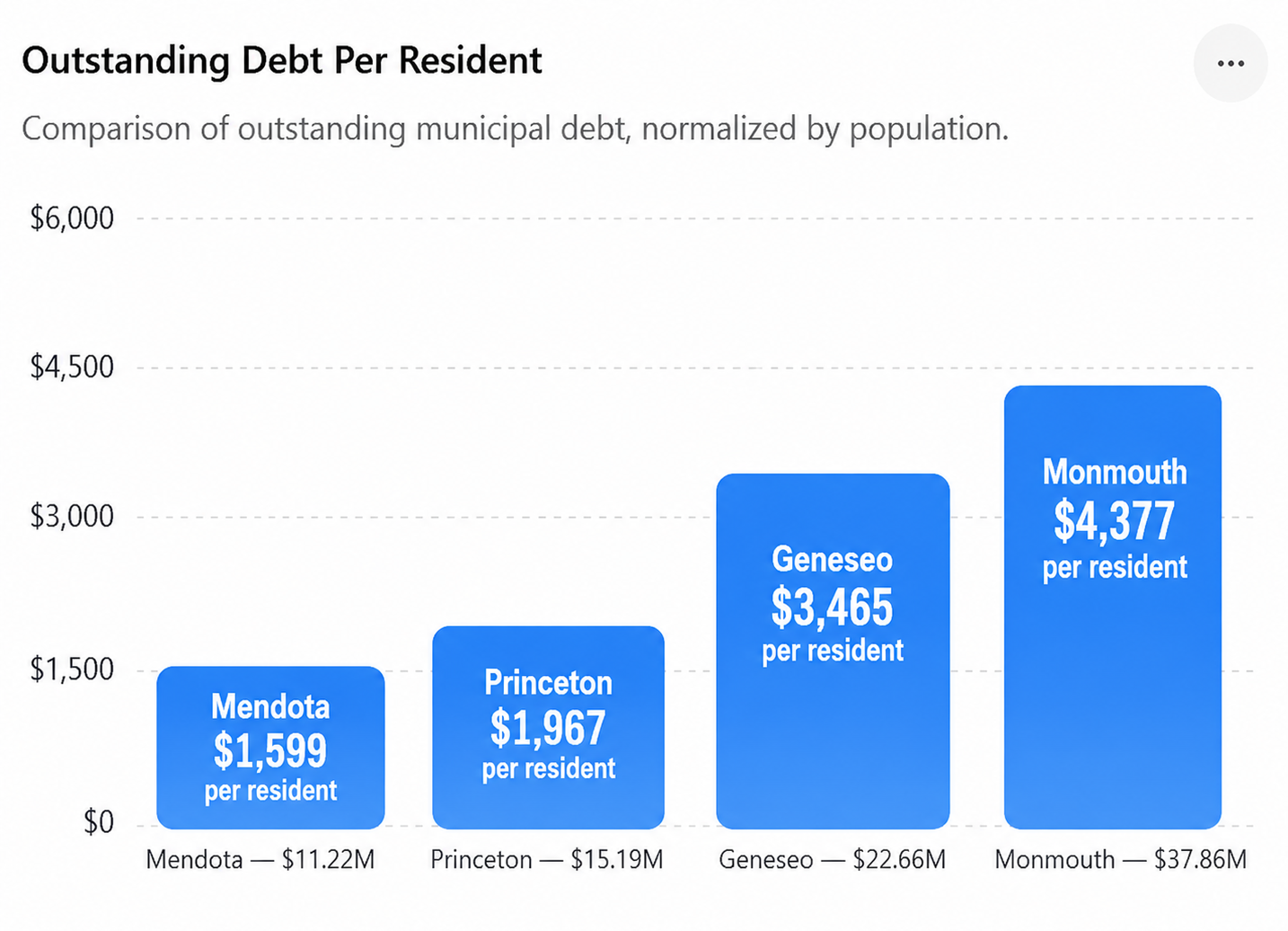
That was more per resident than Princeton or Mendota, but less than Monmouth.
However, the state's debt figure includes debt associated with both governmental and proprietary activities. In Geneseo's case, that means debt connected with municipal utility infrastructure can be included.
The number therefore shouldn't be interpreted as General Fund debt alone.
So, is Geneseo city government expensive?
The FY2024 numbers don't produce a simple yes-or-no answer.
On one of the best standardized measures available, Geneseo spent about $1,000 per resident through its General and Special Funds. That was close to the statewide median and lower than Princeton, Mendota and Monmouth.
At the same time, Geneseo maintained substantial fund balances, operated a sizable municipal workforce and utility system, and carried significant infrastructure-related debt.
Taken together, the numbers show a city with moderate governmental spending, substantial reserves and significant municipal infrastructure to operate and maintain.
That provides a more useful picture than Geneseo's total city budget alone.