by Sarah DeMaranville
Geneseo Current
KEWANEE — New correspondence obtained through a Freedom of Information Act request provides additional details about a proposed data center in Kewanee, including its anticipated electricity consumption, water requirements, backup generators, environmental considerations, and potential economic benefits.
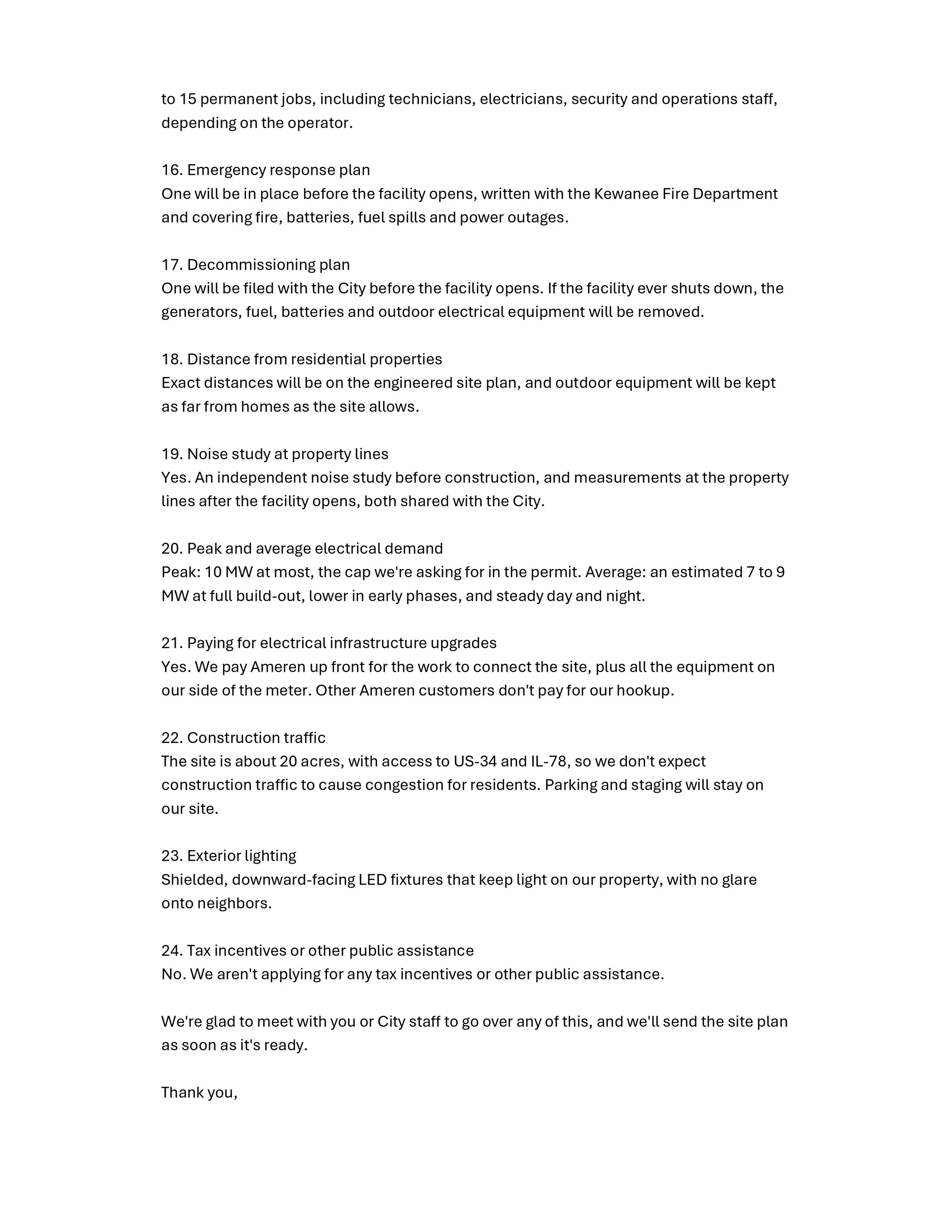
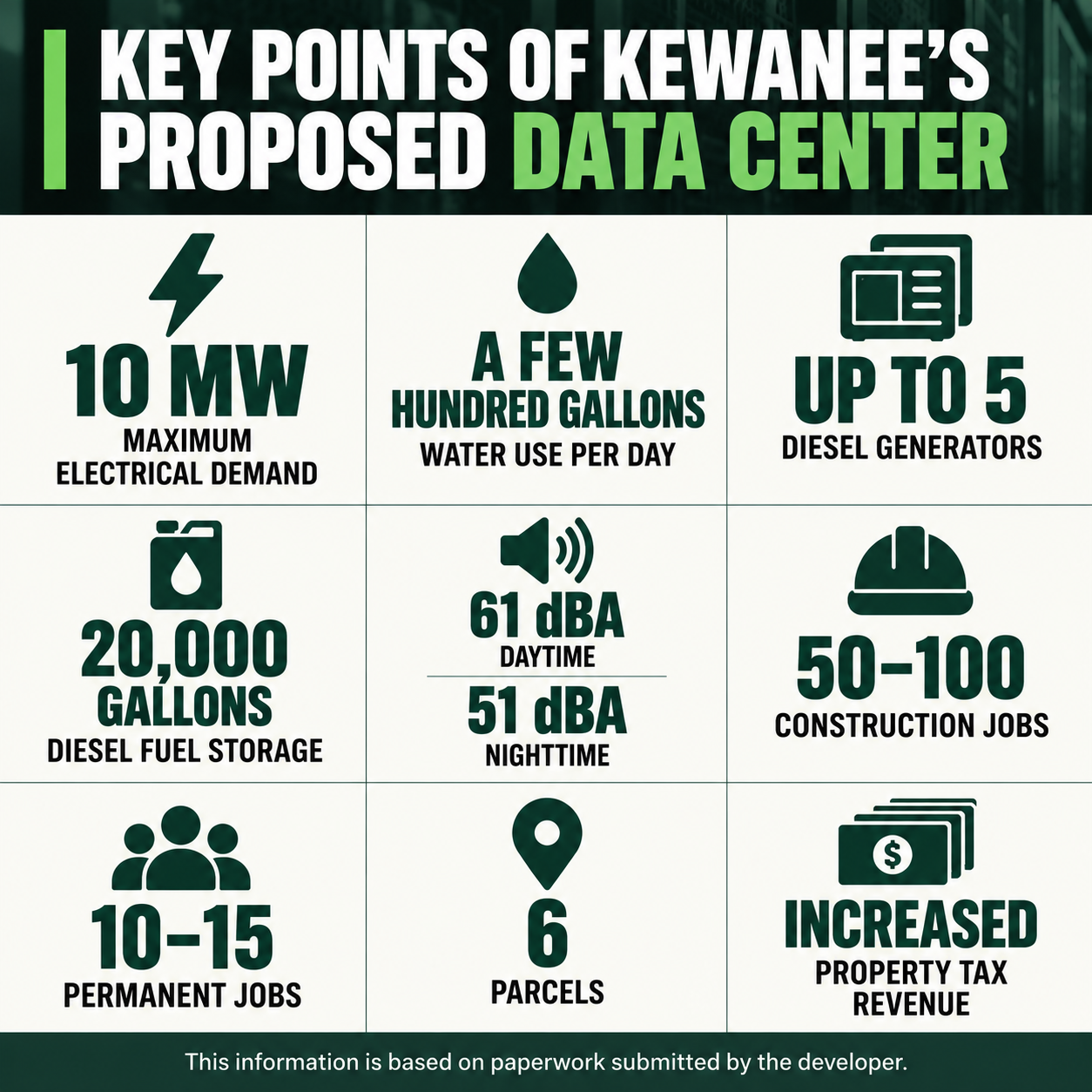
In an October 18 email to Mayor Gary Moore, developer Pawel Nowak outlined plans for a facility that could consume up to 10 megawatts of electricity, operate around the clock and maintain approximately 20,000 gallons of diesel fuel for emergency backup generators.
The proposal also anticipates between 50 and 100 construction workers at peak activity and approximately 10 to 15 permanent jobs once the facility becomes operational.
However, several significant aspects of the project remain preliminary, including its final design, building footprint, environmental assessments and the identity of the company that would ultimately operate the facility.
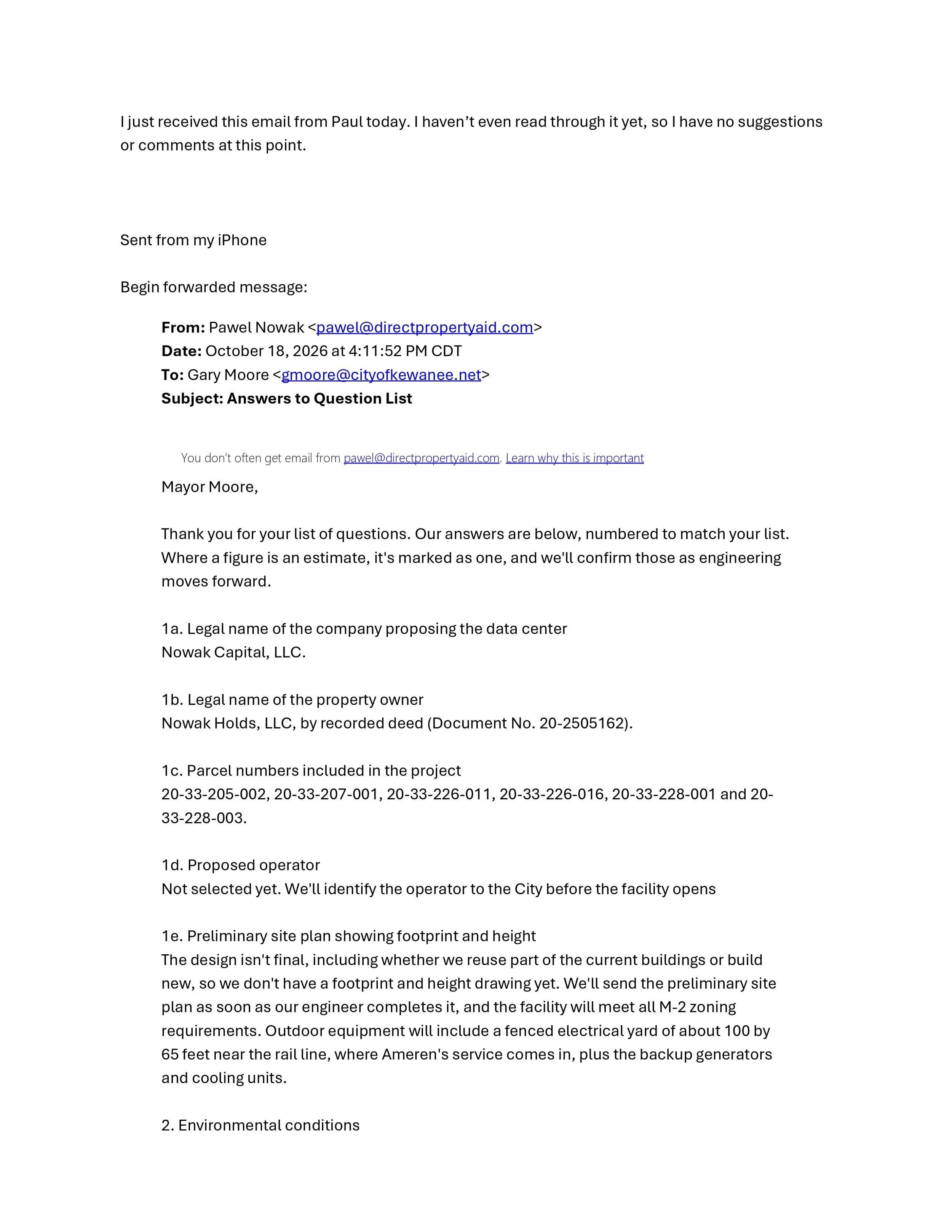
According to the correspondence, Nowak Capital, LLC, is the company proposing the data center, while Nowak Holds, LLC, owns the property. The project encompasses six parcels, and the developer has not determined whether existing buildings would be reused or new structures constructed.
Nowak indicated that the facility would operate within the city's M-2 manufacturing zoning requirements and that its electrical capacity would be capped at 10 megawatts.
At full development, the facility is expected to maintain an average electrical demand of approximately 7 to 9 megawatts, with consumption remaining relatively steady throughout the day and night.
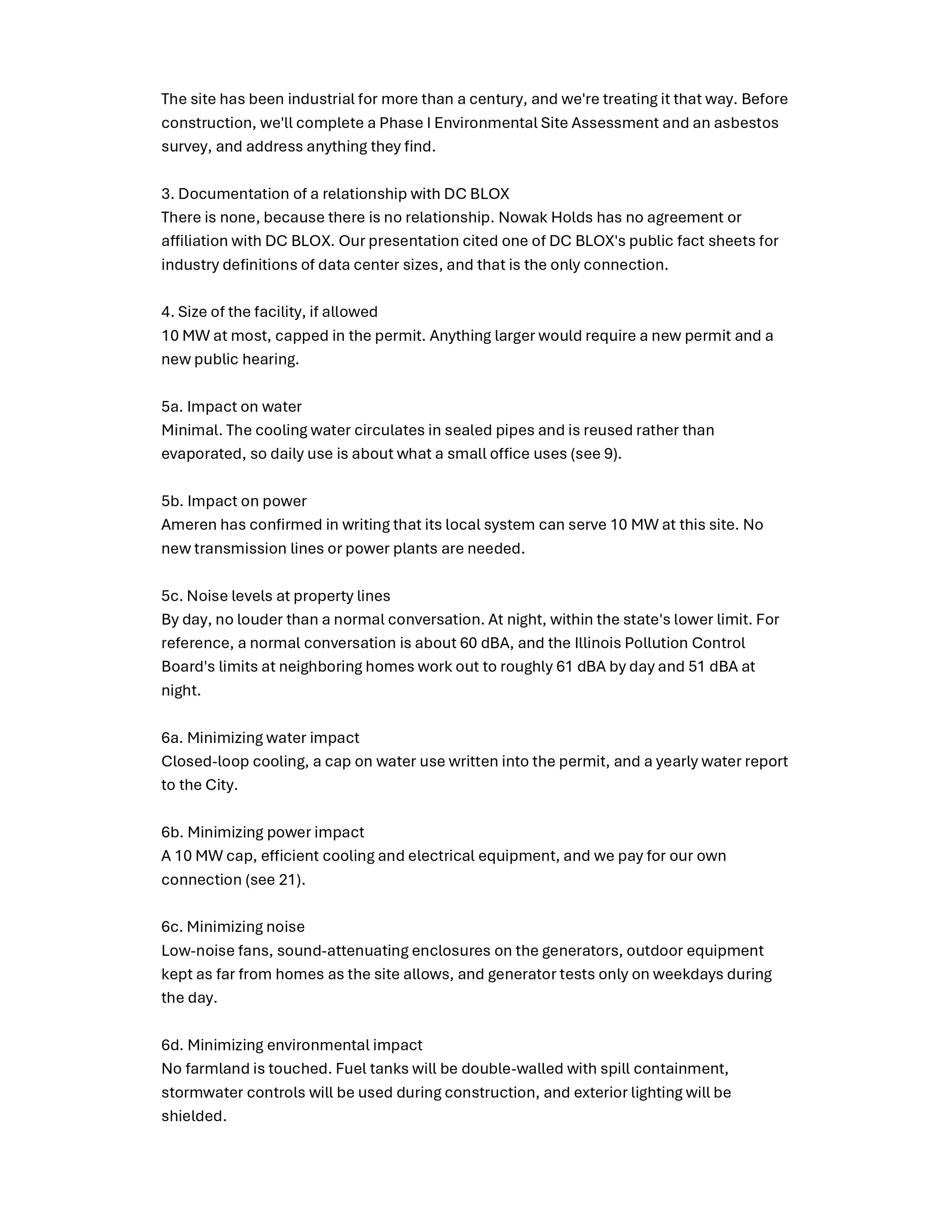
In his response, Nowak stated that Ameren had confirmed in writing that its local electrical system could accommodate the proposed 10-megawatt demand without requiring new transmission lines or power plants.
He also said the developer would pay for the infrastructure necessary to connect the facility to Ameren's system, including equipment installed on the property.
The correspondence provided to The Geneseo Current did not include Ameren's written confirmation or an independent utility assessment.
Water consumption is another consideration addressed in the proposal.
Nowak described a closed-loop cooling system that would circulate and reuse water rather than relying on evaporative cooling towers. The proposed system would use dry coolers or air-cooled chillers outside the facility, with liquid cooling equipment serving the computer racks.
According to the developer, daily water consumption would amount to a few hundred gallons, comparable to a small office building, in addition to the initial water required to fill the cooling system.
All water would come from the city's municipal supply.
Nowak proposed including a water-use limit in the project's permit and submitting annual water consumption reports to the city.
The project would also include substantial backup electrical equipment.
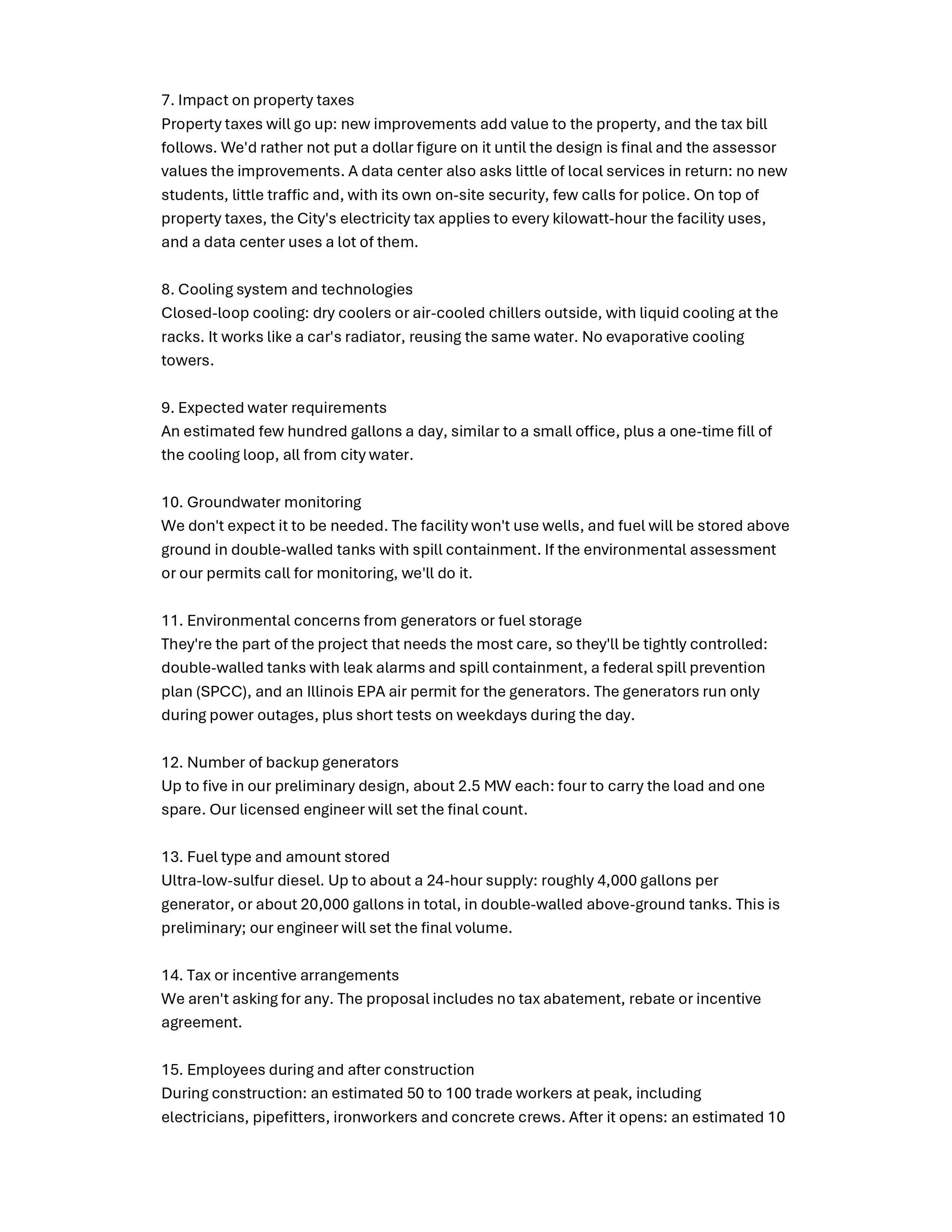
The preliminary design calls for as many as five diesel-powered generators, each capable of producing approximately 2.5 megawatts. Four generators would support the facility's electrical demand during an outage, while a fifth would serve as a spare.
The generators would require an estimated 4,000 gallons of diesel fuel each, bringing potential on-site storage to approximately 20,000 gallons.
Nowak said the fuel would be stored in double-walled above-ground tanks equipped with leak detection and spill containment systems. The generators would operate during power outages and undergo periodic testing during weekday daytime hours.
The developer also identified the need for an Illinois Environmental Protection Agency air permit and a federal spill prevention plan.
The final number of generators and amount of fuel storage have not been determined.
Noise from the facility's cooling equipment and backup generators is another issue under consideration.
In his October 18 response, Nowak referenced approximate state noise limits of 61 decibels during daytime hours and 51 decibels at night near neighboring residential properties.
He said the project would incorporate low-noise fans, sound-attenuating generator enclosures, and equipment placement intended to maximize separation from nearby homes.
An independent noise study would be conducted before construction, with additional measurements taken after the facility begins operating.
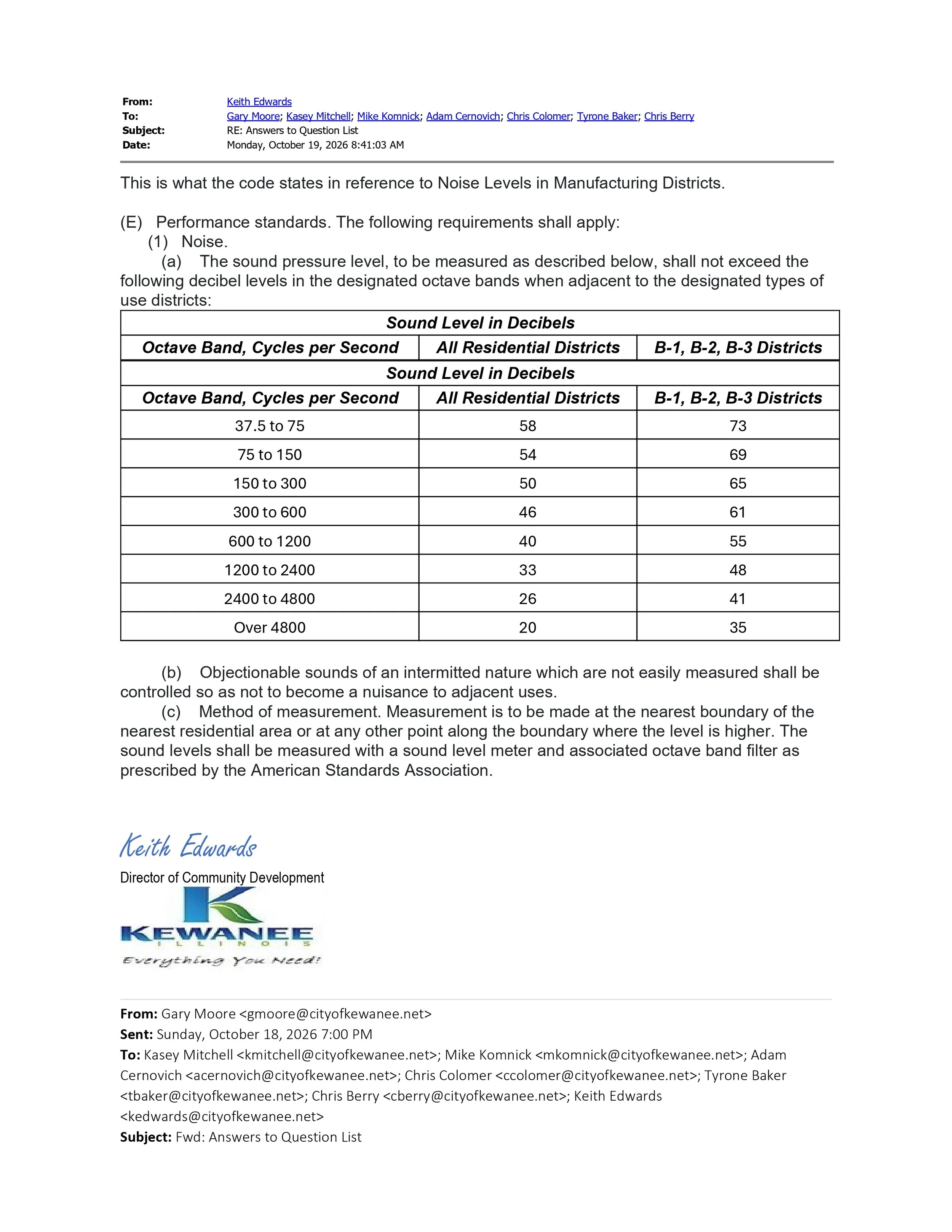
The following morning, October 19, Kewanee Director of Community Development Keith Edwards circulated the city's existing manufacturing-district noise standards to Moore and other city officials.
Those regulations establish different allowable sound levels across multiple frequency ranges, with stricter limits near residential districts.
The correspondence does not establish whether the proposed facility would meet those requirements. A detailed acoustic assessment would be necessary to evaluate the project against the city's standards.
Environmental conditions at the property also remain under review.
Nowak acknowledged the site's lengthy industrial history and said a Phase I Environmental Site Assessment and asbestos survey would be completed before construction.
The developer committed to addressing any conditions identified through those assessments.
Groundwater monitoring is not currently anticipated, although Nowak said it would be conducted if required by environmental findings or applicable permits.
The correspondence does not include completed environmental assessments or remediation plans.
Beyond the project's physical and environmental considerations, Nowak outlined potential economic benefits for the community.
He estimated that construction would employ between 50 and 100 trade workers at peak activity, including electricians, pipefitters, ironworkers and concrete crews.
Once operational, the facility would employ approximately 10 to 15 people, depending on the eventual operator. Those positions could include technicians, electricians, security personnel and operations staff.
Nowak also projected increased property tax revenue resulting from improvements to the site, although he did not provide an estimated amount.
He identified the city's electricity tax as another potential source of municipal revenue, given the facility's anticipated power consumption.
According to the developer, the project is not seeking tax abatements, rebates, or other public financial incentives. The correspondence does not include an independent estimate of the project's potential tax revenue or its overall fiscal impact on the city.
Several additional plans would be developed as the project advances. Nowak said an emergency response plan would be prepared in coordination with the Kewanee Fire Department before the facility opens. That plan would address fire protection, batteries, fuel spills, and electrical outages.
A decommissioning plan would also be submitted before operations begin, outlining the removal of generators, fuel tanks, batteries and other equipment if the facility eventually closes.
Neither plan was included in the documents released by the city.
The October 18 correspondence also clarifies a previously raised question about a possible connection between the project and DC BLOX, a data center company referenced in an earlier presentation.
Nowak stated that neither the property owner nor the proposed project has an agreement or affiliation with DC BLOX. He said the company's publicly available materials were used only to provide industry definitions and comparisons.
The newly released records also offer insight into discussions among city officials.
Nowak's October 18 email was presented as a response to a list of questions previously provided to him. In forwarding those answers to seven city officials that evening, Moore stated that he had just received the email and had not yet reviewed its contents.
Edwards responded the following morning with the city's manufacturing-district noise regulations.
Kewanee officials have previously addressed the possibility of data center development through changes to the city's zoning regulations. In August, the City Council approved an ordinance restricting data centers to M-2 manufacturing districts and requiring a special-use permit. Those requirements establish a review process for proposed facilities but do not constitute approval of the Nowak project.
For now, the developer's October 18 responses provide a more detailed picture of what could be constructed at the site while leaving several important questions unresolved.
The proposed facility's electrical demand, diesel storage, noise impacts, environmental conditions and potential tax benefits will require further documentation as the project moves through the city's review process.
No final site plan, independent noise study, completed environmental assessment or confirmed operating company was identified in the correspondence released to The Geneseo Current.
The Geneseo Current asked for all communication between the developer and the mayor from January 1 to present. This email exchange was the entirety of the FOIA response. See below. Click to enlarge images.