The Promise and the Questions: Weighing the Benefits and Concerns
Now comes the question many Henry County residents are asking:
If a data center were proposed here, what would it mean for our community?
The answer isn't simple.
Supporters see opportunities for economic growth, infrastructure investment, and long-term tax revenue. Critics raise questions about electricity demand, land use, water consumption, and whether the benefits outweigh the costs.
Like many major development projects, data centers come with both potential advantages and legitimate concerns.
The Potential Benefits
Construction Jobs
Building a large data center is a significant construction project that can take years to complete.
During construction, hundreds of workers may be involved, including electricians, plumbers, heavy equipment operators, concrete crews, steel workers, HVAC specialists, and other skilled trades. Hotels, restaurants, fuel suppliers, and other local businesses may also see increased activity while construction is underway.
Increased Property Tax Revenue
Data centers are expensive facilities, often representing hundreds of millions—or even billions—of dollars in private investment.
Depending on how a project is structured and whether tax incentives are involved, a completed facility can add substantial value to the local property tax base. Those revenues may help support schools, local governments, and other taxing districts.
The amount ultimately received depends on local agreements, assessments, and state law.
Infrastructure Improvements
Large developments often require improvements to roads, electrical infrastructure, fiber-optic networks, and utility connections.
In some cases, those improvements can benefit other businesses or future development. In others, the infrastructure is built primarily to serve the facility itself.
Economic Diversification
Henry County has long been known for its strong agricultural and manufacturing roots.
Some local leaders see technology investment as one way to diversify the economy while continuing to support existing industries.
Others question whether that diversification provides enough long-term local benefit.
Potential Concerns
Electricity Use
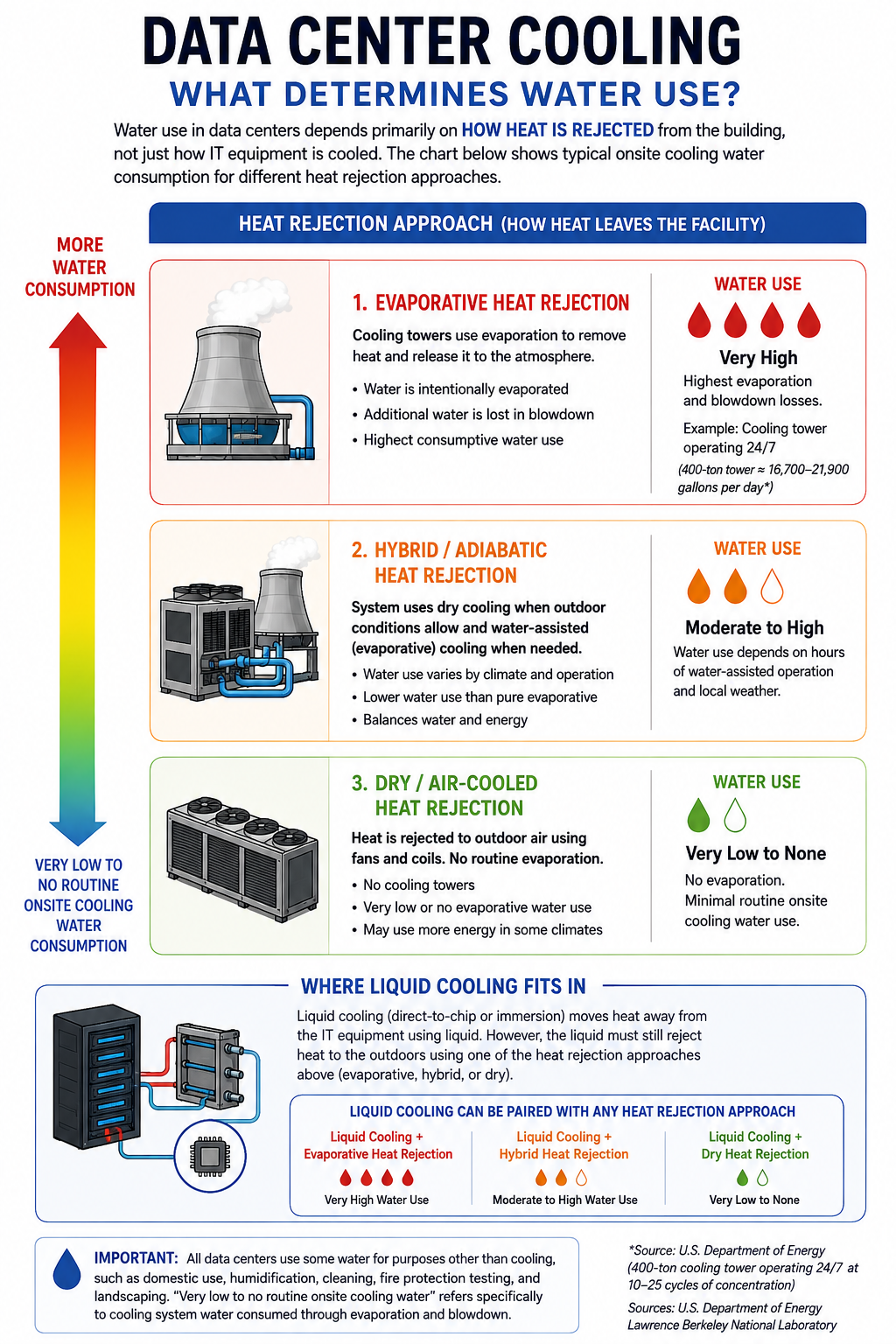
Modern data centers require large amounts of power to operate thousands of servers around the clock while also running sophisticated cooling systems.
For communities considering a project, questions often include:
Can the existing electrical grid support the additional demand?
Will new transmission lines be required?
Who pays for infrastructure upgrades?
Could additional demand affect future industrial development?
These are questions utility providers and regulators evaluate before projects move forward.
water usage
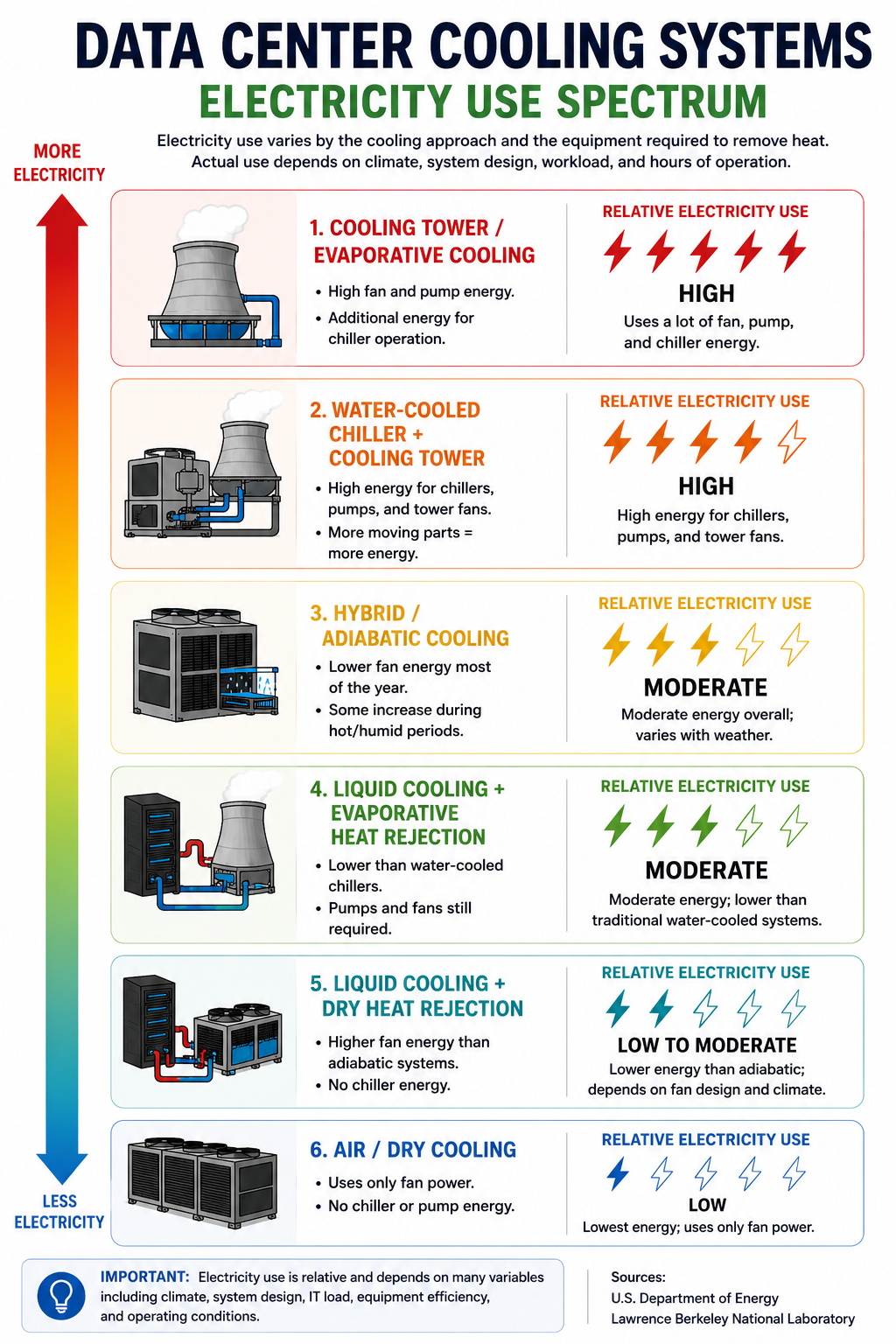
Not all data centers use the same cooling systems. Some rely heavily on air cooling, while others use water-based systems. As technology evolves, companies continue developing methods to reduce water consumption.
Because every facility is different, projected water use depends on the specific design and location of the project.
Land Use
Data centers typically require large sites with room for future expansion.
For rural communities, that raises questions about farmland preservation, neighboring property uses, building size, visual impacts, and how such developments fit within existing zoning plans.
These considerations vary widely depending on the location.
Noise
Although data centers do not generate the traffic or emissions associated with heavy manufacturing, they are not silent.
Cooling equipment, ventilation systems, and backup generators do produce noise.
Modern facilities often include sound-reduction measures, but noise remains an issue communities frequently evaluate during the planning process.
Emergency Planning
Local governments also consider emergency preparedness.
Questions may include:
How would emergency responders access the site?
What fire suppression systems are used?
How are backup fuel systems managed?
What training would local responders need?
These issues are among the reasons many communities spend months—or even years—reviewing proposals before approving construction.
A Case Study
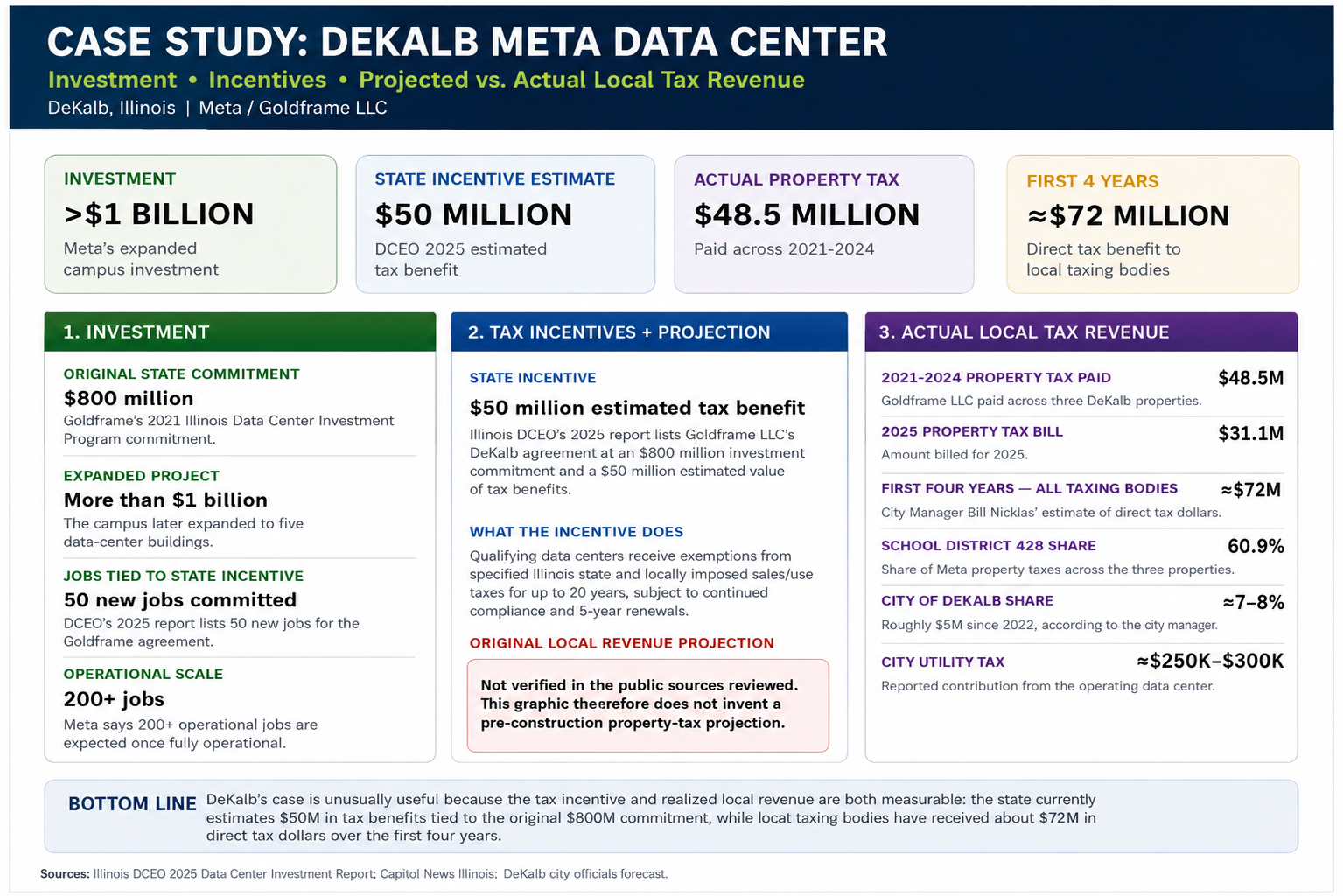
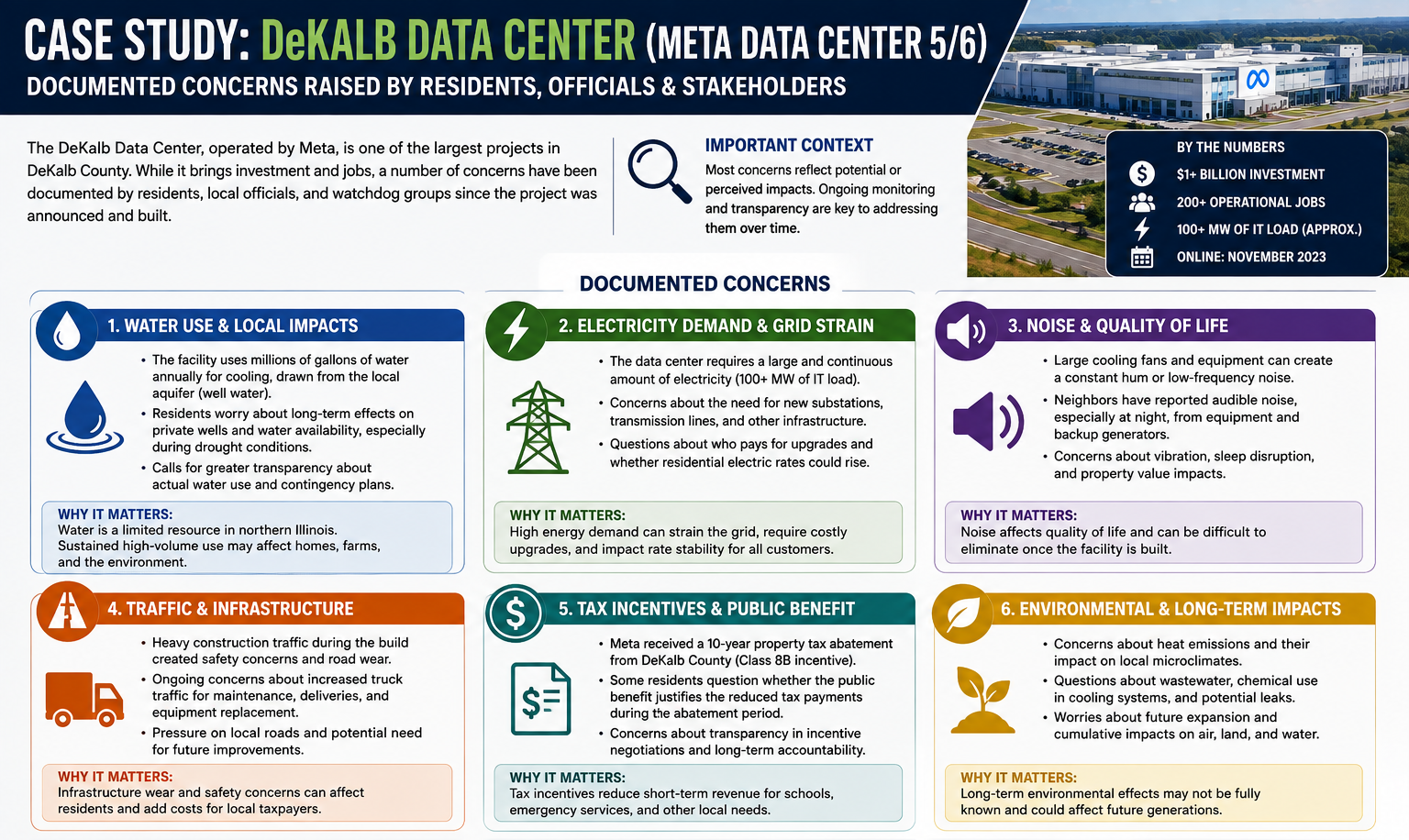
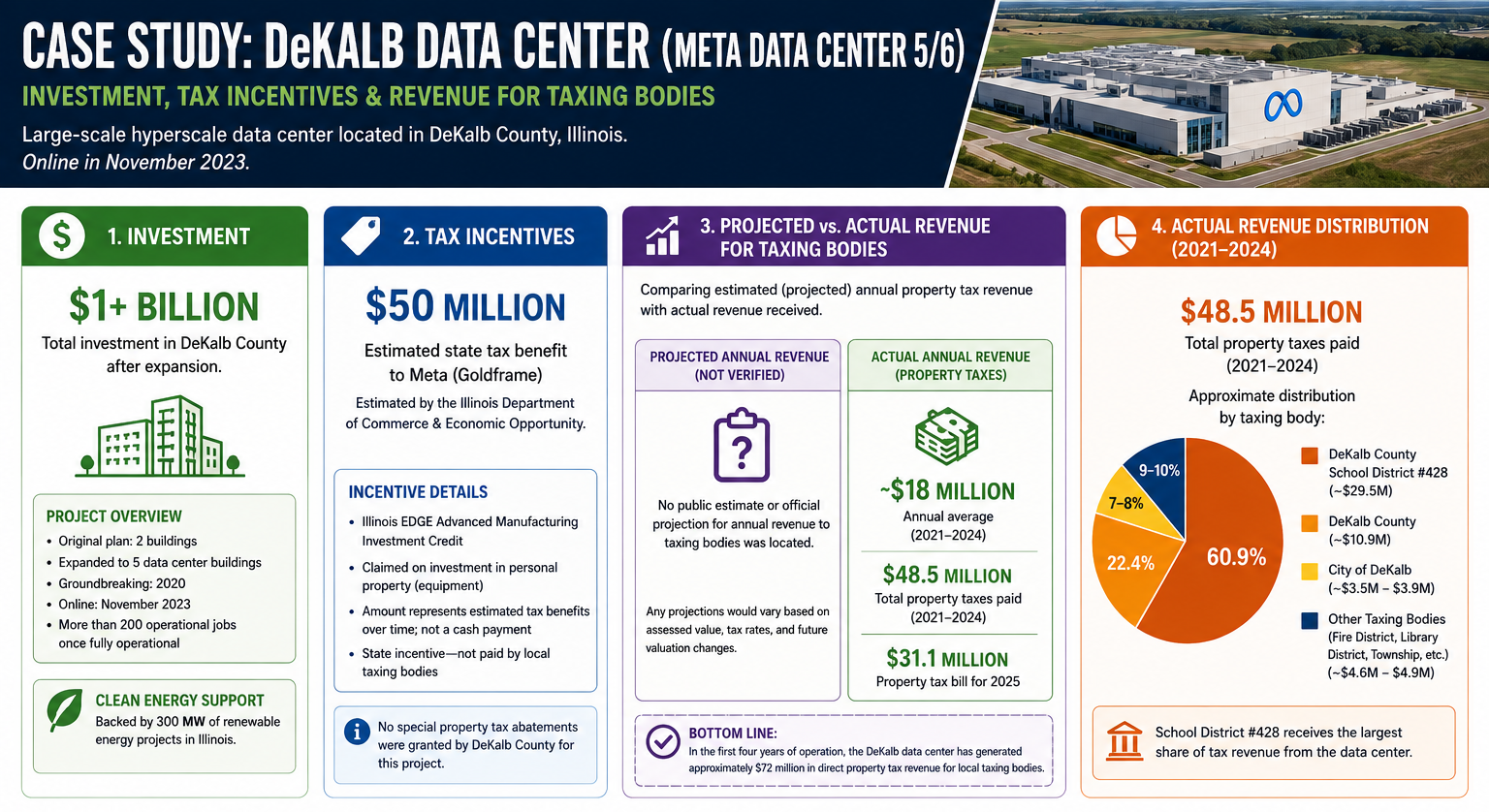
The Meta data center in DeKalb offers a real-world Illinois example for examining both the potential benefits and concerns associated with a large-scale data center after development. Rather than treating DeKalb as evidence either for or against data centers, the following case study looks at what can actually be documented: the scale of investment and employment, state tax incentives, taxes received by local taxing bodies, and concerns raised about water, electricity, noise, infrastructure and long-term impacts. Some outcomes can now be measured, while others remain questions or potential impacts that require continued monitoring.
There Isn't One Universal Answer
Across the country, some communities have welcomed data centers, believing the economic benefits outweigh the concerns.
Others have adopted stricter regulations, delayed approvals while gathering more information, or decided certain projects were not the right fit.
The differences often come down to local priorities, available infrastructure, and community goals.
Looking Ahead
Henry County has not been approached with or approved a data center project. Instead, county leaders have chosen to pause and study the issue through a temporary moratorium, giving officials time to better understand the opportunities, challenges, and potential regulations before making future decisions.
Next in the series: Henry County has already taken its first step by approving a temporary moratorium on new data centers. In Part 3, we'll explain what that moratorium means, why county officials believe it's necessary, and the questions they'll be working to answer before considering future proposals.
Sources:
U.S. Department of Energy
Data Centers and Servers (DOE)
U.S. Department of Energy / Lawrence Berkeley National Laboratory
DOE Release: 2024 Report on U.S. Data Center Energy UseU.S. Department of Energy – Powering America's AI Future: Data Center Resource Hub
DOE Data Center Resource HubCongressional Research Service Report – Data Centers and Their Energy Consumption: Frequently Asked Questions
U.S. Department of Energy – Clean Energy Resources to Meet Data Center Electricity Demand
DOE: Meeting Data Center Electricity DemandIllinois Department of Commerce & Economic Opportunity (DCEO)
JCE Co-op – "Powering Growth, Keeping Members First," HI-LINES, August 2026.