by Sarah DeMaranville
Geneseo Current
For years, Facebook has been an important marketing tool for small businesses, allowing owners to share website links, promote products, announce events, and direct customers to online stores.
Now, Meta, Facebook's parent company, is testing restrictions that could change how businesses use the platform to reach customers.
Under the test, some Facebook business Pages are being limited to just two posts or comments containing external website links per month unless they subscribe to a paid service.
For business owners in Geneseo and Henry County, the change could have significant implications. Many local businesses rely heavily on Facebook to announce sales, promote events, share menus, and direct customers to their websites.
The restriction is not yet universal. Some business Pages are encountering the new limits, while others continue operating normally. Meta has not announced when, or whether, the restrictions will apply to all business Pages.
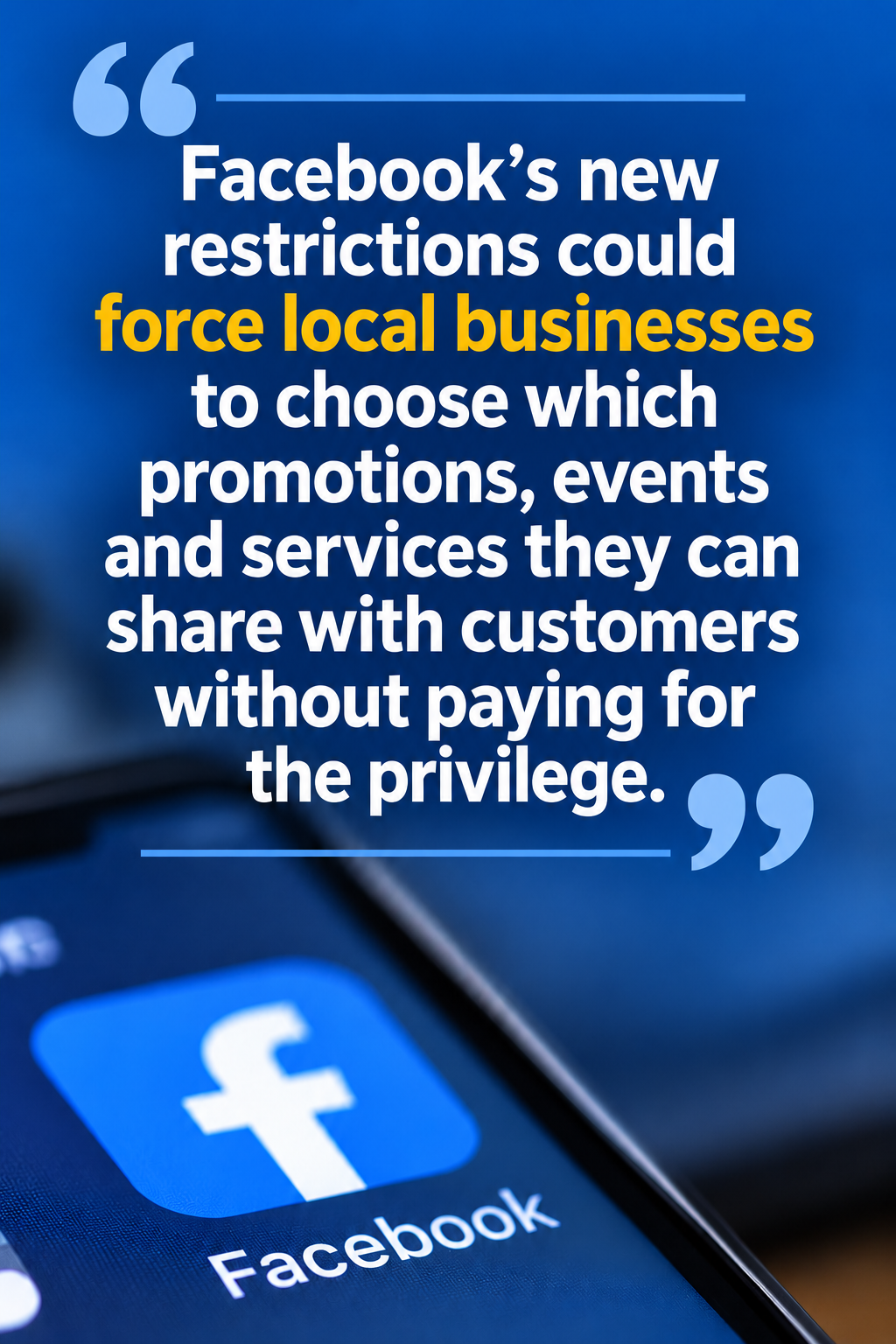
Local business owners are already reporting that they are encountering the new restrictions on their Facebook Pages, indicating that the changes are beginning to affect businesses in the Geneseo area. While the limits have not been applied to every Page, their appearance locally means business owners should begin reviewing reliance on Facebook links to promote their products and services.
For a local retailer, the limit could mean choosing between sharing a link to an online store, promoting a special sale or directing customers to an event registration page. Restaurants and service providers that regularly link to menus, appointment scheduling systems, or product information could face similar challenges.
The change also affects a familiar Facebook practice: placing website links in the comments rather than in the original post.
For Pages included in the test, links in comments generally count toward the same monthly allowance. Moving a link to the first comment does not necessarily avoid the restriction.
There are exceptions. Paid advertisements containing links are not subject to the same restriction, and links to certain Meta-owned platforms, including Instagram and WhatsApp, generally do not count toward the monthly limit. Personal profiles and Facebook Groups are not part of the current business Page test.
News and media organizations are also exempt from the restrictions under the current test, allowing qualifying publishers to continue sharing links to their articles and websites without the same monthly limit. That distinction is particularly important for local news outlets like the Geneseo Current that rely on Facebook to distribute reporting and direct readers to their websites.
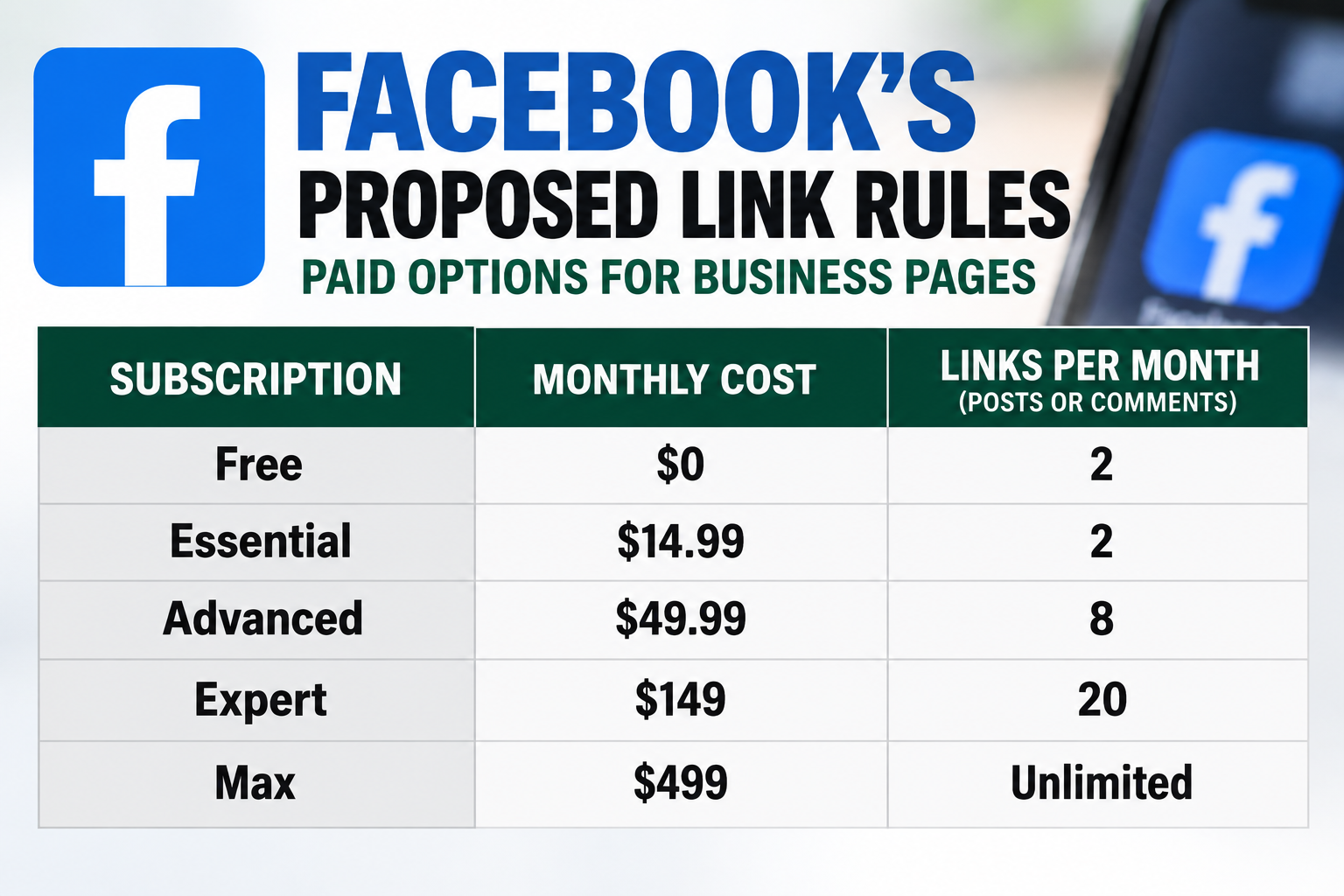
Businesses can continue publishing photographs, videos, announcements and other content without external links.
For local business owners, the first step is to check whether their Facebook Page has received a notification about link restrictions before making changes to their marketing plans.
Businesses affected by the restriction may need to become more selective about which website links they share, reserving them for important promotions, registrations or sales opportunities.
They can also provide more information directly in their Facebook posts, including event dates, hours, locations and contact information, rather than relying on customers to visit another website.
Maintaining an updated business website, Google Business Profile and customer email list can also help reduce dependence on Facebook as a primary source of customer traffic.
The changes raise a broader question about the increasing costs of digital marketing for small businesses.
Facebook Pages have traditionally offered businesses a free way to maintain an online presence and communicate with customers. While businesses have long paid for advertising to reach larger audiences, the new test introduces a potential cost for a basic function: directing followers to an outside website.
Meta's testing does not mean Facebook is eliminating free business posts or requiring every business to purchase a subscription. However, it does mean some businesses may have fewer opportunities to direct customers away from the platform without paying.
As the test continues, local businesses should monitor their Page notifications, review their marketing strategies and avoid relying exclusively on Facebook to reach customers.
The larger lesson is that businesses do not control the rules of social media platforms, and those rules can change with little notice.
For Geneseo and Henry County business owners, maintaining direct relationships with customers through websites, email newsletters and other communication channels may become increasingly important.