By Claudia Loucks
The Geneseo Current
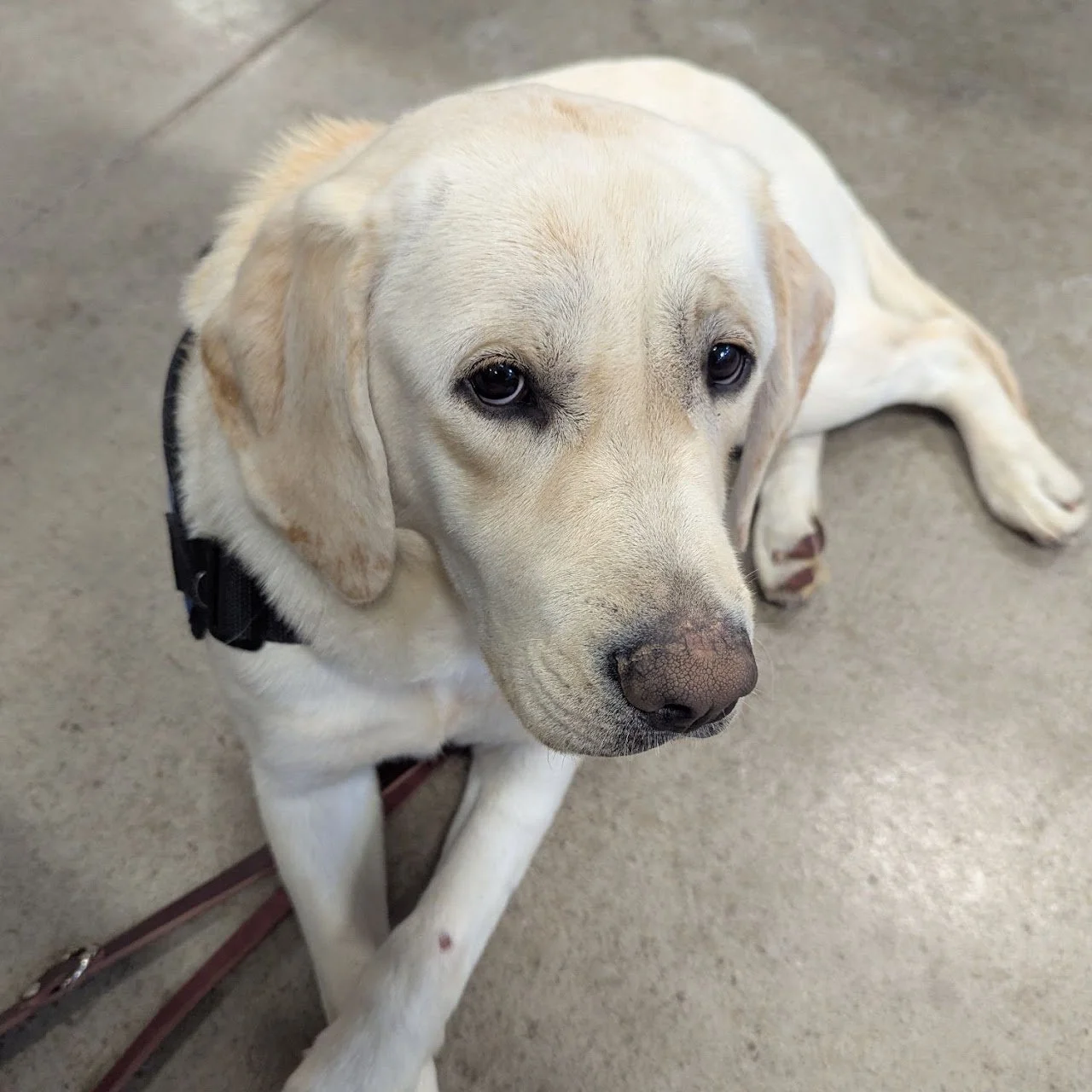
Geneseo High School Principal Tom Ryerson brings someone with him to school each day. Her name is Rika, a yellow Labrador Retriever, who will be celebrating her second birthday on Nov. 30.
When Mr. Ryerson was asked why a therapy dog at GHS, he replied, “The goal of bringing a therapy dog to GHS was to provide another way to support our students’ social and emotional needs. High school can be stressful, and sometimes spending a few minutes with a dog can help students relax, feel more comfortable, and reset during a busy day.”
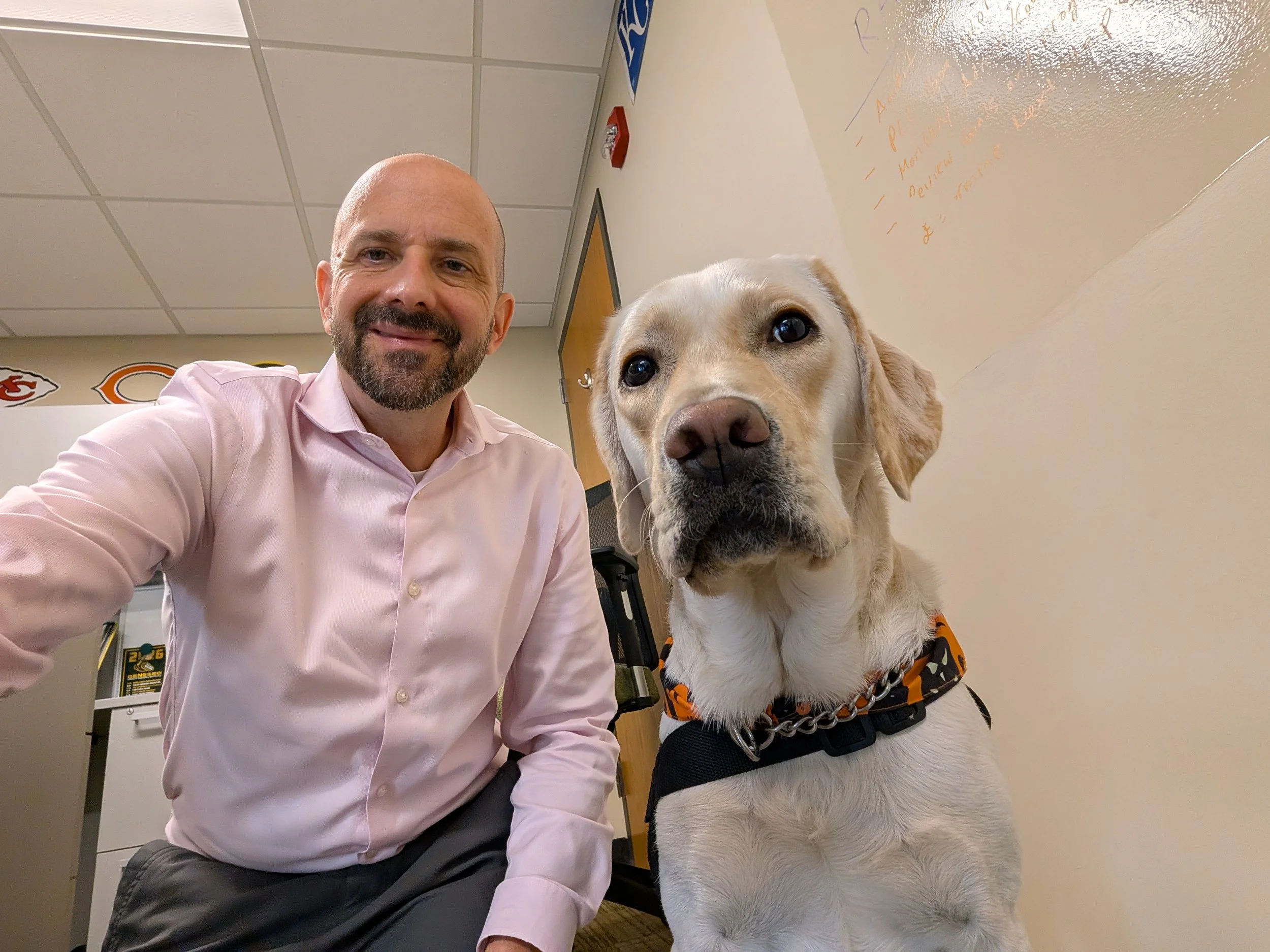
Geneseo High School Principal Tom Ryerson with therapy dog Rika. Contributed photo.
He said as school principal he always is looking for ways to make GHS a place where students feel connected, supported, and comfortable asking for help.
“Rika is one more way we can build those relationships.”
Her primary role is at GHS, where she works alongside Ryerson as a certified therapy dog, and having her at school provides students and staff with an opportunity to interact with her throughout the school day.
Even though she is with the principal at school, Rika is “on call” for anyone who needs her.
She does have scheduled visits to some classrooms during certain times of the school day, as well as set times that she meets with individual students and the school social worker.
“These scheduled times are all on my calendar and I make sure she attends those consistently for our students,” Ryerson said.
“Labs are known for being friendly, social, and eager to work with people, which makes them a great fit for a school therapy dog,” he added.
Rika’s breeder recognized her potential and provided her initial training before donating her to CARES (Canine Assistance Rehabilitation Education Services), Inc., in Concordia, Kansas, for specialized training.
“We then completed a public access test to become a certified therapy dog team,” Ryerson said. “Her training prepared her to remain calm, respond appropriately to people and situations, and feel comfortable in different environments. Those skills are especially important in a busy high school!”
“I think one of the most important things we do as educators is to build relationships with students. We spend a lot of time focused on academics, grades, attendance, and preparing students for life after high school, and all of those things matter. But we also need to recognize that students are people who sometimes experience stress, anxiety and difficult days.”
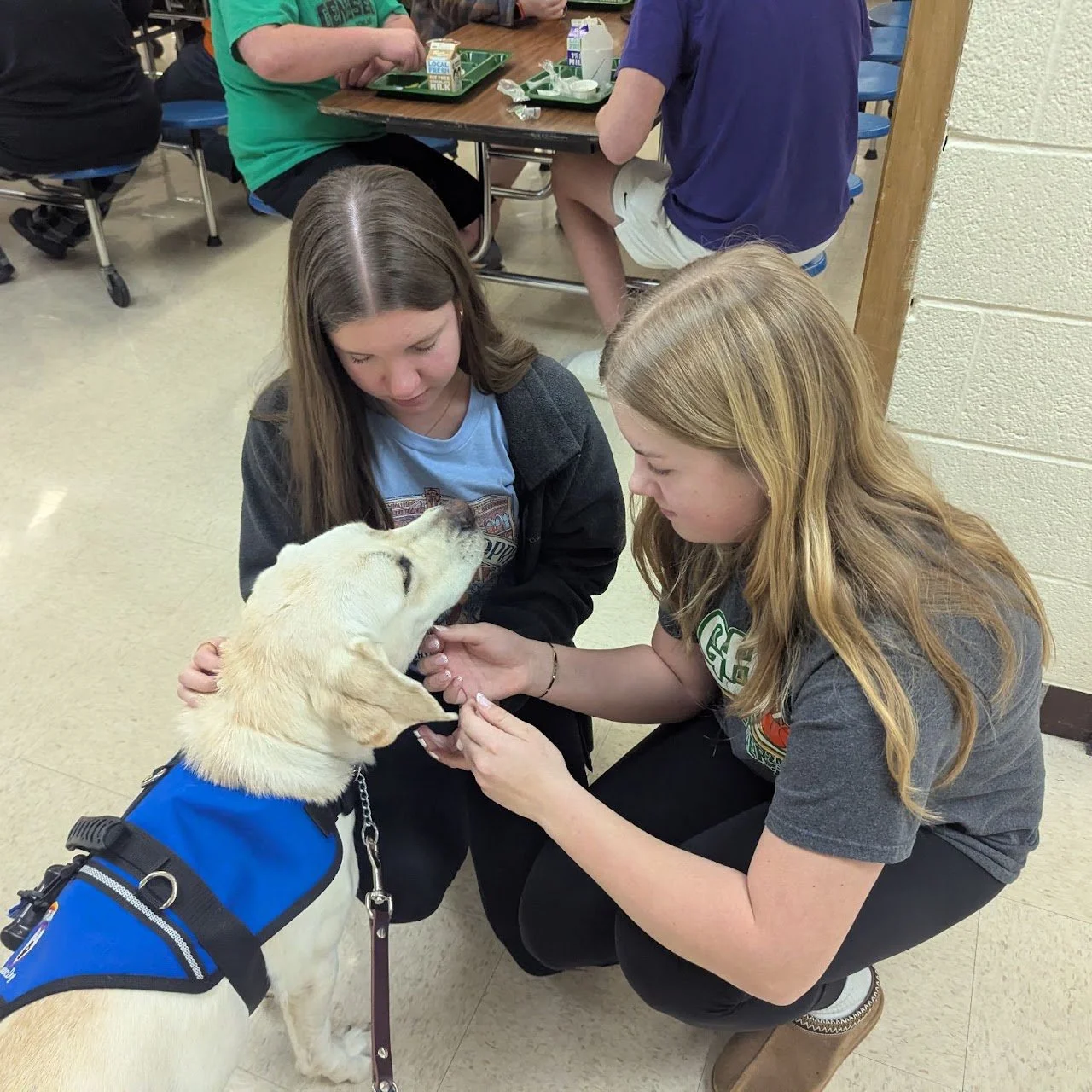
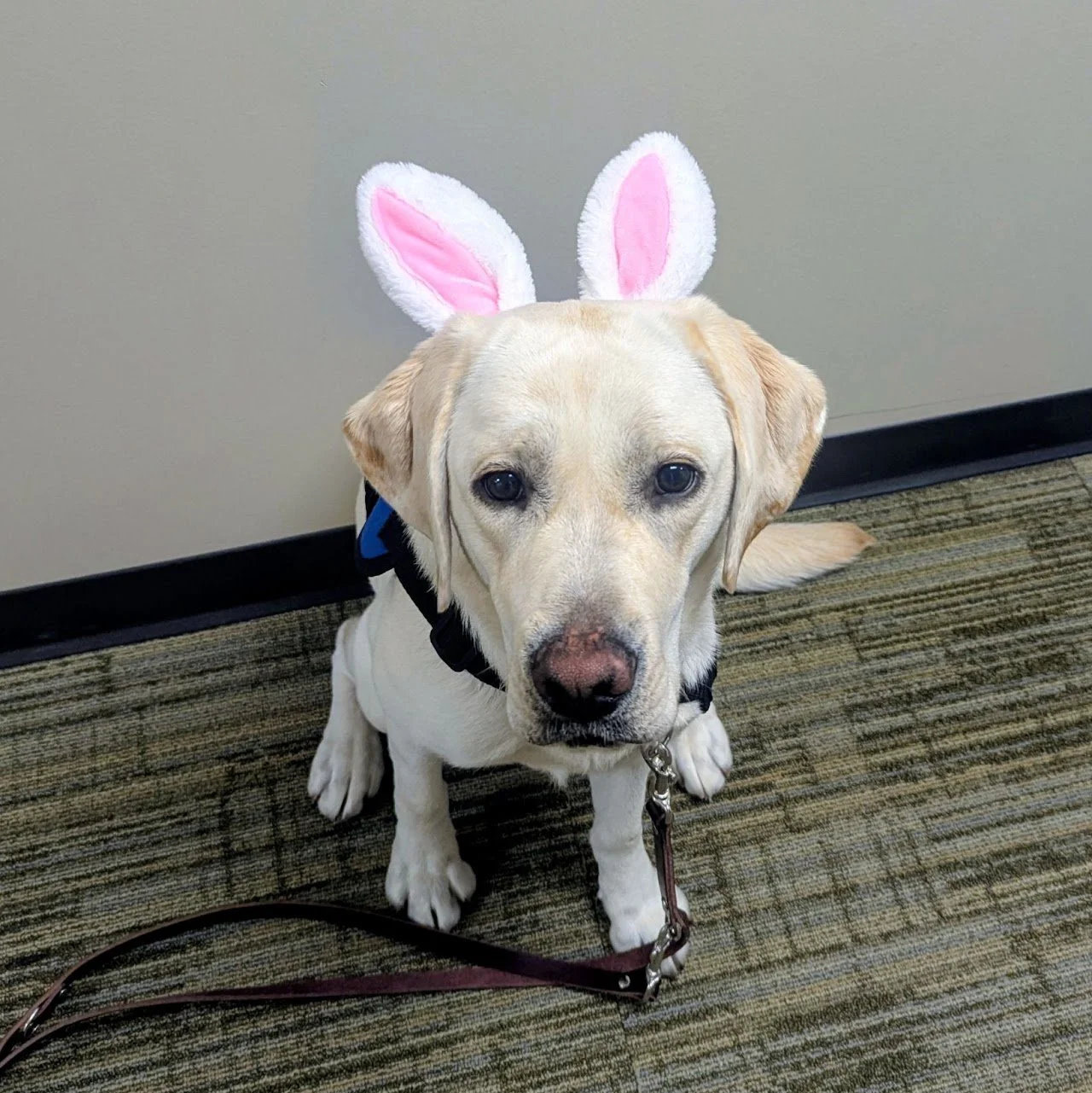
In looking for additional ways to help students feel connected to school and supported by the adults around them, Ryerson said a therapy dog can provide comfort without requiring a student to explain what’s wrong or even say anything at all.
“Sometimes, a student just needs a few minutes to decompress, smile, or take a break from whatever is weighing on them. Rika can help create that opportunity.”
“I also think there’s something special about the way a dog interacts with people. Rika doesn’t care about a student’s grades, social status, or what kind of day they’re having. She is simply happy to see them. That unconditional acceptance and love can be a powerful thing, especially during the high school years.”
The principal shared two experiences when he was aware of just how valuable Rika is at school.
He described a situation when a student was dealing with some anxiety due to circumstances in their life.
“The student was crying and upset, and Rika was able to come alongside them, lie down, and let the student pet her. She even gave the student one of her signature ‘hugs,’ where she puts her front paws on their lap and rests her head on them. It was a simple moment, but Rika provided comfort when the student really needed it.”
Another example happened during a band competition hosted at GHS when a student from another school was having a difficult time after performing and was visibly upset.
Rika was able to approach the student and provide an opportunity for them to pet her and take a moment to calm down.
“It was a great reminder that the impact of a therapy dog can reach beyond our own students,” he said.
“Both experiences show how Rika can provide comfort without saying a word. Sometimes, just having a calm, friendly presence nearby can make a difficult moment a little easier.”