
by Sarah DeMaranville
Geneseo Current
Charging a phone on the couch or plugging in a cordless tool with the wrong charger may seem harmless. This year’s Fire Prevention Week highlights how everyday charging habits can help prevent fires.
Observed October 4–10, Fire Prevention Week 2026 carries the theme “Charge into Fire Safety: Safe Charging Is a Superpower.” The National Fire Protection Association’s campaign focuses on safely charging devices powered by rechargeable lithium-ion batteries.
These batteries power many phones, laptops, tablets, power tools, e-bikes, and scooters. They store substantial energy in a small space, but damage, overheating, and improper charging can create fire hazards.
Why battery safety matters
According to the U.S. Fire Administration, lithium-ion batteries can release flammable gases when exposed to high temperatures or physical damage. A failing battery can experience thermal runaway, a chain reaction of uncontrolled heating that can lead to a fire or explosion.
Battery fires can also reignite after appearing to be extinguished, creating additional challenges for firefighters.
Use the right charger and charging surface
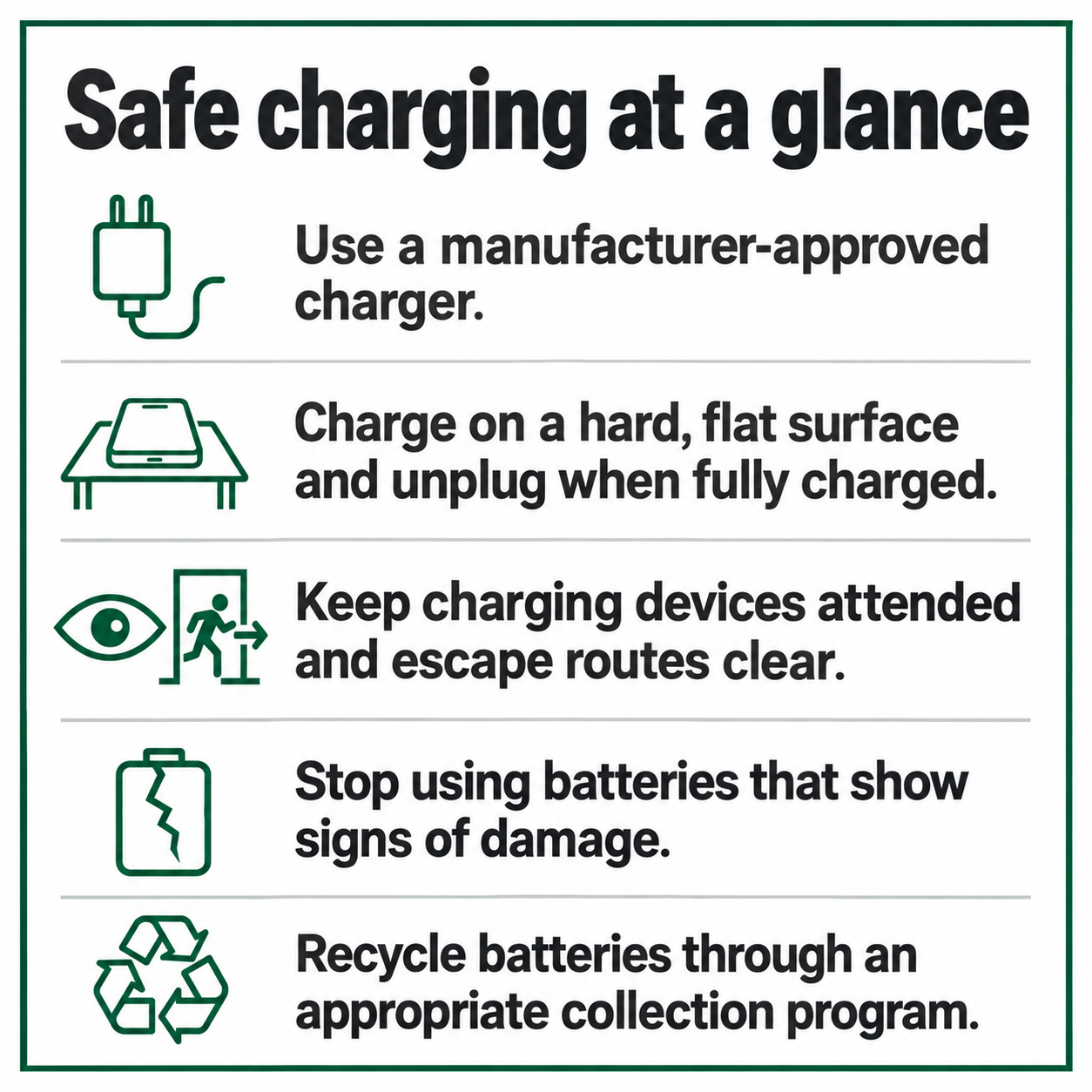
Guidance for this year’s campaign recommends using the cord and charger supplied with a device or a replacement approved by its manufacturer. An incompatible charger can damage the battery and increase the risk of overheating.
Devices should charge on a hard, flat surface, such as a desk or table. Beds, couches, pillows, and blankets can trap heat around a charging device.
NFPA’s campaign materials also advise unplugging devices when they are fully charged. The National Park Service recommends keeping charging devices attended and looking for recognized safety certification marks, such as UL, ETL, or CSA, when purchasing battery-powered products.
For larger devices, including e-bikes and scooters, keep charging equipment away from doors, hallways, and other escape routes. A battery fire should never stand between someone and an exit.
Watch for warning signs
Stop using a battery or device if it develops an unusual odor, changes shape or color, leaks, becomes excessively hot, or makes strange noises. Swelling, popping, and hissing can indicate a damaged or failing battery.
If a device begins smoking or catches fire, move away, get outside, and call 911. The U.S. Fire Administration advises residents not to attempt to extinguish a lithium-ion battery fire themselves.
Temperature matters, too. The U.S. Fire Administration advises storing batteries at room temperature when possible and avoiding charging below 32° F or above 105° F. Batteries should also be kept out of direct sunlight and hot vehicles. Follow the manufacturer’s instructions for the specific device.
Keep batteries out of the trash
Lithium-ion batteries should not go into household trash or ordinary recycling bins, where they can ignite.
The U.S. Fire Administration recommends using an appropriate battery collection location. For damaged batteries, seek handling and disposal instructions from the manufacturer and confirm that a collection facility accepts them before bringing them in. Battery-pack repairs should be performed only by a certified repair facility.