
Henry County Farm Bureau is thrilled to announce an exclusive travel opportunity for its members: the Shades of Ireland Tour, scheduled for July 25 – August 3, 2026.
Read moreGriefShare Seminar is Nov. 22

By Claudia Loucks
Geneseo Current
Kippy Breeden, left, and Barbara Leonard, are planning for the upcoming GriefShare Seminar to be held Saturday, Nov. 22, at the South Campus building of Kingswood Church in Geneseo. Breeden will lead the seminar from 9 to 11 a.m. The program is free and open to anyone in the community who is grieving the loss of a loved one. An RSVP is appreciated and can be made at https://griefshare.org/events/279800 or by calling 309-944-2793. Contributed Photo
The 45th Annual Madrigal Dinner
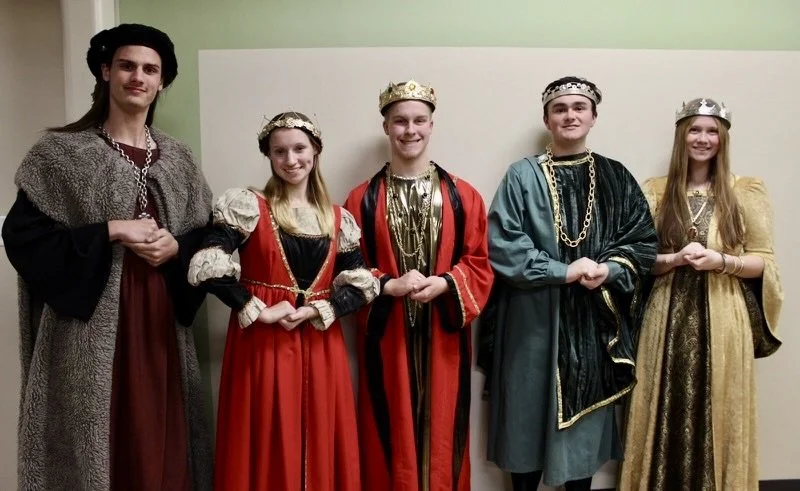
Madrigal royalty from left to right: Perry Farley Lord Chamberlain, Nina Schmedding Queen, Landry Possin King, Cy Sammons Prince, & Ella Brooks Princess
Noble Lords and Ladies, the Geneseo High School Music Department heartily invites you to the 45th annual Madrigal Dinner Concert, presented in the Great Hall of Geneseo High School.
Read moreGirls Scouts Annual Rake 'n Run
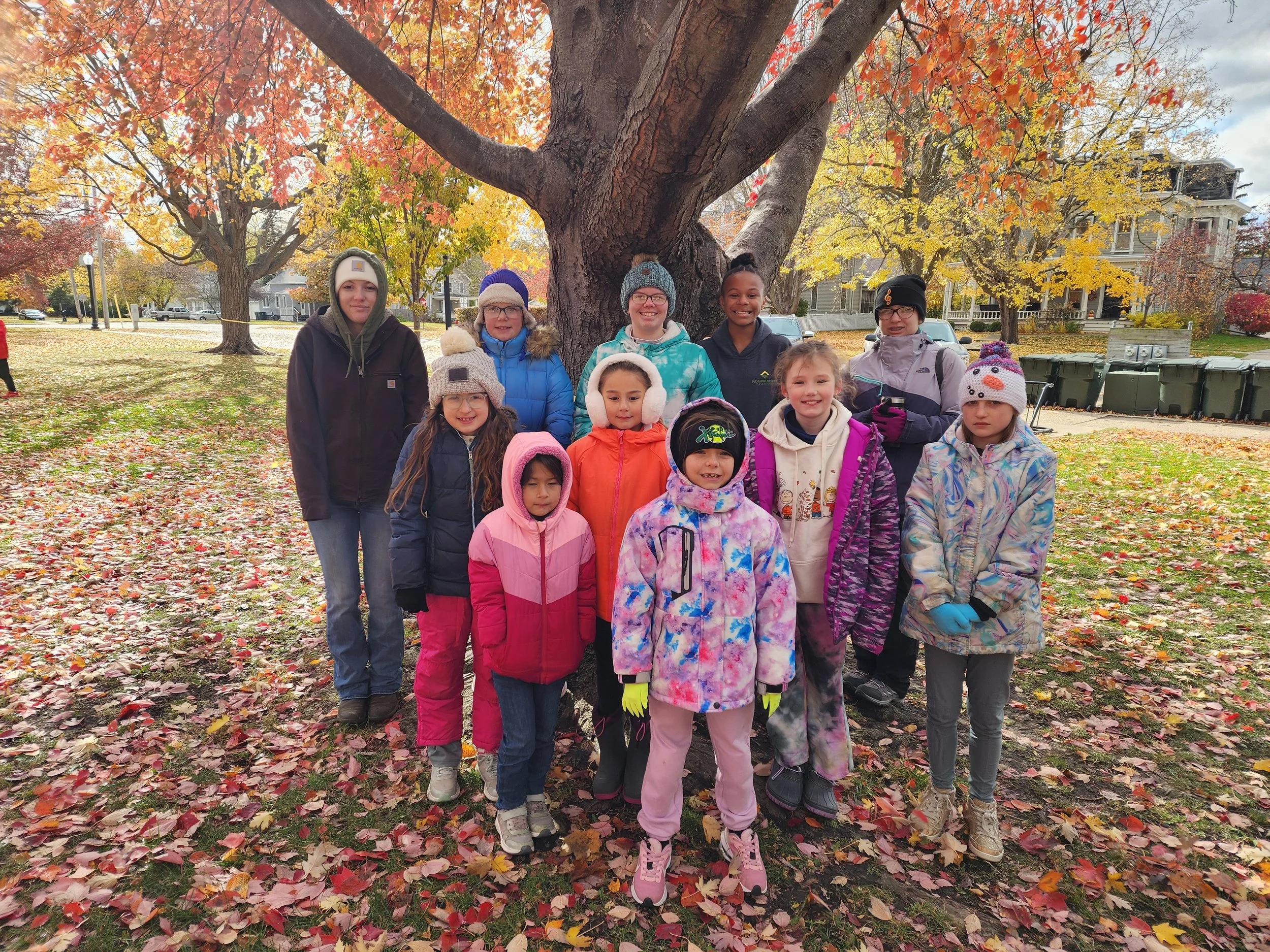
On Sunday, November 9, 2025, Geneseo Girl Scouts gathered for their annual Rake 'n Run event. Eleven Girl Scouts, their leaders and families visited local residents to rake and bag Fall leaves. The girls braved very cold temperatures to give back to their community. This project was supported by funds from the Geneseo Community Chest and leaf pickup costs were provided free of charge by the City of Geneseo. Pictured are Girl Scouts:
Lucy Montgomery, Brylee Fuller, Michelle Benhart, Madeline Mosher, Charlie Hessenkemper, Audrey Pogue, Brooklyn Bos, Amelia Runty, Violet Runty, Zania Sefton, Allison Bos and Anna Kamprath (not pictured). Contributed Photo

Operation Christmas Child 2025 Packing Parties Nov. 14-15
By Claudia Loucks
Geneseo Current
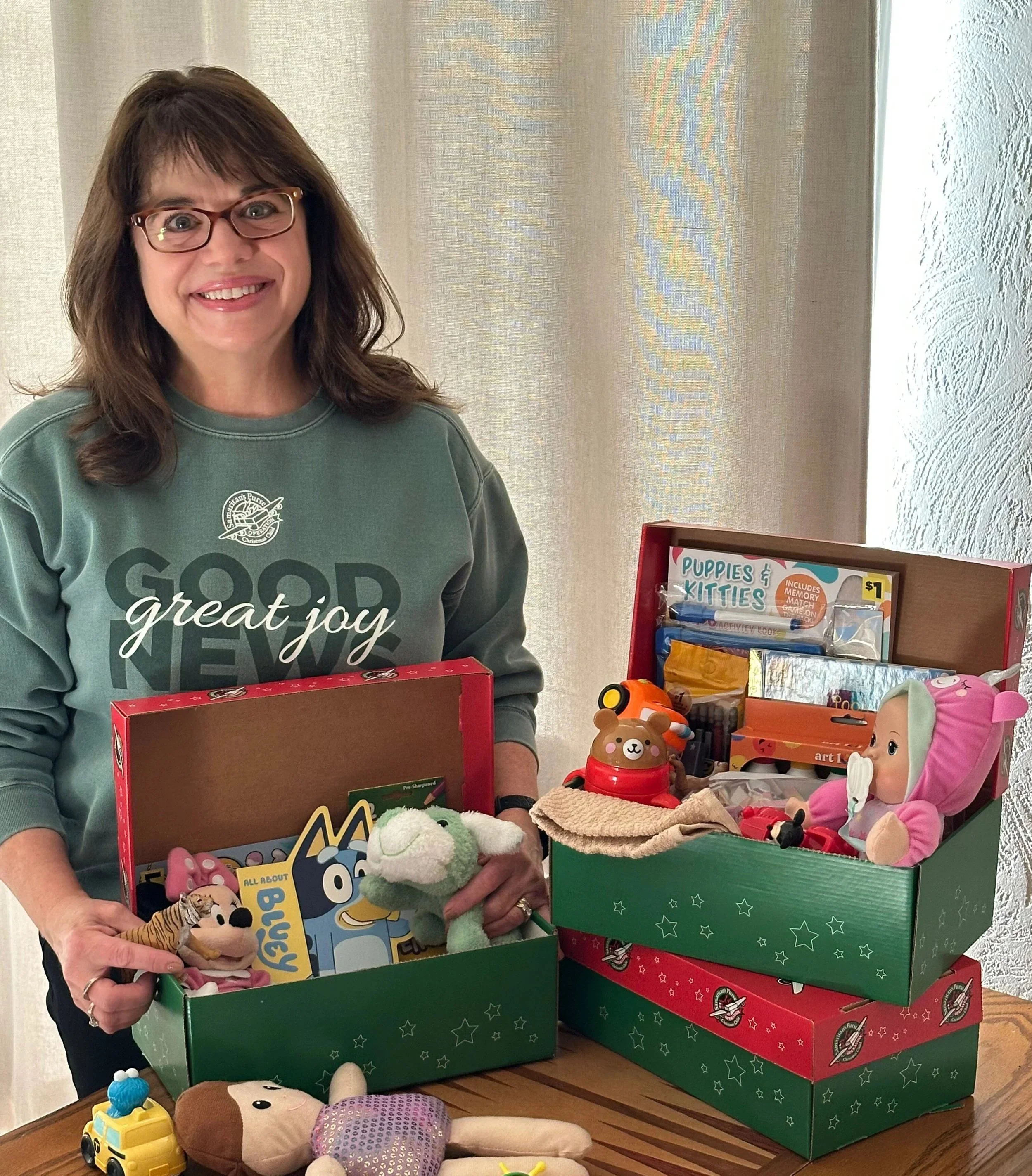
Shelly Emerick, Operation Christmas Child Church Relations Team Member, said there is still a need for additional shoeboxes to be filled, and A need for volunteers to help at the Shoebox Packing Parties planned for Nov. 14-15 at the South Campus of Kingswood Church. Photo by Claudia Loucks
The Packing Party dates are set and the Shoebox Drop-Off dates are in place, but there are still many empty shoeboxes to be filled for the Operation Christmas Child outreach.
Team members are aware that the Christmas season is drawing near and there is a concern of making sure the OCC shoeboxes get to disadvantaged children worldwide.
Empty shoeboxes are available from Shelly Emerick, OCC church-relations team member, by contacting her at 309-945-3700. Anyone interested in filling a shoebox may also use an empty shoebox of their own.
SHOEBOX PACKING PARTY TIMES:
Shoebox packing parties will be held from 4 to 8 p.m. on Friday, Nov. 14, and from 9 a.m. to 2 p.m. on Saturday, Nov. 15, at Kingswood Church, south campus, 224 North State St., Geneseo. Volunteers who help with packing can come and go as their schedules allow.
SHOEBOX DROP-OFF DATES AT GENESEO EVANGELICAL FREE CHURCH, 914 NORTH CHICAGO ST., GENESEO
-Monday, Nov. 17, Tuesday, Nov. 18, – 2 to 4 p.m.
-Wednesday, Nov. 19, – 4 to 6 p.m.
-Thursday, Nov. 20, and Friday, Nov. 21, - 2 to 4 p.m.
-Saturday, Nov. 22, - 10 a.m. to noon.
-Sunday, Nov. 23, - 2 to 4 p.m.
-Monday, Nov. 24, - 9 to 11 a.m.
For those not able to attend a packing party, but who still want to help, she said, “Packing a shoebox can be done by anyone and the first step is to decide to pack for a boy or a girl in age groups 2-4, 5-9 or 10-14. It’s best to begin with a “wow” item such as a doll, stuffed animal, deflated soccer ball with a pump, toy cars or trucks. It is important to include school supplies and hygiene items such as a washcloth, comb, brush, toothbrush - but toothpaste is not allowed.”
Clothing or shoes also can be included in the shoebox as well as fun toys, but no food, candy, liquids or soap.
Each shoebox contains a copy of “The Greatest Gift” booklet, a storybook that shares the message of salvation, written in the language of the child receiving the shoebox.
Items that cannot be included in the shoeboxes are anything glass, liquid, camouflage or war-related, or any type of food.
Emerick said there also is still a need for monetary donations to help pay the $10 cost of shipping each shoebox. Donations can be mailed or dropped off at the office of Emerick Pest Control, 361 JF Edwards Dr., Geneseo, IL 61254. Donations also can be left or mailed to Kingswood Church, 302 North State St., Geneseo, IL 61254.

Operation Christmas Child is an outreach of Samaritan Purse, an international Christian relief and evangelism organization. The non-profit organization specializes in meeting the critical needs of victims of war, poverty, disease and natural disaster, in order to demonstrate God’s love and share the Gospel.
The ministry, which is in its 32nd year, uses the shoebox as a tool to open the door for the Gospel and make disciples of all tribes, tongues and nations. OCC started in the United Kingdom in 1990 as an outreach to Romanian Orphans and OCC began in North America in 1993.
Nobuntu, Female A Capella Group, to Perform Nov. 13 at Geneseo Library
By Claudia Loucks
Geneseo Current
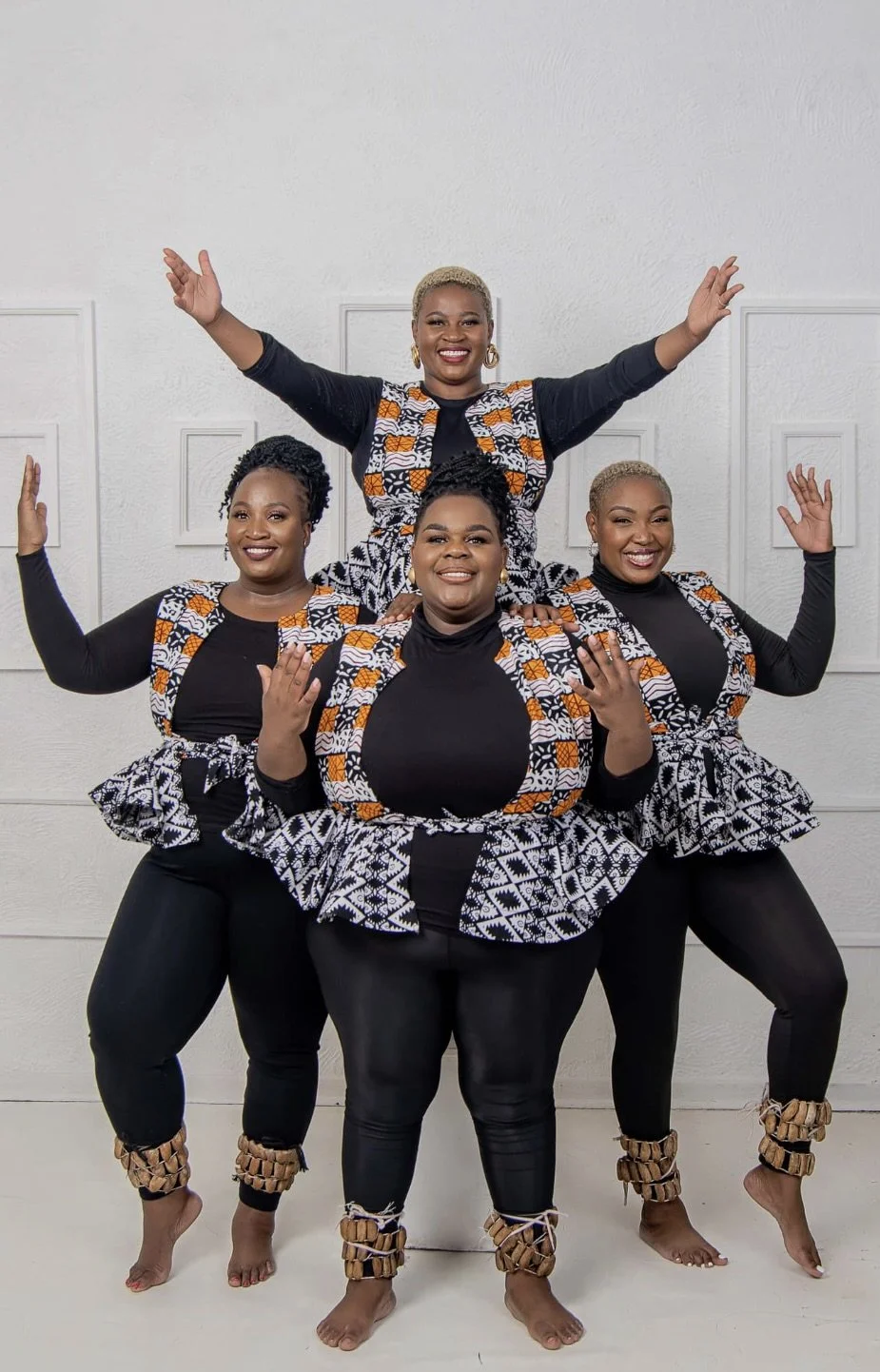
Nobuntu, a female A Capella ensemble from Zimbabwe, will perform at 2 p.m. on Thursday, Nov. 13, at the Geneseo Public Library.
The group has toured extensively across Africa, Europe, and North America. They are dedicated to community work, including the Nobuntu Pad Bank, which provides sanitary products to young women in the arts.
Information received from the library stated: The group’s name, Nobuntu, reflects an African concept of humility, love, unity and family from a woman’s perspective, and their mission is rooted in the belief that music can transcend racial, tribal, religious, gender and economic barriers. They have received international acclaim for their inventive performances that range from traditional Zimbabwean songs and Afro Jazz to Gospel. In addition to their exciting uplifting concerts, which feature their pure voices along with traditional dance and percussion, they also offer highly-impactful outreach activities…“Their 45-minuite performance and artist talk will enlighten you with their vibrant celebration of heritage. They are a testament to the power of music as a force for change.”
The program at the Geneseo Library is made possible by a grant from the Quad City Arts Council.
Tony Simon Remembers His Honor Flight
By Claudia Loucks
Geneseo Current
Those of us fortunate enough to know Roy (Tony) Simon know for certain that he is a dedicated patriotic guy. As I thought about what sort of story to write in observance of 2025 Veterans Day, I realized how little I know about the Honor Flights that transport our military veterans on one-day trips to Washington, D.C. to visit their memorials, and I chose to interview Tony Simon to learn more.
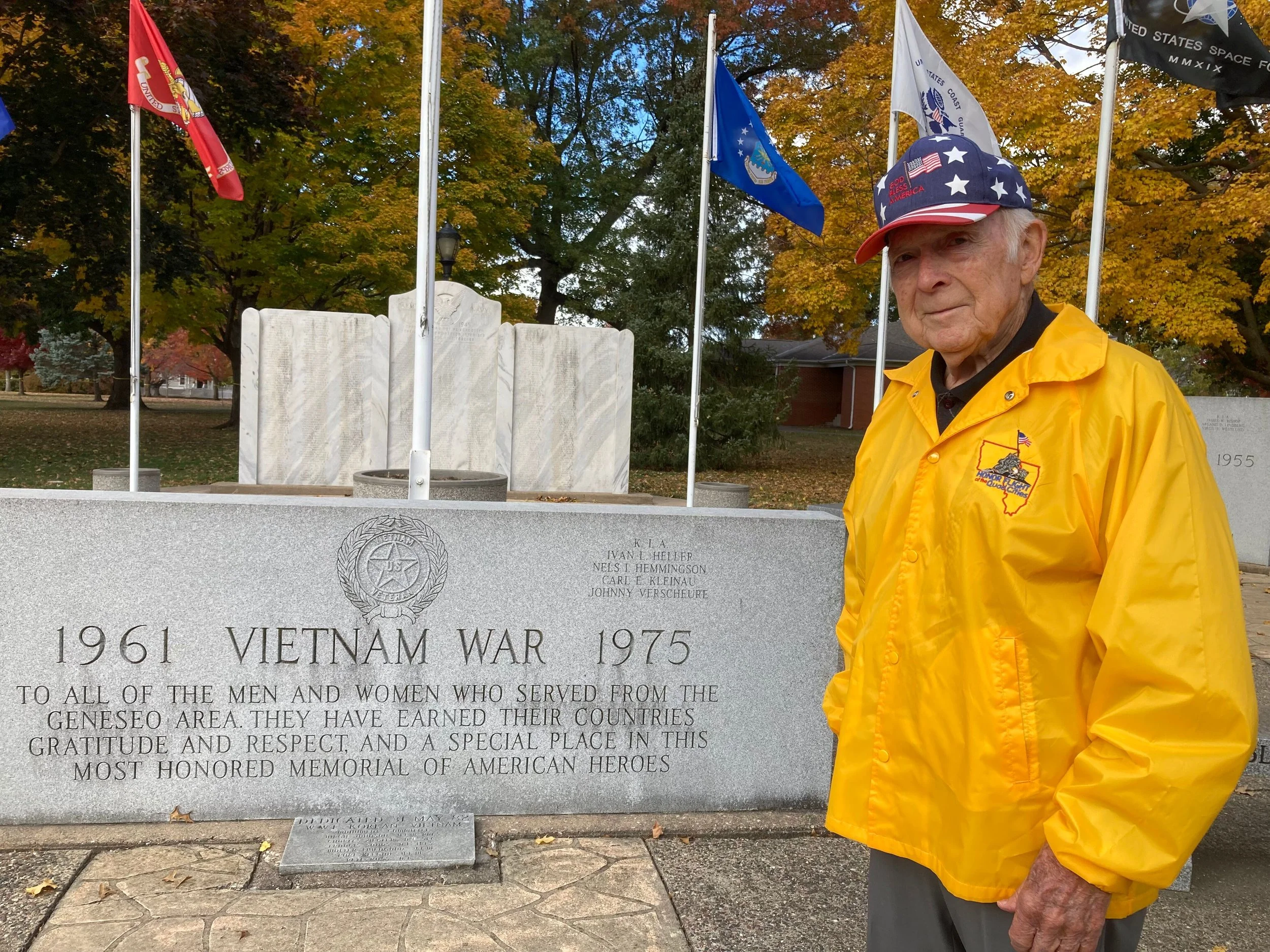
Lt. Col. Roy (Tony) Simon, Geneseo, is photographed at the Vietnam Memorial in Geneseo City Park, wearing the jacket and cap he received when he was a passenger on the Honor Flight to Washington, D.C. Photo byClaudia Loucks
Lt. Col. Roy (Tony) Simon made a career of the Air Force and during his years of service, volunteered for special operations duty combat in Vietnam.
He was aboard Honor Flight #52 that departed from the Quad City International Airport early in the morning of April 12, 2022, and landed at Reagan International Airport, Washington, D.C., with approximately 80 veterans and about the same number of guardians.
(Guardians on Honor Flights are volunteer escorts, typically between 18 and 72 years old, who are physically able to assist veterans for the entire day's trip. Their role is to ensure the veteran's safety, comfort, and a memorable experience, which includes pushing wheelchairs, assisting with boarding, and helping with meals.
Simon said several sources of media, including television radio, newspapers, etc., advertise early the dates of details of the upcoming Honor Flight, generally once per year. Applications are made available to those wishing to participate. There is no cost for the veteran, however, guardians must pay a fee. The remainder of the cost is funded by local organizations, and “in our case, I believe an organization form Galva, the Back Roads Music Festival, funded Flight #52.”
As a military pilot, Simon recalled landing at the D.C. Airport many years ago, in addition to many trips to the area made by automobile with his family.
The veterans making up Honor Flight #52 spent the day visiting museums, memorials, monuments and the veterans’ cemetery.
What made the trip even more special for Simon was that his son, Tony Jr., came from San Antonio, Texas, came to serve as his dad’s guardian….”We discovered there was one veteran in a wheel chair who did not have a guardian, Simon said. “Since I did not require any special assistance and was able to maneuver on my own, my son volunteered to act as the disabled veteran’s guardian. I was so proud of him for doing the right thing.”
“We visited all the monuments and memorials, but were disappointed that we did not have the time to visit the Space Museum,” he said. “We were late in departing Moline and were not able to visit everything as scheduled.”
Simon commented that everything about the trip was “a highlight, but there are two things that really stood out. There was a huge crowd as we departed and entered the airport at Reagan. These people, more than likely, did not know a soul on our flight but showed up in droves to clap, cheer us on and sing songs.”
He shared another highlight that he said “brought a tear to my eye was a rather large group of very young boys and girls belting out patriotic songs. It was a sight to behold! There was even a good size crowd of people as we departed on the bus to take up to the aircraft”
Another highlight, he said, was the group’s arrival at the Quad City Airport in Moline at the end of the day.

A book of photographs of her dad’s experience on the Honor Flight was put together by Simon’s daughter, Lori Rowe, and includes a photo of Simon and his son, Tony Jr., who was his dad’s guardian on the Honor Flight. Photo by Claudia Loucks
“I couldn’t believe the crowd of people gathered there to welcome us home. What made it even more unbelievable was the hour of the night. Our approximate arrival time was 10:30 p.m., but I think it was closer to 11 p.m., if not later. I’m told these crowds appear at every Honor Flight arrival.”
He added, “I’m heartened by the support our veterans receive from the local folks.”
One of the questions I asked Lt. Col. Simon was his feelings about freedom in the USA and the American flag.
He responded, “As you know I’m a rather patriotic guy. I love my country and the beautiful American flag that represents it. I fly my flag on a pole outside my front door every day to remind me how lucky I am to be an American. I wear my American flag pin when appropriate and I wear it proudly. I volunteered for combat duty in Vietnam because I felt it my duty to do my part to protect my family, my loved ones, my fellow Americans and my country; I would do it again without question. We would not be free Americans had it not been for the terrible sacrifice of our millions of veterans, living and dead. We cannot and must not ever forget what many of them have suffered.”
“I will never forget the experience of having participated in the Honor Flight,” he said. “It continues to remind me that most Americans are thankful for what our veterans represent and are not shy when it comes to express those thanks and gratitude. I highly recommend that any and all veterans participate in an Honor Flight in possible.”
TONY SIMON AND THE MILITARY
Before enlisting in the Air Force, Simon said he had never been in an airplane.
It was while he was in basic training when Simon applied for, and was accepted into the Aviation Cadet program. He completed basic and began pilot and officer training in the Air Force Aviation Cadet program. He trained in small single aircraft as well as World War II B-25’s and B-29’s, and graduated from the program in January of 1956.
He and his wife, Ginny, were married two days after Simon received his wings and 2nd Lieutenant Commission. He was given a choice of assignments in either fighter aircraft or multi-engine transports.
“I chose multi-engine primarily because I thought this would give me a better chance of seeing the world,” he said. “We were transferred to our first permanent assignment in the state of Washington.”
Simon said he flew C-124 Globemasters, the largest transport of its time, at assignments in Washington, Hawaii, Delaware and Oklahoma for the next 10 years.
“As pilots, we were qualified to fly anywhere in the world at any time,” he said. “In 1966, I was selected to instruct other pilots in a new jet transport, the C-141 Starlifter, at Altus Air Force Base in Oklahoma. At Altus, I was an instructor and flight examiner for three years in the C-141.”
Simon recalled numerous memorable missions during his years in transports, including flights to northern Greenland, just 400 miles south of the North Pole; a mission through the restricted corridors in Germany to Berlin; missions to Africa, South America, Australia, Iceland, Europe, Southeast Asia, Japan, Canada, Alaska, numerous islands in the Pacific and Atlantic oceans, “and more.”
“I have experienced on-board fires, hydraulic leaks, oil leaks, fuel leaks, lightning strikes, multiple systems failures, landing gear failures, communications failures, minimum weather conditions, flights through thunderstorms, extreme icing conditions and, of course, engine failures,” he said. “Single engine failures on a mission were common. I very vividly remember a double engine failure, two engines on the same side of a four-engine aircraft.”
“The ultimate heart-thumper was a nighttime bailout of my 13 crew members in the South China Sea.,” Simon said.
In late 1971, Simon volunteered for Special Operations combat duty in Gunship aircraft in Vietnam.
“After stateside training in the gunship, a converted transport aircraft with six side-firing Vulcan rotating barrel 20 mm and 7.62 mm guns and carrying thousands of rounds of ammunition, I first attended an ocean survival course and a jungle survival course in the Philippines before arriving in Vietnam,” he said. “For the next eight months, I flew 120-night combat missions in Vietnam and Laos, where nightly anti-aircraft fire and heat seeking missiles were a constant threat. As the end of the war approached in 1972, since I was the Wing Chief Standardization and Flight Examiner Pilot for the gunship group, I was selected to remain at DaNang Air Base in South Vietnam to train the South Vietnamese Air Force pilots in the operation of the gunship. All the gunships were ultimately transferred to the South Vietnamese Air Force.”
After the Vietnam War, Simon was transferred to Kansas, then to North Carolina as Commander of Mobile Aerial Port Squadron, made up of about 300 officers and enlisted men, including a contingent of Air Force Combat Controllers.
“These were intensely trained and highly qualified special forces airborne troops whose sole purpose was to parachute into forward landing and drop zones to secure them and set up communications for follow-on Army Airborne troop drop missions,” he said.

Simon said because he enlisted in the Air Force before finishing his college education, he realized early in his career that he needed to continue his education. He took night classes for the next several years and after a six-month residency, he earned a bachelor’s degree in business from the University of Nebraska in 1970. He continued his studies and earned a master’s degree in business management in 1977. During this same time, Simon also completed Air Force courses at the Squadron Officers School, the Air Command and Staff College and the Air War College.
After a short joint tour with the Army in New Jersey, Simon was transferred to Scott Air Force Base in Illinois near St. Louis as Chief of the Mobile Aerial Port Division at the Military Airlift Command Headquarters.
He retired in 1978 as Lt. Colonel Simon with more than 10,000 flying hours.
His awards and decorations include the Distinguished Flying Cross, the Air Medal with five oak leaf clusters, Meritorious Service Medal, Air Force Commendation Medal and the Joint Service Commendation Medal.
He and his wife Ginny have a son, Tony Jr., who served as a medical technician in the Air Force for 24 years and before his retirement, he was a medical technician at a military hospital in San Antonio, Texas; one daughter, Lori Rowe, Davenport, and four granddaughters, two great-granddaughters and one great-grandson.
Christmas Open House is Nov. 14 at the Geneseo Museum
By Claudia Loucks
Geneseo Current

Melanie Rice, Director/Curator of the Geneseo Historical Museum, is shown by the Christmas Train Display featured in the formal parlor of the museum. The two trains, under the decorated Christmas tree, will be operating during the Christmas Open House at the museum, from 4 to 7 p.m. on Friday, Nov. 14.
Docents in vintage dress will welcome guests to the museum which will be decorated in Victorian splendor.
In addition, during the open house hours, Mrs. Claus will be seated in the General Store at the museum, accepting letters to Santa that she will take back to the North Pole. Children are encouraged to take their letters to the museum during the open house hours on Nov. 14.
Rice is inviting visitors to the museum on Nov. 14, to “step inside a wonderland filled with sparkling holiday, décor, local history, and charm!”
May He Rest In Peace - By Dan Dauw
May He Rest in Peace
Last Saturday we paid our respects to a really nice guy, Wayne A. Dengler, Eldridge. A Celebration of Life was held at the Cornerstone Church in Eldridge. He was a hardworking farmer and a really nice person. One of his sisters is Sharon Bianchetta, Geneseo. Lorna graduated with Wayne from North Scott High School. Wayne accomplished a lot during his time on Earth. May God rest his soul.
Wild Game Dinner
The Boy Scout Troop 131 and their leaders did an awesome job with last Saturday’s wild game dinner. This annual event is a big drawing card for both the scouts and the public. The food was “sooo” good.
Geneseo Ikes “Wiener Roast”
Another nice event was the Geneseo Izaak Walton League’s “Weiner Roast” held last Saturday evening. Sad to say that as the years go by we have less members and guests. There were ten attendees, but it was a nice event for sitting around the campfire and talk experiences.
Congratulations to the Geneseo Football Team
We haven’t been to a Geneseo high school football game since our kids graduated from GHS. They have a really good team this season. In last weekend’s game a last minute field go by Geneseo kicker, Carson Peters, sealed the win over Rochelle, 16-14. Rochelle had a good team. Anyway, good luck to the Leafs during the rest of the IHSA tournament.
‘da Bears Great Win
Talk about a “nail bitter!” The Bears played the Bengals last Sunday. The game came right down to the wire and you just knew there would be an “L” in the Bear’s column. But no, in a minute or so left on the score clock, QB Caleb Williams marched them downfield to a final score of 47-42. Next Sunday the Bears host the NY Giants at Soldier Field. “Go, Bears!”
Hug a Vet
Well, I’m not sure you need to do that, but a nice “Thank You for your service” is always welcome to we Vets. Veterans Day is Tuesday, November 11, 2025. I should mention that Iowa PBS will have “A Salute to Service” broadcast on Monday, November 10 at 8 p.m.
St. Joan of Ark
I’m not sure if this little prayer was originally said by the Saint, but none of us were around to say for sure. Whatever, I thought I’d share her little prayer. “If I am not in His grace, may God place me there. If I am, may God so keep me there.”
GI Ingenuity
This is a non-fiction book I just finished reading. It’s mainly about soldiers and airmen during and after Normandy in France. In short, it points to the good and bad decisions made by the higher rank officers. While they came up with good ideas in fighting the war, the ordinary G.I. also showed great ingenuity and ideas. Some things worked, others did not. The book is called, “GI Ingenuity” by James Jay Carafano.” The book has been out since 2008.
Humor
A nurse says to a recovering patient, “You’re a lucky man. The doctor took a gallstone the size of a golf ball out of you. The patient said, “My goodness, I’d like to thank him if he’s around.” The nurse says, “No, he just left to go golfing!”
Quote
“There are no uninteresting things, there are only uninterested people.” - William Jennings Bryan
Ann Marie Shoemaker: May 1, 1936 ~ October 30, 2025

Ann Marie Shoemaker, 89, passed away Thursday, October 30, 2025, at Southgate Nursing Home and Rehabilitation in Metropolis, Illinois. A funeral service will be held at 11:00 a.m. on Saturday, November 8, 2025, at Vandemore Funeral Homes & Crematory – Geneseo Chapel. Visitation will be held from 10:00 a.m. – 11:00 a.m., before the funeral service. Interment will be at Rosedale Cemetery in Cambridge, Illinois.
Ann was born May 1, 1936, in Wareham, Massachusetts, to Gerald V. and Hannah (Potter) Robery. She graduated from Wareham High School in 1954. Ann married Thomas Willard Shoemaker on December 19, 1955. They were married for 68 years. He passed away in January 2023, preceding her in death. In addition to her husband, she was preceded in death by her parents, two sisters, two brothers, and an infant grandson (Benjamin Shoemaker).
Ann loved to travel with her husband, Tom. Her favorite trips were cruises to Greece and to Hawaii. No matter where she was, she always considered Cape Cod her home. Her greatest joy in life was being a grandma and great-grandma.
Surviving are her two children: Patricia (Tony) Thompson and Tom Shoemaker Jr.; seven grandchildren: Darin (Nancy) Thompson, Trevor (Kathy) Thompson, Tyler (Kara) Thompson, Abigail Thompson, Grant Shoemaker, Gavin Shoemaker, and Maddie Barfield; six great-grandchildren: Zion, Matthew, Lucas, Lydia, Kayden, and Reagan. She is also survived by her sisters, Marjorie (Paul) Maloney and Patricia Battles, and a sister-in-law, Marilyn Borkgren
Geneseo TV is Hard at Work
We have been in communication with the two-person technical team at Geneseo TV 50, who are anticipating a substantial viewing audience for this weekend’s playoff game. Throughout the week, they have been diligently working behind the scenes to enhance the broadcast and ensure an optimal viewing experience for all audiences.

Online Health Literacy Session Offered by Library on Nov. 12
By Claudia Loucks
Geneseo Current
If you are a senior citizen in need of assistance of going online “safely” to obtain good health information, the Geneseo Public Library can help. A 90-minute session, presented by Western Illinois University, will be offered on Wednesday, Nov. 12.
Information from the Library states: “Instructors form Western will focus on teaching the basic online health literacy skills. They’ll discuss the basic ideas of online health literacy, which online resources on health topics are safe to access, which online support groups you can access for health issues, and how to access your own personal health records.”
The 90-minute session is free to the public, but spots are limited for in-person training, so anyone interested is asked to call the library at 309-944-6452. Participants will be allowed to access a library computer after the class to put their skills to the test.

Women’s Health Series Program is Wednesday, Nov. 19
By Claudia Loucks
Geneseo Current

Theresa Klotz, left, and Jan Sellman, representing the Hammond-Henry Hospital Foundation Women’s Health Committee; invite area women to the Wednesday, Nov. 19, program of the Women’s Health Series, sponsored by the Hospital Foundation Community Benefits Committee. The program is from 12 noon to 1 p.m. in the Geneseo Community Center Activity Room 541 East North St., Geneseo.
Allision David, DC, ATC, CCSP at Hammond-Henry Hospital, Chiropractic Clinic, will present the program on “Chiropractic Care and Dry Needling.” Cost of the lunch is $12, payable at the door on Nov. 19. Reservations are recommended by Wednesday, Nov. 12, and can be made by calling the Foundation office 309-944-9112, or by email at hhhfound@hammondhenry.com. Photo by Claudia Loucks

Community Invited to “Cram the Cab” and Support Local Families in Need

The Henry County Farm Bureau Young Leaders invite the public to participate in the annual “Cram the Cab” Food Drive on Saturday, November 8, from 9:00 AM to 2:00 PM at Fareway Meat & Grocery, located at 540 Pritchard Drive, Geneseo, IL.
Read moreHammond-Henry’s Cardiac Rehab Department Celebrates 25 Years of Service to the Community
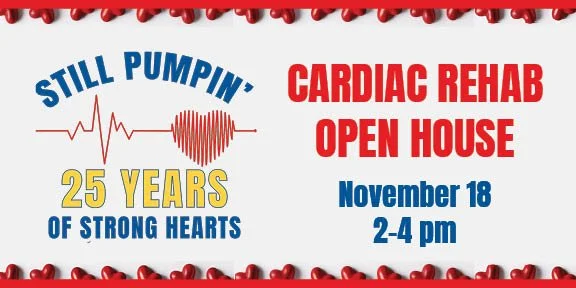
Geneseo, IL - Hammond-Henry Hospital’s Cardiac Rehab Department is celebrating its 25th anniversary with an Open House on Tuesday, November 18 from 2 to 4 pm in the Geneseo’s hospital dining room. Guided tours of the Cardiac Rehab Department will be conducted, and past and present Cardiac Rehab staff will be in attendance. Light refreshments will be served, and all interested are invited and welcome to attend.
Past and present Hammond-Henry Hospital Cardiac Rehab patients are especially encouraged to attend and also tell their story in advance of the event. Story cards are available now to fill out at the Cardiac Rehab desk, and all submissions will be placed on the Cardiac Rehab story wall.
“Our patients are always part of our Cardiac Rehab family, and we would love to see past and present patients and their families at our celebration. We would also love to see community members who have an interest in our program,” said Brandi Catton, CRT, RCP, HHH Cardiac and Pulmonary Rehabilitation and Sleep Lab Supervisor. “We are so grateful for the community support that started our program 25 years ago and those who support it today.”

Catton further noted that Cardiac Rehab’s focus has always been on the patients. “There are often anxious feelings associated with cardiac events that lead patients to our program. We work closely with our medical directors and the referring provider to support the patient through a difficult time,” she added. “Besides monitoring patients during exercise, our experienced team also concentrates on education to help patients better manage their cardiac risk factors and help them feel more confident in advocating for themselves. We want patients in our program to feel heard. We want them to know we are on this journey with them, and we care about their outcomes.”
Currently, Cardiac Rehab is located on the hospital’s Second Floor, adjacent to Physical Therapy. This location allows the Cardiac Rehab team to work in an interdisciplinary fashion. “Our patients benefit greatly from the many service lines that our Rehab Department offers. With the expanded space, we have been able to add multiple pieces of equipment,” Catton said. “In 2023, we upgraded our Cardiac Rehab system. Some of the advancements included continuous pulse oximetry monitoring when needed, electronic signatures capability for our staff and medical directors, and the most up-to-date software available to allow us to monitor up to 10 patients at one time.
“Our community has supported our program, and much of our upgrades are due to funds raised by the Hammond-Henry Foundation and Auxiliary and by generous donations from patients and their families,” she added.
In addition to guided tours, refreshments, give-aways, and time spent reading the story wall, Catton anticipates offering the public a favorite heart-healthy treat from our HHH Dietitian Marcia Wirth plus several recipes to take home.
Past Cardiac Rehab patients attending the event will receive a special sticker. For more information about the event, call 309.944.9169 or 309.944.9153. Hammond-Henry Hospital is located at 600 N. College Avenue, Geneseo
Richmond Hill Players Conclude Season with Holiday Comedy Opening Nov. 13
Geneseo’s Richmond Hill Players conclude their 2025 season with “A Sherlock Carol,” a holiday comedy by Mark Shanahan.
Read moreLearn More About the Life of Audrey Hepburn on Nov. 6 at Geneseo Library
By Claudia Loucks
Geneseo Current

Anyone who is an Audrey Hepburn fan will be able to learn more about her life at a 2 p.m. program on Thursday, Nov. 6, at the Geneseo Public Library.
The program will be presented by Leslie Goddard, historian and author who writes and lectures on American cultural history with particular expertise in women’s history. She has a Ph.D. in Interdisciplinary Studies and a M.A. in Museum Studies.
At the Nov. 6 program, Goddard will delve into the multi-faced actress’s life and struggles through her portrayal of one of Audrey Hepburn’s most well-known roles.
Facts that one may not know about Audrey Hepburn:
-That she trained as a classical ballet dancer, and she had a deep passion for the art, but her dream of becoming a professional prima ballerina was curtailed by severe malnutrition and other factors during World War II, as well as physical limitations like her height. Her intensive ballet training, however, profoundly influenced her grace, poise, and expressiveness, which became trademarks of her successful career.

-That she was 31 years old when she portrayed Holly Golightly, a 19-year-old.
-That Shirley McLaine turned down the role in “Breakfast at Tiffany’s.”
-Her first son was born in July 1950; “Breakfast at Tiffany’s” came out in 1961.
-Her salary for the film was $750,000 (roughly equivalent to $7.3 million as of 2022), making her the highest paid actress per film at the time.
-She called herself an introvert, saying she preferred to be alone often.
-She had big feet; she wore size 10 shoe!
-Her parents split up when she was six, and her father’s departure had a huge impact on her with respect to relationships with men. (She was married twice).
-Her real name was Audrey Kathleen Ruston; didn’t start using Hepburn until 1948. (Her father, Joseph Ruston, changed the family name to Hepburn-Ruston).

With Heartfelt Gratitude to Our Community
As we reflect on the recent 50th Anniversary “Paws for the Cause” Gala, our hearts are overflowing with gratitude for the incredible love and support shown by the Geneseo community and beyond.
For fifty years, this community has been the heartbeat of our mission. Your generosity, kindness, and belief in our work is the reason we are able to rescue, protect, and love animals in need, and why second chances will continue for years to come.
To every business, organization, and individual who donated auction items or contributed monetary gifts toward baskets and event needs, thank you. Because of you, wagging tails, healing hearts, and new adoption stories are already beginning.
Every contribution, whether a handcrafted item, meaningful experience, essential service, sponsorship, or financial gift, was deeply felt. The success of this event was a powerful reminder that this community leads with compassion and always shows up when it matters most, proving once again that our community has a heart like no other.
Your support was seen. It was celebrated. And it will make a real and lasting impact!
With sincere appreciation The Henry County Humane Society – Geneseo Board of Directors, Staff, and Volunteers

Scarecrow Row in Geneseo a ‘Huge Success’
By Claudia Loucks
Geneseo Current
Geneseo’s Scarecrow Row made its debut in 2020, and the Halloween event continues to draw crowds of people, young and old, to City Park, just days prior to the official date of Halloween on Oct. 31. This year’s event was held Saturday, Oct. 25, and included a “Howl-O-Ween” Doggie Costume Pageant.
Scarecrow Row is sponsored by the Geneseo Chamber of Commerce and the “Howl-O-Ween” Doggie Pageant was sponsored in partnership with the Henry County Humane Society – Geneseo Shelter.
The Scarecrow Row display featured 90 scarecrows, designed and created by local businesses, organizations, and families. Participants handed out candy to children who were trick-or-treating in the park Saturday morning.
Zack Sullivan, executive director of the Geneseo Chamber of Commerce, said, approximately 4,000 people attended this year’s event, and he added, “We have had about 80 scarecrow displays in each of the last two years, and with 90 this year, we are encouraged by the number of participants.
There were 35 dogs in the Howl-O-Ween Doggie Costume Pageant, and Sullivan commented, “We would have been happy with 10 (dogs), so we were thrilled with the turnout.”
The doggie pageant was described as an “on-sight” fundraiser for the HCHS- Geneseo Shelter and participating dogs were awarded treats.
Sullivan said the Geneseo Chamber is thrilled with the success of this year’s event, “and we are planning ahead for the 2026 Scarecrow Row.”
He added, “David Smith of Smith Studio and Gallery in downtown Geneseo, is a driving force behind the event and I am very appreciative of his support.”
First, second and third place prizes were awarded to the top three scarecrow displays, and each winner received a Geneseo Chamber of Commerce Gift Certificate.

“Our First Responders Deserve Some Fun,” was the theme of the second-place winner in the Scarecrow Row display held Oct. 25 in Geneseo City Park. The display was created by the Bob and Jan Sellman family. Contributed Photo
THE WINNERS:
-First place -Girl Scout Troop 2930 with a theme of “Sally S’More,” received a $150 Chamber of Commerce Gift Certificate.
-Second place – Jan Sellman (family) with a theme of “Our First Responders Deserve Some Fun,” received a $100 Chamber Gift Certificate.
-Third place – DeFauw Family with a theme of “Mickey and Minnie Mouse,” received a $50 Chamber Gift Certificate.



Splendid Misery - By Dan Dauw
Curb Appeal
We hired this Carbon Cliff company to do some landscaping work. At our age it was just too much work to do ourselves. I must say they did an outstanding job. Dave, Kim and their crew were super nice to deal with. We also had them do some much needed work on our lawn, both the front and backyard. Curb Appeal is located just pass the Rock River bridge heading west. Take a right at the light and you’ll see the place. Their showroom has a ton of gardening and outdoor related Items. Their phone number is 309-762-2724.
Ikes Halloween Party Rescheduled
This annual event will be held on Saturday, November 1, 2025, starting at 5 p.m. Bring your hot dog stick and enjoy roasting a dog or two on an open fire. Bring a covered dish and a lawn chair. Guests are welcome.
Boy Scout Troop 131 “Wild Game Feast”
This annual event will be held on Saturday, November 1, 2025, at the Geneseo Moose Lodge. Serving will be from 4:30 to 7:00 p.m. Donations of $12 for ages 13 and over. Those ages 4-12 is $6.00. They will be serving buffalo (bison), pheasant, venison, salmon, turkey, and traditional chicken. There will also be a silent auction.
We’ve been going to this event for a long time and it is always enjoyable. Not only that, but it is a good fund-raising event for the scouts.

Gary Dalhquist and Tom Simpson caught these big channel catfish in a lake in Henry County on Friday, October 24, '05.
Lots going on in November
1) All Saints Day – Nov 1
2) Daylight Saving Time Ends – Nov 2
3) Election Day - Nov 4
4) Full Moon - Nov 5
5) Veterans Day - Nov 11
6) New Moon – Nov 20
7) Thanksgiving Day – Nov 27
Grover Cleveland’s Grandson Here in Geneseo
I would think it would be his “great-great” grandson that being George Cleveland, but that’s what a flyer shows. George Cleveland will be at the Central Schoolhouse Inn at Geneseo on Tuesday, November 18, 2025, from 8:30 – 10:00 a.m.
You can break breakfast bread with George at his table as he tells you with little known facts, stories and anecdotes about the former U.S. President.
For reservations to dine with George, contact Tim Pletkovich at 309- 253-5377. Grover Cleveland was President from 1885-1889 and again from 1893-1897. Grover Cleveland was the 22nd President and 24th President of the USA.
Humor
Why did everyone find the baker funny? Ans: He had a rye sense of humor.
A woman frantically calls the fire department to report a fire in her neighborhood.
The dispatcher asks, “How do we get there?” The woman replies, “Don’t you still
have those big red fire trucks?” The reason I worked at a bakery is I needed the dough.
Quote of the Week
“The second office of this government is honorable & easy, the first is but a splendid misery.” - Thomas Jefferson
