Tyson Foods has closed its Joslin beef processing plant, affecting more than 2,500 workers. Here’s what is known about the closure, Tyson’s restructuring and employment resources available to displaced workers.
Read moreSugar Maple Lady Golfers Raise Funds for Breast Cancer Awareness
The recent Annual Breast Cancer Awareness event, hosted by the Sugar Maple Ladies Golf League and held at Sugar Maple Golf Club, Geneseo, raised a total of $2,780 which was donated to the Trinity Cancer Center Expansion Fund.
Read moreGeneseo School Board Reviews FY27 Budget as District Confronts Rising Costs, Declining Enrollment
Geneseo CUSD #228 reviewed its tentative FY27 budget, including a $975,805 Education Fund deficit, rising healthcare costs, declining enrollment and long-term plans to strengthen the district’s financial position.
Read moreState Street Newswire - August 14, 2026
Video: Geneseo Now! with Geneseo Schools Superintendent Dr. Laura Delgado
On this episode of Geneseo Now we talk to Geneseo Schools superintendent, Dr. Laura Delgado
Read moreRichmond Hill Players to Present ‘Picasso at the Lapin Agile’, opening Aug. 20
Geneseo’s Richmond Hill Players continue the 2026 season with “Picasso at the Lapin Agile,” a comedy by Steve Martin.
Read moreState Street Newswire - August 13, 2026
From Geneseo to the Big Ten Network: Zach Mackey Takes Next Step in Broadcasting Career
Geneseo native Zach Mackey is joining the Big Ten Network in a full-time play-by-play role, bringing his broadcasting career back to the conference where it began.
Read moreThe Future of Data Centers in Henry County, Part 1
Why Does the World Suddenly Need So Many Data Centers?
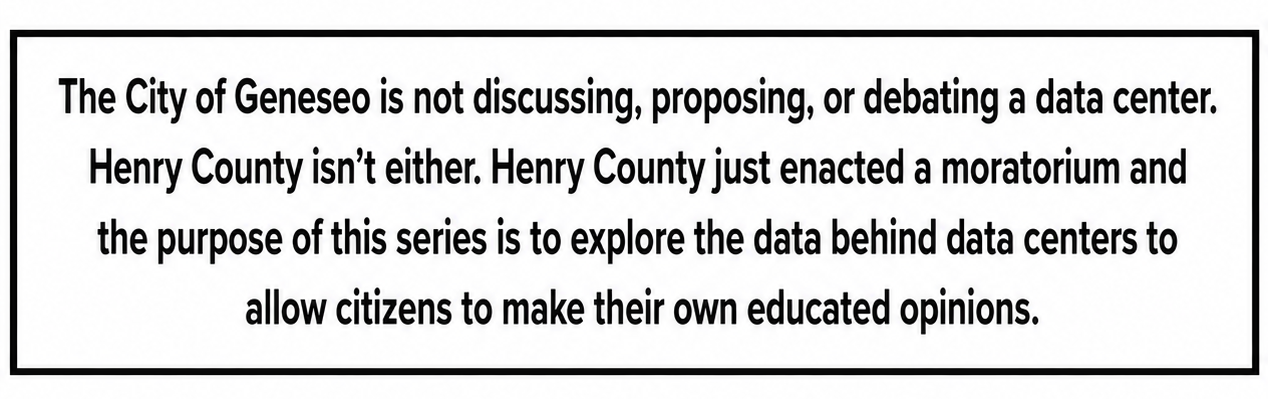
If you've followed recent discussions at the Henry County Board, you've probably heard the term data center more times in the past few months than ever before.
Communities across Illinois—and across the country—are being approached about the possibility of hosting large data centers. Though there is no proposed project at the moment, Henry County will be no exception. County leaders recently approved a temporary moratorium to give themselves time to study the issue, learn more about the industry, and determine what regulations, if any, should be in place before considering future projects.
But before asking whether a data center belongs in Henry County, there's an even more basic question worth answering:
Why does the world suddenly need so many of them?
The Internet Has to Live Somewhere
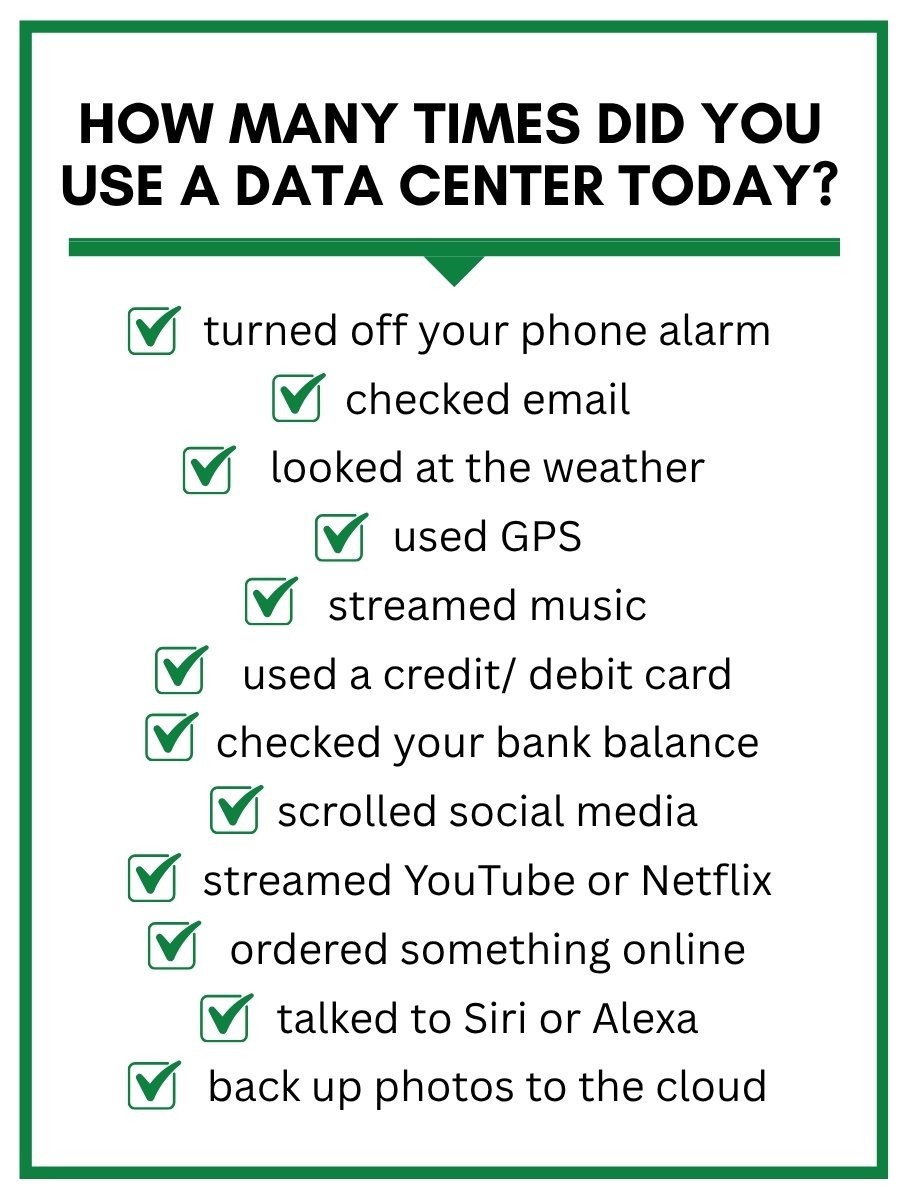
It's easy to think of the internet as something that exists "in the cloud." In reality, every email, every online purchase, every Netflix movie, every Google search, every Facebook photo, and every AI conversation is processed by physical computers located inside secure buildings known as data centers. The fact that you’re reading this right now is due to data centers.
Imagine a warehouse—but instead of storing boxes, it stores thousands upon thousands of powerful computers. Those computers work around the clock to store information, process requests, and keep the digital services we rely on running every second of every day.
Most of us interact with data centers dozens—if not hundreds—of times each day without realizing it.
That description isn't just theoretical. In its August 2026 member newsletter, JCE Co-op described data centers as "the physical backbone of many services we use every day," citing online banking, medical records, school systems, farm technology, local business software, weather tools, emergency communications, streaming services and artificial intelligence as examples of services that depend on them.
Why Are We Building More Now?
Data centers aren't new. The internet has depended on them for decades.
What has changed is how much computing power the modern world demands.
Twenty years ago, most people used the internet to browse websites and send email.
Then came smartphones.
Then streaming movies and music.
Then cloud computing, where businesses began storing files and running software online instead of on office computers.
Then remote work and virtual meetings.
Now comes artificial intelligence.
Each wave has dramatically increased the amount of information that must be stored, transmitted, and processed. AI is the latest jump.
Why AI Is Different
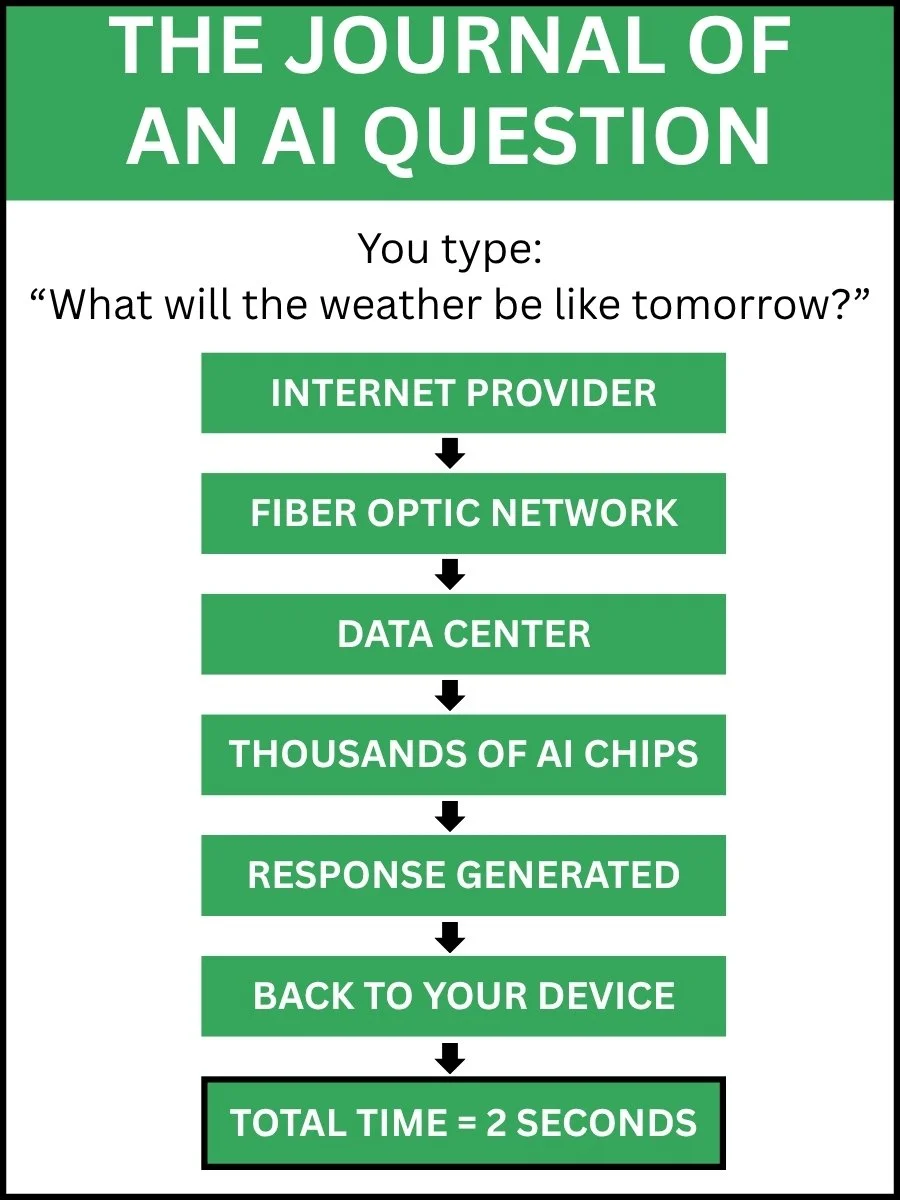
Traditional internet activity is relatively straightforward. You search for a restaurant. You stream a song. You check your bank balance. It’s a simple match of your query to indexed keywords or transmission of data.
Artificial intelligence works differently.
Instead of simply retrieving existing information, AI systems analyze enormous amounts of data to generate text, create images, write computer code, summarize documents, answer questions, and perform increasingly complex multi-step tasks in real time.
That requires enormous computing power.
While the exact amount varies depending on the task and the technology involved, AI workloads can require substantially more computing resources than many traditional internet searches. Multiply that by millions of users around the world, and the need for additional computing capacity grows quickly.
Why Not Use the Data Centers We Already Have?
Many existing facilities were designed years ago for different kinds of workloads.
Today's AI servers consume more electricity, generate more heat, and require more advanced cooling systems than many previous generations of computer equipment.
Some existing facilities can be upgraded. Others cannot.
In many cases, companies find it more practical to build entirely new facilities designed specifically for modern computing needs.
Why Are Companies Looking Beyond Major Cities?
If demand is growing so quickly, why not simply build more facilities in Chicago or other major metropolitan areas?
The answer often comes down to infrastructure.
Large data centers require vast amounts of electricity, extensive fiber-optic connectivity, hundreds of acres of land, and room to expand over time. In some areas, suitable sites are increasingly difficult or expensive to develop.
As a result, companies are looking beyond traditional technology hubs and evaluating communities that have the land, infrastructure, and long-term potential to support these projects.
That has placed more rural communities—including some in Illinois—into conversations that would have seemed unlikely just a few years ago.
Why Henry County?
That naturally leads to the next question.
What characteristics make Henry County attractive—or not attractive—for a project like this?
Does the county have the electrical infrastructure?
Is there enough available land?
How important are fiber-optic networks?
What role do local zoning regulations play?
And perhaps most importantly, what would a data center actually mean for the people who live here?
Those are the questions we'll begin exploring in the next installment of this series.
Next in the series: Data centers promise jobs, tax revenue, and economic investment—but they also require land, power, and infrastructure. In Part 2, we'll examine the potential benefits and challenges communities consider before approving a data center.
The goal of this series isn't to persuade readers that data centers are good or bad. It's to provide the information needed to have an informed conversation.
Sources:
U.S. Department of Energy – Data Centers and Servers
Uptime Institute – Data Center Fundamentals
Uptime Institute – Research & Reports
U.S. General Services Administration – Cloud Basics (NIST-based)
JCE Co-op, "Powering Growth, Keeping Members First," HI-LINES, August 2026.
Geneseo Council Weighs Wind Turbine Repairs, Flock Camera Concerns as City Projects Move Forward
Geneseo City Council discusses wind turbine repairs and potential electric cost impacts, Flock camera privacy concerns, infrastructure projects and other city updates from its Aug. 11 meeting.
Read moreState Street Newswire - August 12, 2026
Geneseo Couple Hopes Hometown Support Can Carry Them to ‘America’s Favorite Couple’ Quarterfinals
For Miranda and Kyle, home has rarely been tied to one place.
The professional actors and musicians have spent much of their 11-year relationship traveling the country for theater work, living in cities including Denver and Chicago and, for a time, taking their home with them while traveling full-time in a converted Ford Transit van.
Now, their travels have brought them somewhere Miranda knows especially well: back to Geneseo and into the house where she grew up.
And this week, the couple is hoping their hometown will help carry them a little farther in another journey — the nationwide America’s Favorite Couple competition.
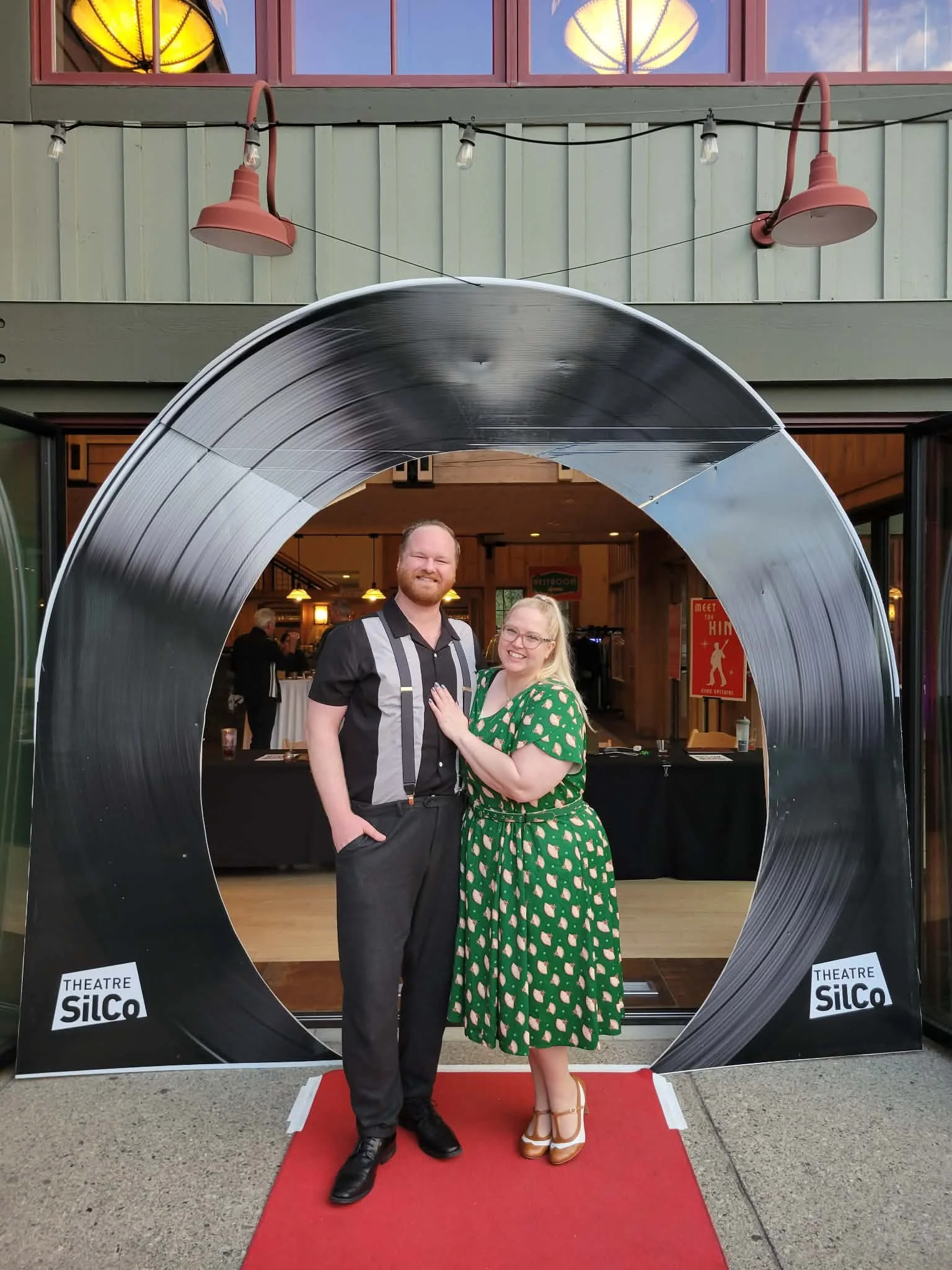
Miranda Lipes and Kyle Lahr
As of Tuesday evening, Miranda and Kyle were ranked third in their competition group. Only the first-place couple automatically advances from the Group Finals to the Quarterfinals, with voting in the current round ending Thursday, Aug. 13, at 9 p.m. Central.
For Miranda, returning to Geneseo wasn't necessarily part of the plan.
After living in Denver beginning in 2017, the couple briefly moved to Moline in 2021 before embracing full-time travel. Kyle's work eventually brought them back to Illinois and Chicago in 2024.
Then, as they considered settling down again, a longtime Geneseo family friend contacted Miranda with some unexpected news: her childhood home was for sale.
“How many chances do you get to buy back your childhood home?” Miranda said.
They decided to take the opportunity.
Returning has allowed Miranda to see the community differently than she did growing up.
“When I was younger, I wanted to see what else the world had to offer,” she said. “I felt like I needed to get out, take some risks, and try some new things.”
She still wants to follow those dreams, she said, but now appreciates having Geneseo as the place they return to — particularly knowing the house will remain in her family lineage.
“The traditions, the friendliness, the camaraderie,” Miranda said. “It literally feels magical to live here, sometimes.”
A Love Story Built on Music — and the Road
Miranda and Kyle's story began in 2015 while both were working at a summer stock theater in Meredith, New Hampshire.
Miranda was splitting her time between stage management and playing trumpet in the pit orchestra. Kyle was playing electric and upright bass.
The musical connection helped bring them together, although Kyle remembers another moment particularly well: watching Miranda show off her hula-hooping skills in a Dollar General.
They spent the summer together before their contracts sent them in different directions. A few months later, Miranda traveled to Maryland to meet Kyle, and following a date at the National Zoo, they officially became a couple.
They've been navigating the unpredictable life of working performers together ever since.
Their careers have included periods of long-distance work, frequent travel and the constant process of auditioning and searching for the next job.
More recently, they've increasingly found opportunities to perform together.
Among their favorite shared experiences have been productions centered on Buddy Holly, with Miranda acting and performing keyboard and trumpet while Kyle played bass as one of Buddy Holly's Crickets.
They have also begun working together on camera, including a commercial filmed in St. Louis and advertisements recorded as a duo.
For Kyle, life in regional theater can mean rehearsing from 10 a.m. to 6 p.m. for nearly two weeks, followed by 12-hour technical rehearsals and then performances several days each week.
“And part of every job is looking for the next job,” he said.
A Second Shot at the Competition
This isn't Miranda and Kyle's first attempt at becoming America's Favorite Couple.
They entered the competition during its inaugural year in 2025, when they were placed in a group of approximately 75 couples. They reached the Top 10 in their group before being eliminated prior to the Top Five.
They decided to try again in 2026 — and this time they've made it farther.
“I think what's surprised me the most about the experience is how kind everyone has been,” Miranda said. “The other competitors are very humble, very sweet, and really just want to shout their love story from the rooftops.”
America's Favorite Couple is operated by Colossal Management as a fundraising campaign on behalf of Action Initiative Team, a 501(c)(3) public charity. Donations generated through the competition benefit the Los Angeles Regional Food Bank and ocean conservation organization Oceana. Voters may cast one free vote every 24 hours, while additional votes can be obtained through donations.
The competition raised nearly $4 million during its 2025 campaign, according to Colossal. The Los Angeles Regional Food Bank reported receiving more than $1.9 million from that campaign for hunger-relief efforts.
The Push to Thursday
For Miranda and Kyle, the immediate goal is simple: get from third place to first.
The Group Finals conclude Thursday. First-place finishers advance to the Quarterfinals, scheduled for Aug. 17-27. Couples finishing second receive another opportunity through a Wildcard Round Aug. 14-16. The Semifinals follow Aug. 28-Sept. 3, with the Finals scheduled for Sept. 4-10.
The eventual winning couple will receive $20,000, a photoshoot and advertorial telling their story in Variety, and a Hollywood dinner experience with Jeff and Emilie Goldblum and Charlie Day and Mary Elizabeth Ellis.
For two working actors and musicians, the Hollywood experience has obvious appeal.
But the $20,000 would serve a considerably more practical purpose back in Geneseo.
Their childhood-home-turned-new-home needs work.
“We have to install new floors and windows and it would make a world of difference,” the couple wrote on their competition profile.
And should their story eventually make it into the pages of Variety, Miranda said they'd be happy to bring a little piece of Geneseo along for the ride.
For now, however, they're focused on Thursday.
“Thanks for those who have already been voting,” Kyle said. “We can see your names pop up when you submit a vote — we really appreciate you for that.”
Voting for the Group Finals ends Thursday, Aug. 13, at 9 p.m. Central.
Readers can view Miranda and Kyle's story and vote through their official competition profile:
State Street Newswire - August 11, 2026
Central Bank Illinois Hosts Annual Customer Appreciation Day
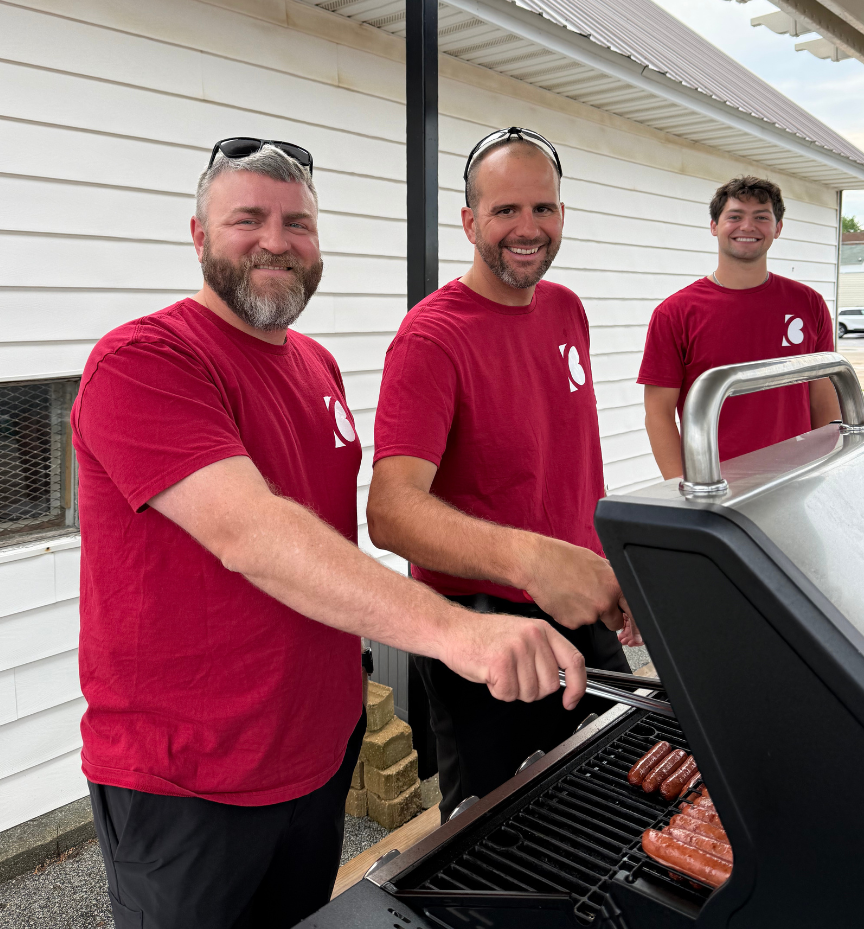
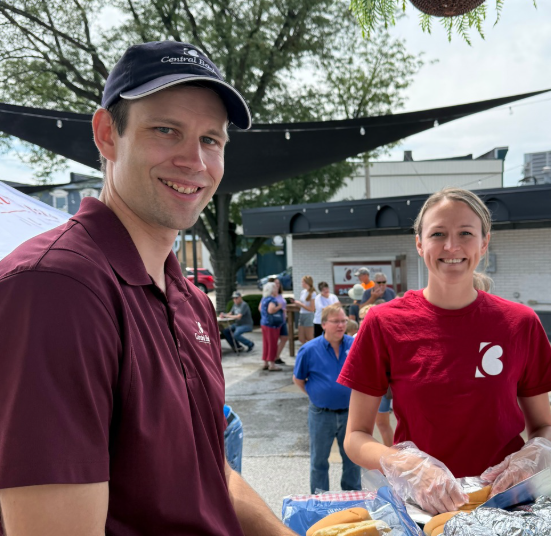
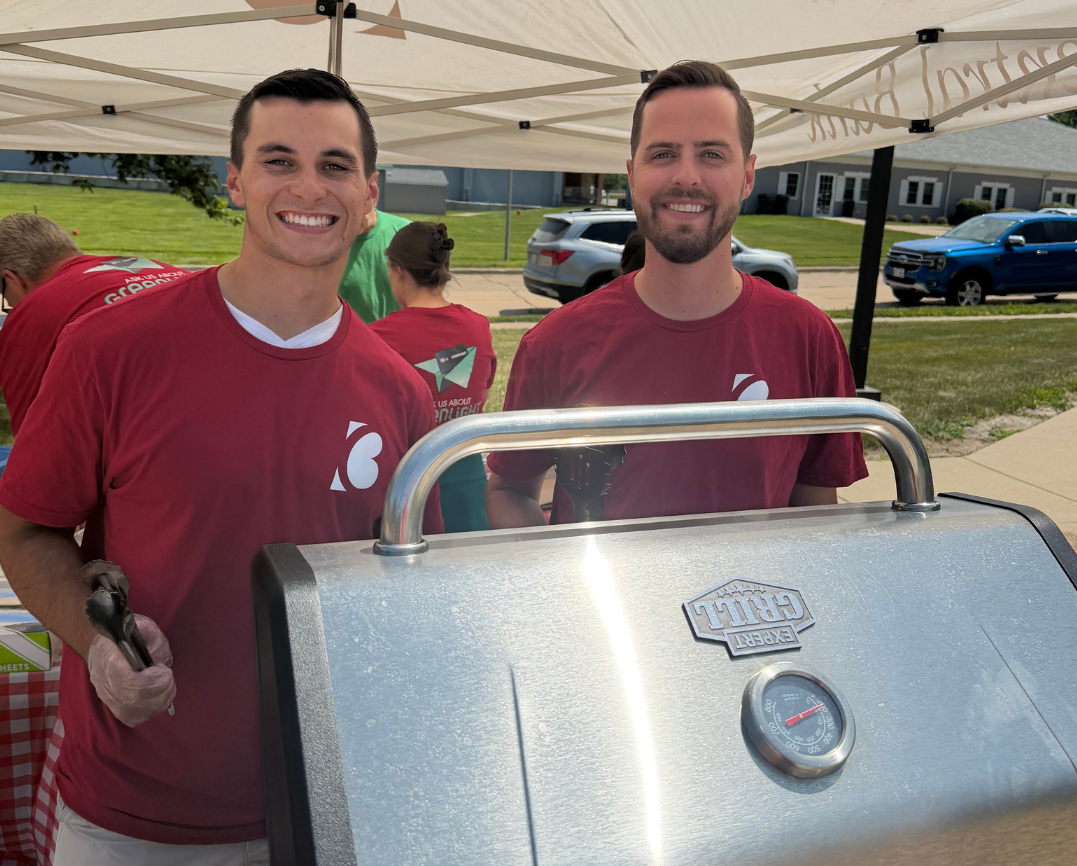
Central Bank Illinois recently celebrated its second annual Customer Appreciation Day by welcoming customers across its 10-branch network and serving lunch to approximately 1,500 customers as a gesture of gratitude for their continued trust and support.
Customers visited the Central Bank Pavilion and the Financial Center in Geneseo and branches in Fulton, Princeton, Peru, Sterling, Rochelle, Ashton, and Oregon to enjoy a complimentary lunch, bank giveaways, and raffle prizes. The event provided an opportunity for customers to connect with branch staff and celebrate the relationships that are at the heart of community banking.
"Customer Appreciation Day is our way of saying thank you to the individuals, families, businesses, and communities that choose Central Bank Illinois as their financial partner," said President and CEO, John DuBois. "We are incredibly grateful for the relationships we have built over the years and for the opportunity to serve our customers every day."
The event reflects Central Bank Illinois' ongoing commitment to community banking and building meaningful relationships with the customers and communities it serves. Central Bank Illinois looks forward to continuing the tradition of Customer Appreciation Day and strengthening the relationships that make community banking unique.
To learn more about Central Bank, www.central-bank.com.
About Central Bank Illinois
Central Bank Illinois is a locally focused community bank serving individuals, families, farmers, and businesses through a network of 10 branches. Committed to providing personalized financial solutions and exceptional customer service, Central Bank Illinois proudly supports the communities it serves through local decision-making, community involvement, and relationship based banking.
What Do School Registration Fees Actually Pay For?
What do Geneseo school registration fees actually pay for? A look at District 228’s 2026–27 fees, how the money is used, and the $11,880 cost of non-resident tuition.
Read moreHow is the Park District Funded?
See how the Geneseo Park District is funded, where its money goes, and how property taxes, memberships, fees, grants and donations support local parks, facilities and recreation.
Read moreFour Classes of Geneseo Graduates Mark Milestone Reunions in 2026
Each year brings another round of class reunions to Geneseo, giving former classmates a chance to reconnect, remember their high school years and see where life has taken one another.
In 2026, the Classes of 1971, 1976, 1981 and 1986 are among those marking major anniversaries — celebrating 55, 50, 45 and 40 years, respectively.
Class of 1971 — 55 Years
The Geneseo High School Class of 1971 will celebrate its 55th reunion on Saturday, Aug. 15, beginning at 5 p.m. at Habaneros, 1225 S. Oakwood Ave. in Geneseo.
Complimentary appetizers will be provided, while additional bar and menu items will be available for purchase. Plus-ones are welcome, and organizers are encouraging classmates to spread the word.
Class of 1976 — 50 Years
For the Class of 1976, 2026 marks a half-century since graduation.
Members looking for reunion information are asked to search Facebook for the class Facebook page.
Class of 1981 — 45 Years
The Class of 1981 has chosen Geneseo's Homecoming weekend for its celebration.
Plans include participating in the traditional Homecoming parade, sitting together at the football game and gathering the following evening for a meal and social time at Habaneros. Additional details are available through the Facebook event page “Geneseo Class of 1981 45th Reunion.”
Class of 1986 — 40 Years
The Class of 1986 is also preparing to celebrate four decades since graduation. Reunion information is available through the class's dedicated website- Geneseo Class of 1986 reunion information
Information submitted by Jerry Reedy.
State of Geneseo: Cost of Living
By Sarah DeMaranville
Whether you're buying your first home, relocating for work, or deciding where to raise a family, one question usually comes first:
Can I afford to live there?
The answer is more complicated than looking at home prices alone.
Housing is often the largest household expense, but it's only one piece of the financial picture. Household income, mortgage costs, rent, utilities, transportation, taxes, and employment opportunities all influence what it actually costs to live in a community.
To better understand how Geneseo compares with neighboring communities, The Geneseo Current examined data from the U.S. Census Bureau's 2020–2024 American Community Survey.
Housing: Geneseo Costs More Up Front
The biggest difference between Geneseo, Princeton and Kewanee is housing.
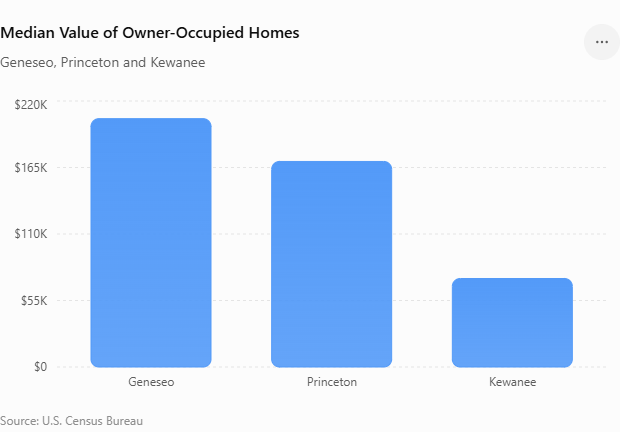
According to the Census Bureau, the median value of an owner-occupied home is:
Geneseo $205,400
Princeton $170,000
Kewanee $73,200
A home in Geneseo is worth nearly three times as much as the typical owner-occupied home in Kewanee.
At first glance, that may make Geneseo seem significantly less affordable.
But economists often view home values as a reflection of something else: demand.
Communities with strong schools, stable employment, desirable neighborhoods, and healthy local economies generally command higher home prices because more people want to live there.
Monthly Mortgage Costs
The Census also estimates what homeowners spend each month.
For homes with a mortgage, the median monthly owner cost is:
Geneseo: $1,688
Kewanee: $1,089
For homeowners without a mortgage, the median monthly housing cost is:
Geneseo: $685
Kewanee: $477
Those figures include expenses such as property taxes, insurance and utilities that are typically included in the Census definition of owner costs.
Renting
Rent follows a similar pattern.
Median monthly gross rent is:
Geneseo: $1,015
Kewanee: $797
That's a difference of more than $2,600 per year for the typical renter.
Princeton generally falls between the two communities on both home values and rental costs.
Higher Costs—But Higher Incomes
Housing tells only half the story.
The other half is income.
Median household income is:
Geneseo $70,147
Princeton $61,900
Kewanee $50,900
In other words, Geneseo households earn roughly 38% more than Kewanee households on average.
Higher incomes help offset higher housing costs.
That's why economists generally evaluate housing affordability rather than simply asking whether homes are expensive.
Homeownership
Another indicator of community stability is homeownership.
According to the Census:
76.3% of Geneseo homes are owner-occupied.
69.2% of Kewanee homes are owner-occupied.
Higher homeownership often corresponds with longer-term residency, greater neighborhood investment, and increased civic participation, although it isn't a measure of quality by itself.
Electricity Costs
Electricity is one area where Geneseo residents appear to have a cost advantage compared with state and national averages.
Geneseo operates its own municipal electric utility. Under the city's 2026 residential rate schedule, customers pay 10.829¢ per kilowatt-hour for the first 500 kWh and 10.294¢ for usage above 500 kWh, plus a $25 monthly basic charge.
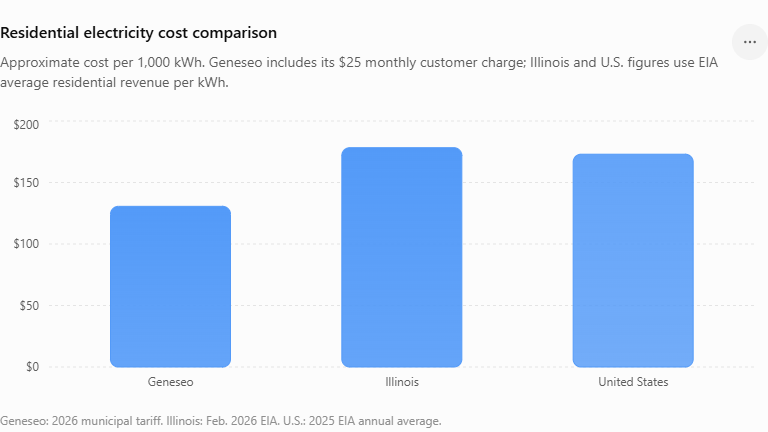
For a household using 1,000 kWh in a month, that translates to approximately $130.62 before applicable taxes, or an effective rate of about 13.06 cents per kWh when the monthly basic charge is included.
For comparison, the most recent finalized annual data from the U.S. Energy Information Administration puts Illinois' 2024 residential average at 15.87¢ per kWh. The national residential average increased to 17.30¢ per kWh in 2025.
More recent monthly data show Illinois residential electricity averaging 17.83¢ per kWh in February 2026, although monthly rates fluctuate and shouldn't be directly compared with a full-year national average.
The comparison isn't perfectly apples-to-apples. Geneseo's figure is calculated from its published rate schedule, while EIA averages represent total residential utility revenue divided by electricity sold and therefore incorporate the various costs customers actually pay. Still, the figures indicate that electricity is one household expense where Geneseo residents generally pay less than broader Illinois and national benchmarks.
It's About More Than Price
If affordability were based solely on home prices, Kewanee would clearly have the advantage.
But lower housing costs don't necessarily mean a community is less expensive overall.
Communities with lower home values often also have lower household incomes, fewer employment opportunities, or slower housing demand.
Geneseo's higher housing costs are accompanied by:
Higher household incomes
Higher educational attainment
Lower poverty
Higher homeownership
Stable population
Those characteristics generally increase demand for housing, which in turn pushes home values higher.
So, Is Geneseo More Expensive?
Yes—but the answer deserves context.
Buying or renting a home in Geneseo will generally cost more than in Kewanee and somewhat more than in Princeton.
However, residents also tend to earn more, and the community has historically maintained stronger home values.
For some buyers, Kewanee's lower home prices may make homeownership easier to achieve.
Others may find Geneseo's combination of schools, employment opportunities, healthcare, and community amenities worth paying more for.
Ultimately, "affordable" isn't just about the purchase price of a house.
It's about what residents earn, what they receive in return, and whether a community offers the quality of life they're looking for.
Sources:
U.S. Census Bureau — American Community Survey —
U.S. Census Bureau QuickFactsU.S. Energy Information Administration (EIA) —
U.S. Energy Information Administration — Electricity DataCity of Geneseo Public Records
Council for Community and Economic Research (C2ER) — C2ER Cost of Living Index
U.S. Bureau of Labor Statistics (BLS) — U.S. Bureau of Labor Statistics
About the State of Geneseo Series
State of Geneseo is an ongoing Geneseo Current series examining the data behind our community. Each installment explores a different aspect of life in Geneseo—from housing and affordability to schools, healthcare, infrastructure, business growth, parks, volunteerism, and local government—to better understand what makes a healthy small town thrive and where opportunities for improvement may exist.
Video: The Current Kitchen - Weeknight Chicken Noodle Soup

State Street Newswire - August 10, 2026
