
The program is from 12 noon to 1 p.m. in the Geneseo Community Center Activity Room, 541 East North St., Geneseo. Kim Sefton and Tess Peters, PT, DPT, PCS, also in the Hammond-Henry Rehab Dept., will present the program on “Incontinence.”
Read moreCentral Bank Illinois Announces Key Officer Promotions
GENESEO, IL — Central Bank Illinois is proud to announce a series of executive and officer-level promotions that reinforce its commitment to local leadership and operational excellence. These advancements recognize the significant contributions of five dedicated professionals who have consistently demonstrated the bank's core values of community service and financial integrity.

Leading the executive advancements, April Davis and Chrissy Eaker have been appointed to the bank's Senior Management team. These strategic transitions take place in preparation for the retirement of long-term employees Denise Ward and Jackie Despain, ensuring a seamless continuation of leadership within these key roles.
Davis has been promoted to Senior Vice President, Human Resource Officer. Recently distinguished as an Illinois Bankers Association Woman of Impact, she will continue to spearhead the bank’s talent strategy and organizational culture from the Geneseo headquarters. Eaker, stepping into the role of Vice President, Operations Officer, will oversee the critical systems and processes that support the bank's deposit operations across 10 locations.
Reflecting the bank's continued growth and expansion within its respective markets and departments, several other key promotions have been announced. The bank’s lending division sees expanded leadership with the promotion of Kim Ewald to Vice President, Loan Officer. Ewald brings years of expertise to the bank’s diverse lending portfolio in the Rochelle, IL area market.
Kristi Kinmon has been promoted to Assistant Vice President, Loan Officer, where she will facilitate consumer and real estate loans in the Sterling and Rock Falls market.
Additionally, the Trust and Asset Management division is strengthened by the promotion of Carlie Sanchez to Trust Administration Officer, ensuring the continued delivery of top-tier fiduciary services to the bank’s clients.
“At Central Bank Illinois, our greatest asset is our people,” stated President and CEO John DuBois.
“These promotions reflect our belief in fostering internal growth and rewarding the professionals who help our customers achieve their financial goals every day.”
Central Bank Illinois is a full-service commercial bank providing a complete line of banking and trust services to individuals and businesses throughout the region. The institution is headquartered in Geneseo, Illinois, with full-service branch locations in the Illinois communities of Andover, Ashton, Fulton, Geneseo, Oregon, Peru, Princeton, Rochelle, and Sterling, with a limited-purpose loan office in Prophetstown. Member FDIC, Equal Housing Lender/Equal Opportunity Employer.
Hospital Foundation Plans Feb. 27 Estate Planning Basics Program
The program is being offered by the Hospital Foundation and includes a complimentary lunch. There is no cost or obligation. Parking is available in the hospital’s east parking lot on Center St.
Read moreGHS Speech Team Entering Tournament Season
The Geneseo High School Speech Team is entering IHSA tournament season with Regionals on Saturday at Monmouth-Roseville High School.
Read moreCaffeine & Carbs Adds Collab Corner
There’s something new at Caffeine & Carbs! In addition to a menu of coffee and tea drinks, fresh pastries and bagel sandwiches, something new has been added in a corner of the popular coffee shop.
Read moreYoung Geneseo Chefs Advance on Food Network TV Show
Abigail and Kenneth Wolf didn’t just “survive,” the fifth episode of Food Network’s TV Show “Baking Championship: Next Gen,” series, which aired on Monday, Feb. 2, the brother and sister team placed second out of the seven teams in competition.
Read moreThe Henry County Sheriff’s Office & Henry County State’s Attorney’s Office Announce a Suspect in Cold Case Homicide
The Henry County Sheriff’s Office, in coordination with the Henry County State’s Attorney’s Office, announces a suspect in a cold case homicide.
Read moreLadders to Learning Preschool Screenings for the 2026-27 School Year Are Coming Soon!

Families with children ages 3, 4, and 5 are invited to schedule a screening on March 2, 3, or 4 at First Congregational Church in Geneseo. Ladders to Learning is a half-day preschool program designed to support young learners who are not yet eligible for kindergarten.
Read moreIllinois Sherrifs’ Association Announces Scholarships
The Illinois Sheriffs’ Association announces that it will be awarding over $58,000 in college scholarships throughout the State of Illinois to students wishing to pursue higher education during the 2026-2027 academic year.
Read moreGeneseo Sibling Chefs Ready for Week 5 Competition
The Geneseo brother and sister team of Abigail Wolf and her brother Kenneth Wolf will continue competing on the fifth segment of the Food Network’s “Baking Championship: Next Gen,” series, which will be televised at 7 p.m. Monday, Feb. 2.
Read moreSol's Legacy Ministries Receives Rotary Grant

Tonya Wells, Executive Director of Sol’s Legacy receives a $500 grant by Rotarian Katie Orwig.
Read morePets and Winter Weather
Pets need special care in cold weather, just as they do in hot weather. Winter weather and frigid temperatures have arrived, along with snow and ice and pet owners are advised to take special care of their domestic friends.
Read moreLil Poms Perform at Girls’ Basketball Game
By Claudia Loucks
Geneseo Current
The Geneseo High School Maplettes were joined by more than 100 “future Maplettes” for the Lil Pom performance at the girls’ basketball game vs. Erie-Prophetstown held Jan. 24 at GHS. The dancers performed to music from “Dancing Through Life.” The routine was choreographed by GHS junior Alexandra Duncan and GHS senior Jack Cooper. The Maplettes are coached by Lydia Reyburn, Michelle Fryear, Yvonne Wayne and Maelyn Gentry.
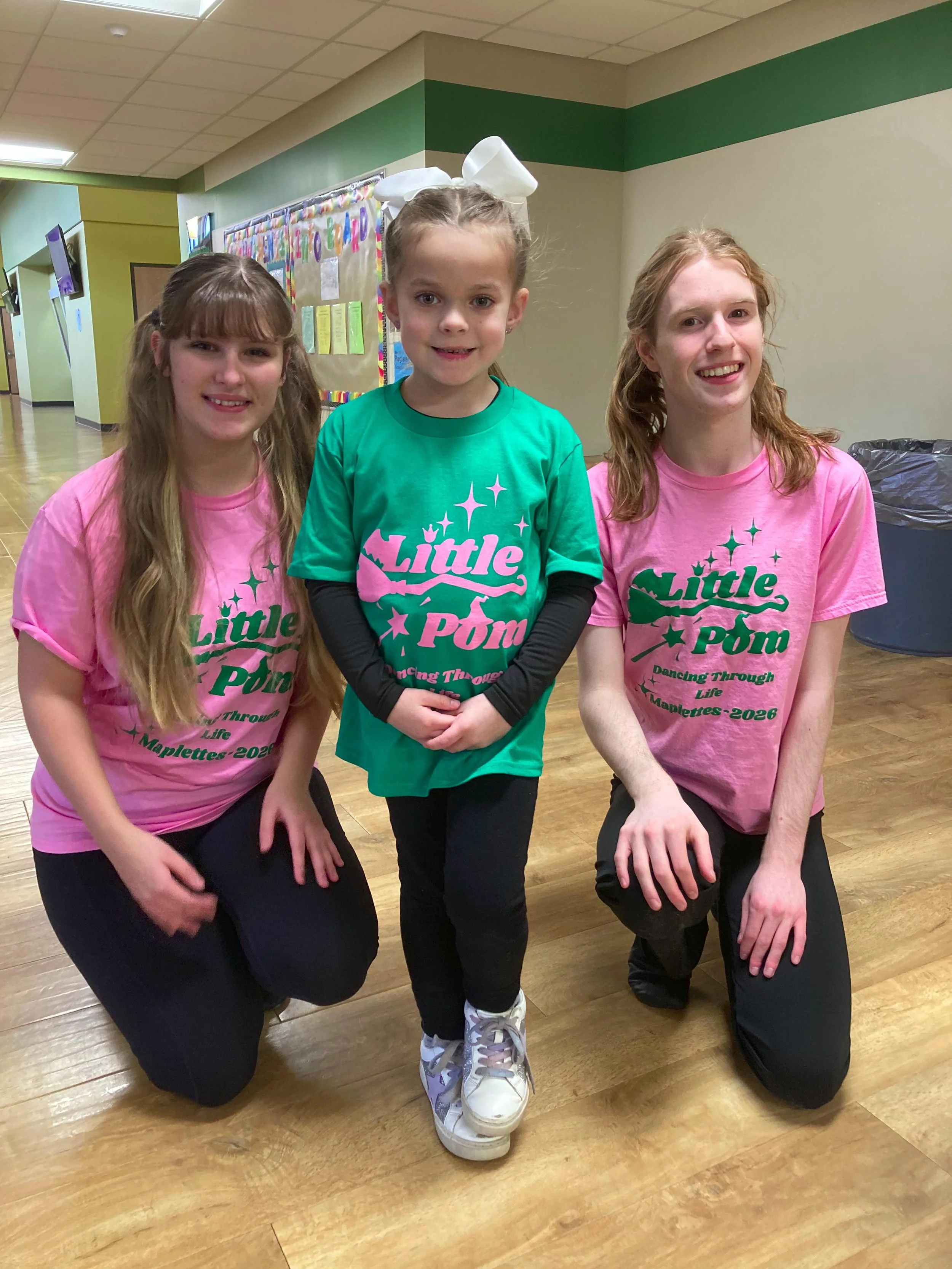
Posing for a photo prior to the dance performance are, from left, junior Alexandra Duncan, six-year-old Sadie Fryear and senior Jack Cooper. Photo by Claudia Loucks
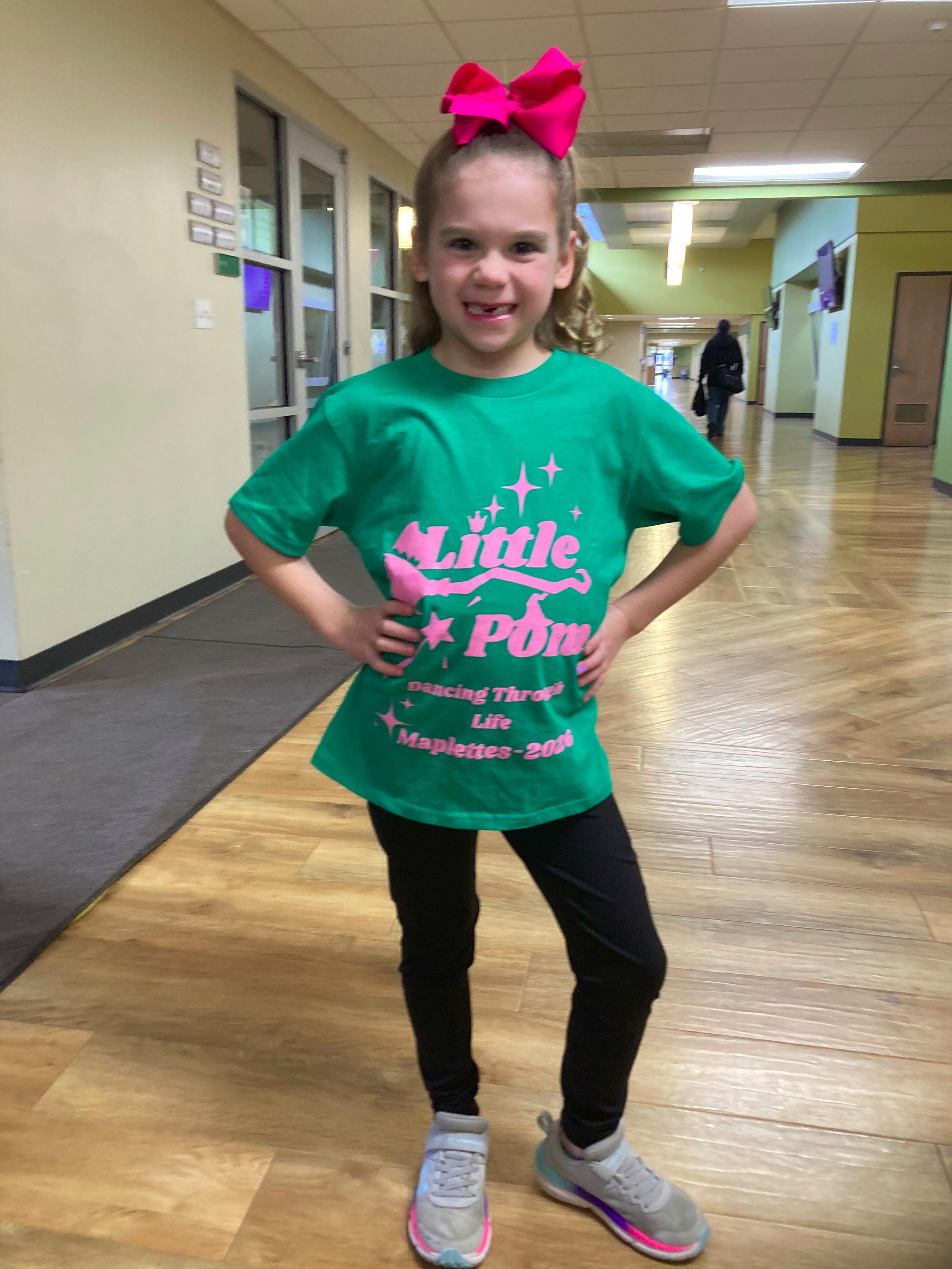
Seven-year-old Elsie Russelburg was among the young dancers in the Maplettes performance at the girls’ basketball game on Jan. 24. Photos by Claudia Loucks

Malaki Jackson Wrestles His Way to 100 Wins
Jackson, the son of Andre Jackson and Leticia Rivera, is a senior at GHS. He wrestles in the 144-lb weight class.
Read moreHammond-Henry Hospital Highlights Funding Challenges Facing Rural Healthcare
On January 12, Hammond-Henry Hospital hosted a press conference with State Representative Li Arellano to outline how gaps in state and federal funding are affecting rural hospitals. While Hammond-Henry serves a rural population, it is also designated as a critical access hospital, a classification intended to help ensure essential healthcare services remain available in remote communities.
Read moreBaby Bottle 2026 Campaign Benefits Pregnancy Resources
Sandy French of Geneseo is a services coordinator at Pregnancy Resources and each year she helps the non-profit organization to raise funds through the Baby Bottle Campaign.
Read moreWhy Extreme Cold Can Lead to School Closures
by Sarah DeMaranville
When schools close due to extreme cold, the decision often raises questions—particularly when roads are clear and snowfall is minimal. However, temperature and wind chill alone can create safety risks that affect transportation, outdoor exposure, and emergency response, especially in rural districts.
Geneseo School District officials note that their goal is always to keep students in school when conditions allow. Superintendent Dr. Laura Delgado explained in a recent blog post, “The ultimate goal is to keep our students safely in school whenever possible,” while acknowledging that “when you live in the Midwest, there will be days when the roads, snow, ice, wind, and temperatures will prevent us from doing that.”
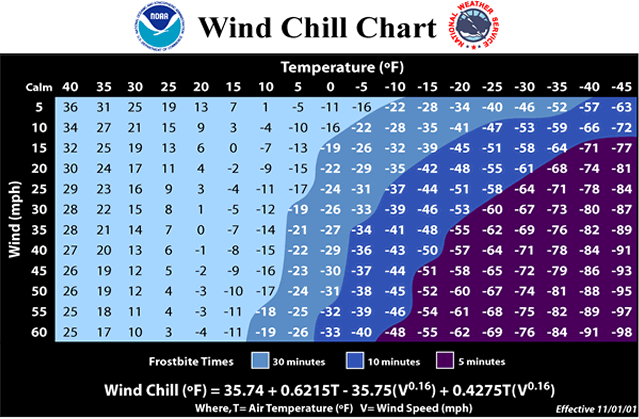
Image from NOAA and National Weather Service
Safety concerns become more pronounced as temperatures reach extreme levels. At wind chill readings near −35°F, exposed skin can freeze in as little as ten minutes. Children are particularly vulnerable because they lose body heat more quickly than adults, often have exposed skin on the face, ears, and hands, and may not recognize or communicate early signs of frostbite.
The greatest risk during severe cold does not occur inside heated school buildings, but during routine transitions throughout the day. Waiting at bus stops and walking from drop-off areas to school entrances require outdoor exposure. In temperatures this low, even minor delays can significantly increase the risk of hypothermia.
Transportation safety is another key factor. The Geneseo School District spans more than 260 square miles, much of it rural, which means longer bus routes and increased exposure time. At temperatures near −35°F, buses are more likely to experience mechanical issues such as difficulty starting, frozen doors, or battery and fuel system failures. A stalled bus can leave students waiting in dangerous wind-chill conditions while assistance is arranged.
Extreme cold can also stress the respiratory system. Very cold air can trigger bronchospasm in children with asthma and cause coughing, chest tightness, or breathing discomfort even in otherwise healthy students. While scarves or face coverings can help reduce airway irritation, consistent and proper use cannot be guaranteed, particularly among younger children.
Emergency response considerations also play a role. In extreme cold, response times may increase, and providing care may involve additional outdoor exposure. Minor injuries can escalate more quickly when temperatures are dangerously low, reducing the margin for safe response during the school day.
District leaders closely monitor forecasts and wind-chill advisories from the National Weather Service when making closure decisions. Dr. Delgado has acknowledged that closures are disruptive, stating, “It’s not a fun part of the job… Closing school for a day means families adjusting plans and teachers pivoting lessons.” However, she emphasized that “it will always come down to the safety of all our students.”
At −35°F, the risks associated with school attendance are not theoretical. They are predictable and tied to normal school operations, including transportation, arrival, transitions, and emergency response. District officials say closures in these conditions are made to ensure student safety, even when that decision is difficult.
Quotes attributed to Superintendent Dr. Laura Delgado sourced from a Geneseo School District blog post explaining weather-related closure decisions.
Wolf Siblings Set for Fourth Segment of Food Network TV Show
Having successfully captured spots on the first three episodes of Food Network “Baking Championship: Next Gen,” Abigail Wolf and her brother Kenneth will continue showcasing their culinary arts on the fourth segment of the show which airs at 7 p.m. on Monday, Jan. 26.
Read moreHammond-Henry Hospital CEO Named to Marquis ‘Who’s Who in America’ List
Wyatt Brieser, Hammond-Henry Hospital CEO, has been selected for inclusion in Marquis’ Who's Who in America. As in all Marquis’ Who's Who biographical volumes, individuals profiled are selected on the basis of current reference value.
Read moreGeneseo Middle School Readers Choose 2026 Community Book Read
Student readers at Geneseo Middle School have selected the Tim Green novel “Final Season,” for the 16th annual On the Same Page Community-Wide Read.
Read more