Experimental Aircraft Association members celebrated with a picnic when they presented two scholarships to local students.
Read moreGeneseo's Oliver Wells Wins National Championship in Indiana
Geneseo’s Oliver Wells captured a national championship in the 50cc PeeWee 4-5 class at the NRA XC Amateur National Championship in Attica, Indiana, after qualifying earlier this year in Colona.
Read moreState Street Newswire - August 19, 2026
The Future of Data Centers in Henry County, Part 2
The Promise and the Questions: Weighing the Benefits and Concerns
Now comes the question many Henry County residents are asking:
If a data center were proposed here, what would it mean for our community?
The answer isn't simple.
Supporters see opportunities for economic growth, infrastructure investment, and long-term tax revenue. Critics raise questions about electricity demand, land use, water consumption, and whether the benefits outweigh the costs.
Like many major development projects, data centers come with both potential advantages and legitimate concerns.
The Potential Benefits
Construction Jobs
Building a large data center is a significant construction project that can take years to complete.
During construction, hundreds of workers may be involved, including electricians, plumbers, heavy equipment operators, concrete crews, steel workers, HVAC specialists, and other skilled trades. Hotels, restaurants, fuel suppliers, and other local businesses may also see increased activity while construction is underway.
Increased Property Tax Revenue
Data centers are expensive facilities, often representing hundreds of millions—or even billions—of dollars in private investment.
Depending on how a project is structured and whether tax incentives are involved, a completed facility can add substantial value to the local property tax base. Those revenues may help support schools, local governments, and other taxing districts.
The amount ultimately received depends on local agreements, assessments, and state law.
Infrastructure Improvements
Large developments often require improvements to roads, electrical infrastructure, fiber-optic networks, and utility connections.
In some cases, those improvements can benefit other businesses or future development. In others, the infrastructure is built primarily to serve the facility itself.
Economic Diversification
Henry County has long been known for its strong agricultural and manufacturing roots.
Some local leaders see technology investment as one way to diversify the economy while continuing to support existing industries.
Others question whether that diversification provides enough long-term local benefit.
Potential Concerns
Electricity Use
Modern data centers require large amounts of power to operate thousands of servers around the clock while also running sophisticated cooling systems.
For communities considering a project, questions often include:
Can the existing electrical grid support the additional demand?
Will new transmission lines be required?
Who pays for infrastructure upgrades?
Could additional demand affect future industrial development?
These are questions utility providers and regulators evaluate before projects move forward.
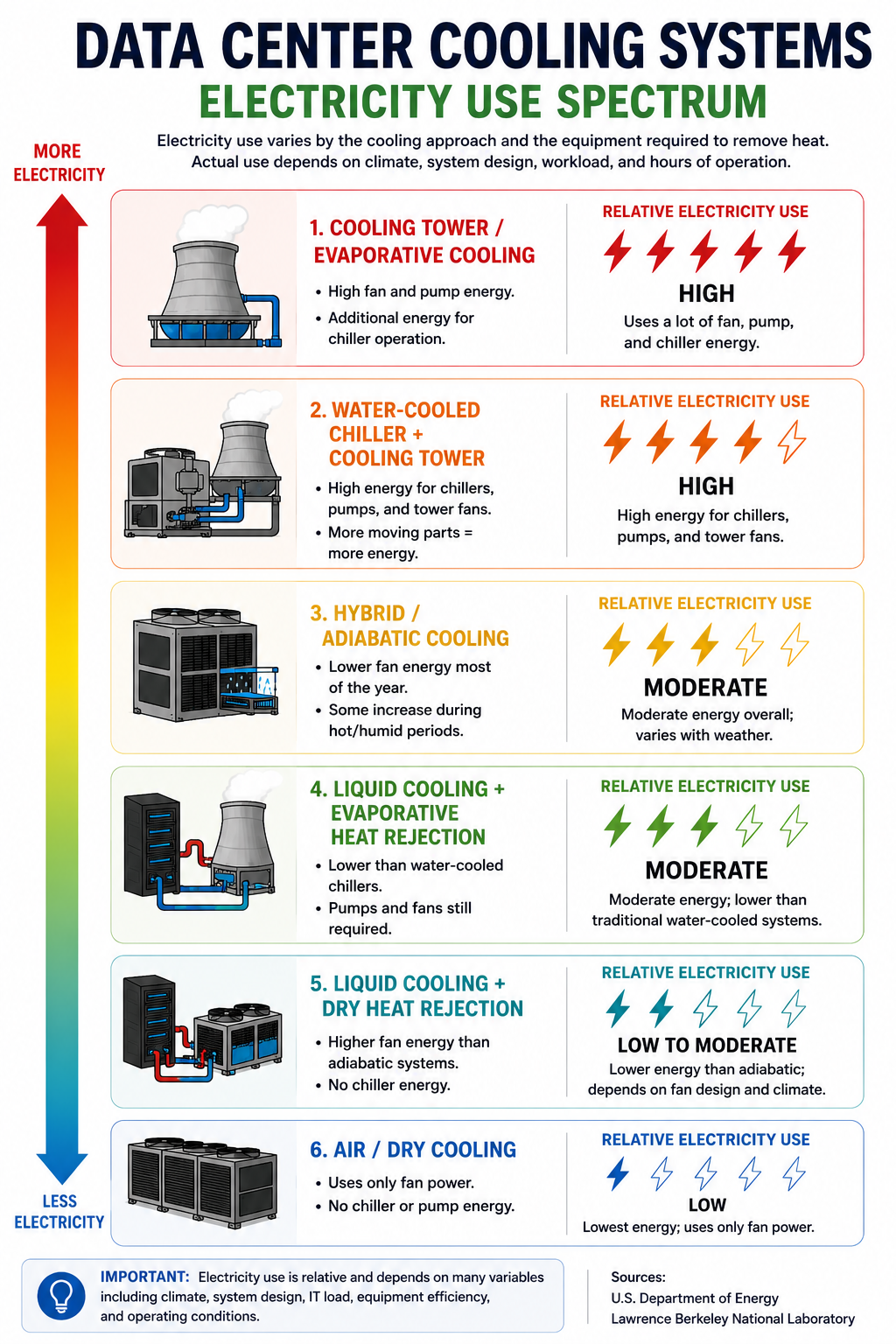
water usage
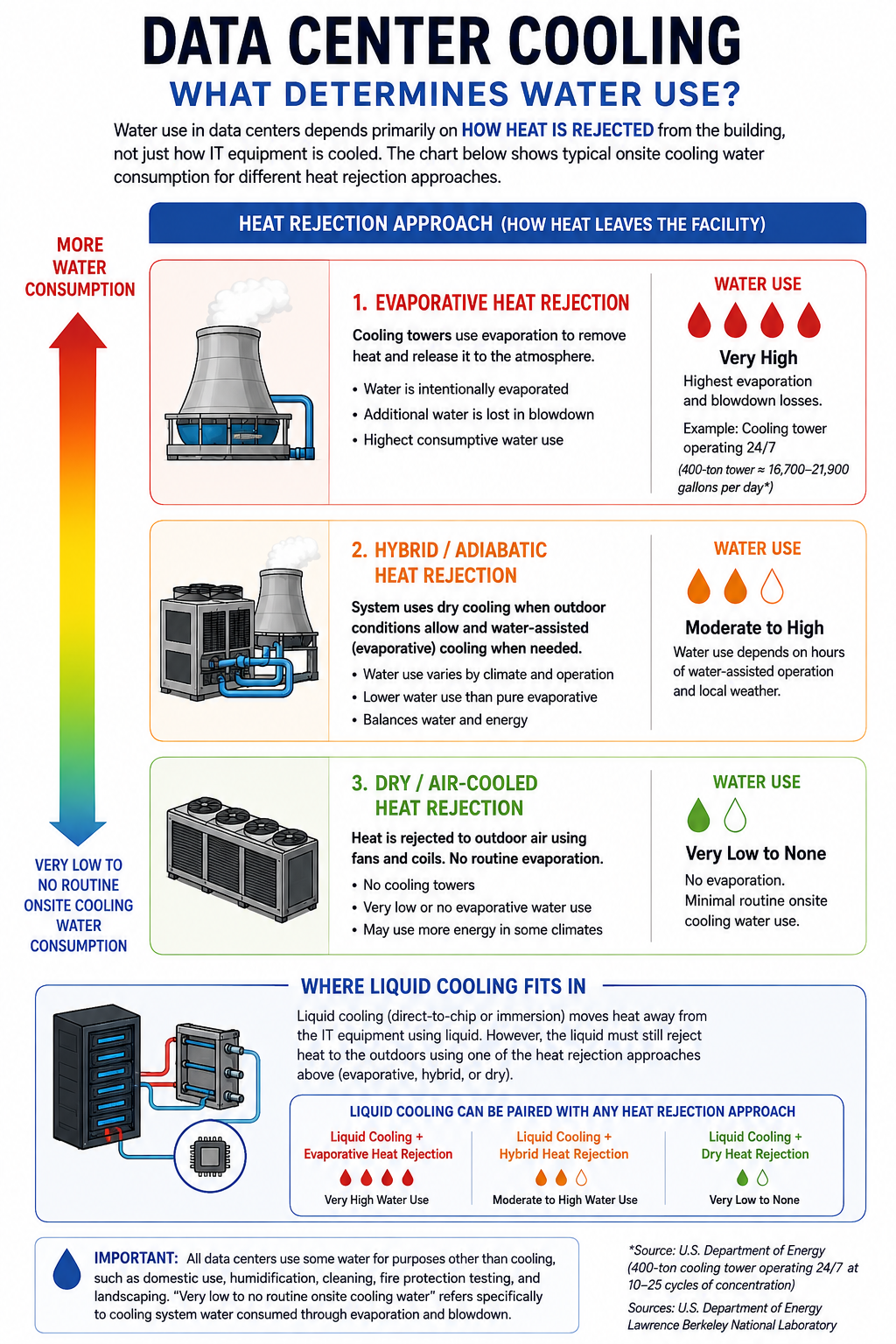
Not all data centers use the same cooling systems. Some rely heavily on air cooling, while others use water-based systems. As technology evolves, companies continue developing methods to reduce water consumption.
Because every facility is different, projected water use depends on the specific design and location of the project.
Land Use
Data centers typically require large sites with room for future expansion.
For rural communities, that raises questions about farmland preservation, neighboring property uses, building size, visual impacts, and how such developments fit within existing zoning plans.
These considerations vary widely depending on the location.
Noise
Although data centers do not generate the traffic or emissions associated with heavy manufacturing, they are not silent.
Cooling equipment, ventilation systems, and backup generators do produce noise.
Modern facilities often include sound-reduction measures, but noise remains an issue communities frequently evaluate during the planning process.
Emergency Planning
Local governments also consider emergency preparedness.
Questions may include:
How would emergency responders access the site?
What fire suppression systems are used?
How are backup fuel systems managed?
What training would local responders need?
These issues are among the reasons many communities spend months—or even years—reviewing proposals before approving construction.
A Case Study
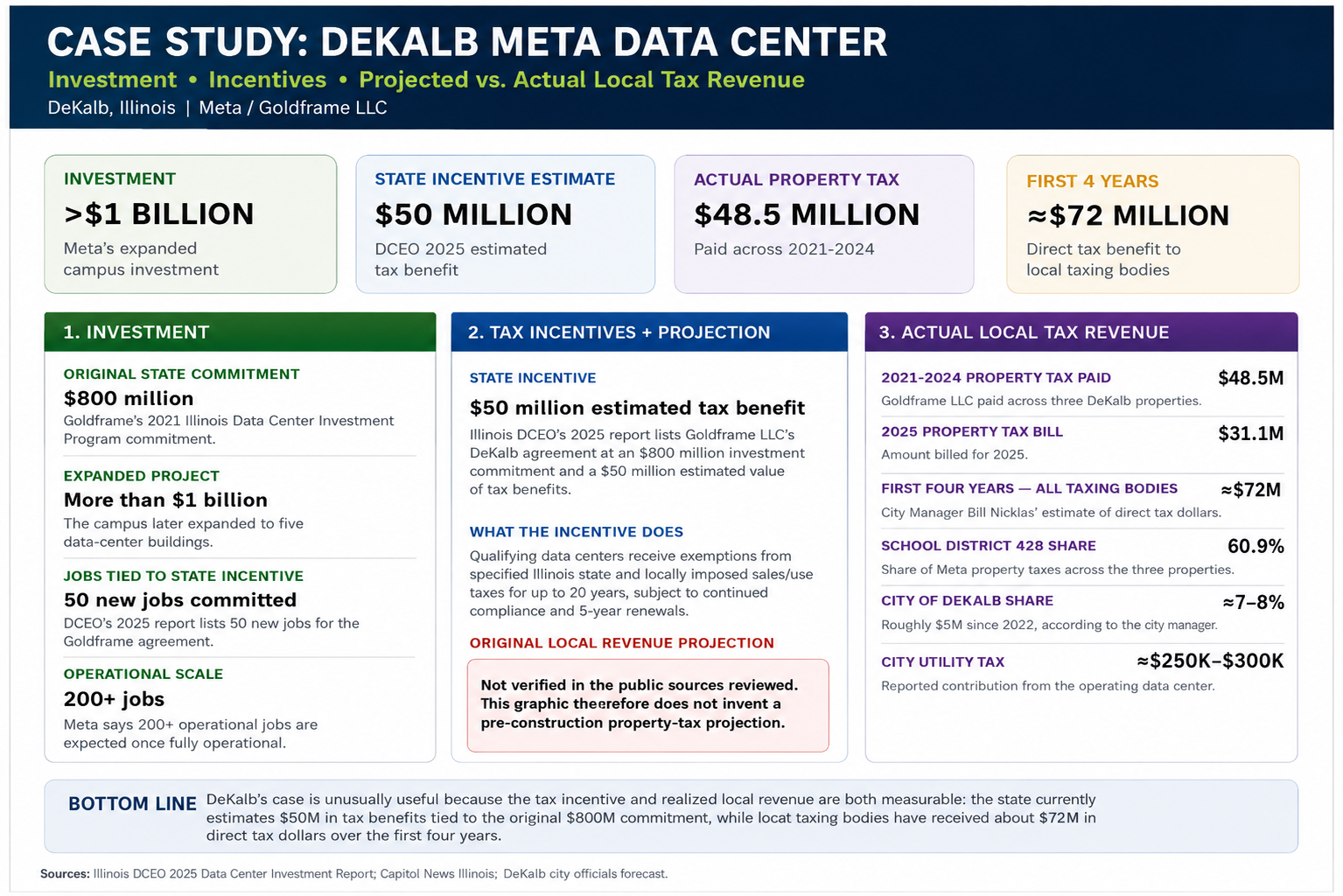
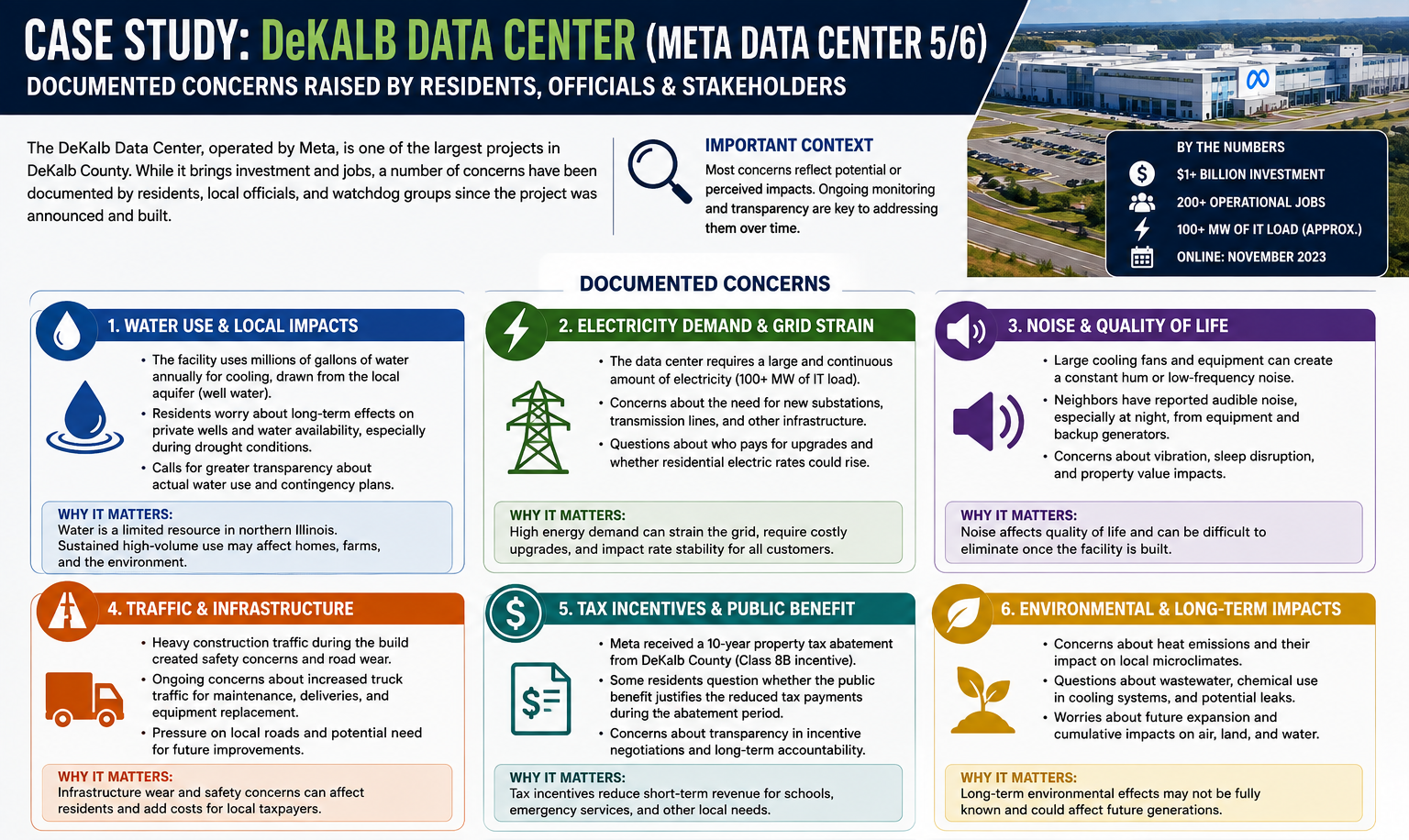
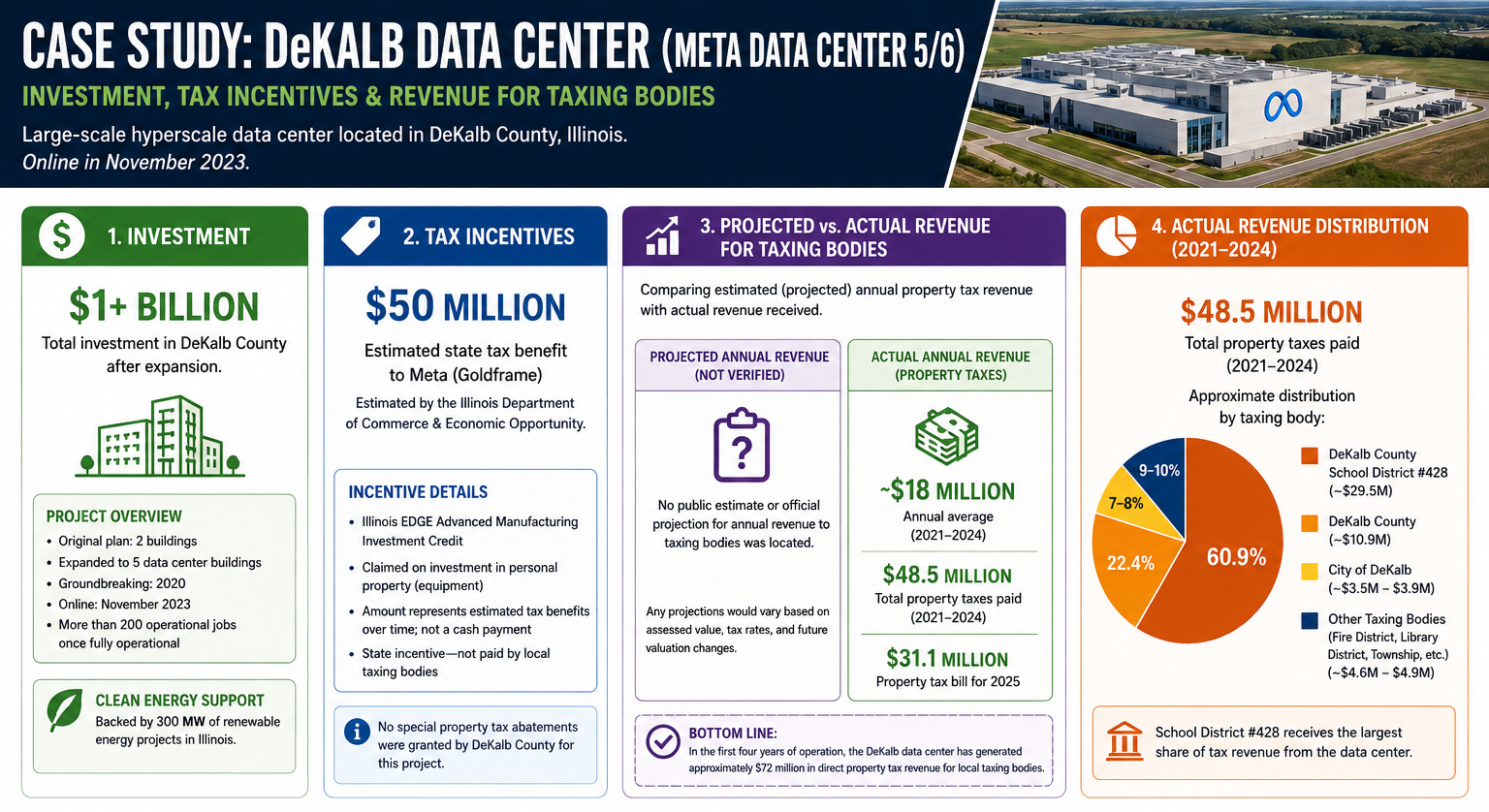
The Meta data center in DeKalb offers a real-world Illinois example for examining both the potential benefits and concerns associated with a large-scale data center after development. Rather than treating DeKalb as evidence either for or against data centers, the following case study looks at what can actually be documented: the scale of investment and employment, state tax incentives, taxes received by local taxing bodies, and concerns raised about water, electricity, noise, infrastructure and long-term impacts. Some outcomes can now be measured, while others remain questions or potential impacts that require continued monitoring.
There Isn't One Universal Answer
Across the country, some communities have welcomed data centers, believing the economic benefits outweigh the concerns.
Others have adopted stricter regulations, delayed approvals while gathering more information, or decided certain projects were not the right fit.
The differences often come down to local priorities, available infrastructure, and community goals.
Looking Ahead
Henry County has not been approached with or approved a data center project. Instead, county leaders have chosen to pause and study the issue through a temporary moratorium, giving officials time to better understand the opportunities, challenges, and potential regulations before making future decisions.
Next in the series: Henry County has already taken its first step by approving a temporary moratorium on new data centers. In Part 3, we'll explain what that moratorium means, why county officials believe it's necessary, and the questions they'll be working to answer before considering future proposals.
Sources:
U.S. Department of Energy
Data Centers and Servers (DOE)
U.S. Department of Energy / Lawrence Berkeley National Laboratory
DOE Release: 2024 Report on U.S. Data Center Energy UseU.S. Department of Energy – Powering America's AI Future: Data Center Resource Hub
DOE Data Center Resource HubCongressional Research Service Report – Data Centers and Their Energy Consumption: Frequently Asked Questions
U.S. Department of Energy – Clean Energy Resources to Meet Data Center Electricity Demand
DOE: Meeting Data Center Electricity DemandIllinois Department of Commerce & Economic Opportunity (DCEO)
JCE Co-op – "Powering Growth, Keeping Members First," HI-LINES, August 2026.

After Tyson: How Far Do Workers Have to Go to Find Comparable Jobs?
After Tyson’s Joslin plant closure displaced approximately 2,500 workers, The Geneseo Current examines how far workers may need to travel to find comparable manufacturing and food-processing jobs — and what employment options remain closer to home.
Read moreGeneseo Communications, Cambridge Telcom and Henry County Telephone Boards Approve Sale to Joink
Geneseo Communications’ board has approved a proposed merger with Indiana-based Joink, LLC, following a search for potential buyers. The deal remains subject to shareholder approval.
Read moreState Street Newswire - August 18, 2026
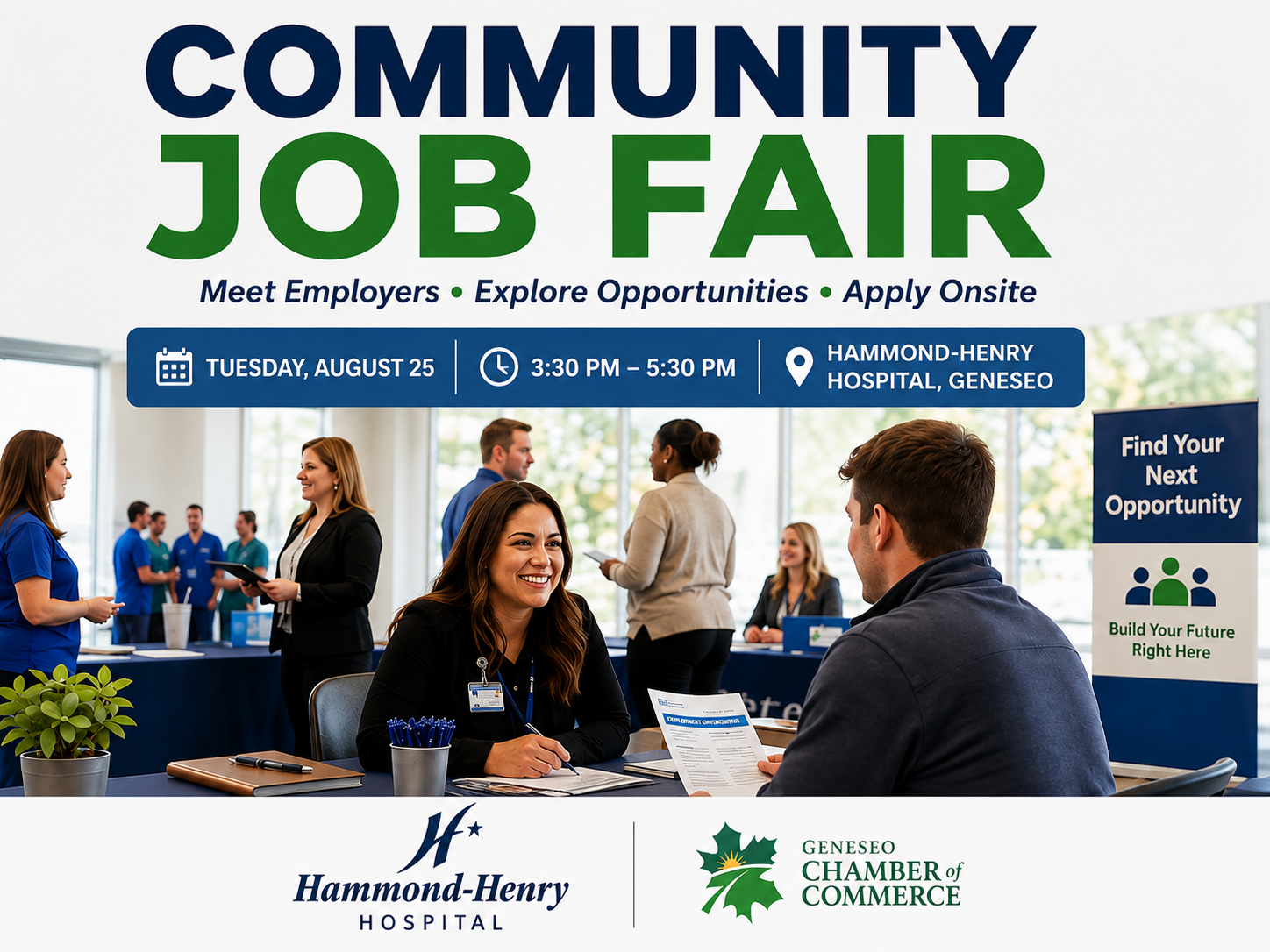
Community Job Fair Takes Shape in Geneseo Following Tyson Joslin Closure
A Community Job Fair will connect job seekers with local employers Tuesday, Aug. 25, from 3:30–5:30 p.m. at Hammond-Henry Hospital in Geneseo. Organized with the Geneseo Chamber of Commerce following the Tyson Joslin plant closure, the free event is open to the public.
Read moreAre Geneseo School Property Taxes High? Here's What the Numbers Show
Geneseo’s school property tax rate falls near the middle of comparable Illinois districts. A closer look at tax rates, property wealth and state funding shows why comparing school taxes requires more than one number.
Read moreState Street Newswire - August 17, 2026
Beyond the Jobs: Tyson Closure Reshapes the Cattle Market for Area Producer
The Tyson Foods Joslin plant closure is reshaping the cattle market across western Illinois and eastern Iowa, leaving area producers facing longer hauls, higher costs, fewer local buyers and uncertainty over cattle prices.
Read moreGeneseo Graduate Kayden Etter Explores Identity, Belonging and History in Ink & Saltwater
Geneseo graduate Kayden Etter discusses his debut novel, Ink & Saltwater, a historical fiction story set aboard the Titanic that explores identity, belonging and the lives often left out of the historical record.
Read moreHanford Insurance Named a 2026 Best Practices Agency
Hanford Insurance has been named a 2026 Best Practices Agency, placing the Geneseo-based independent insurance agency among 300 top-performing agencies nationwide.
Read moreLinda Miller is Volunteer of the Month at Food Pantry
Linda Miller is the Volunteer of the Month at the Geneseo-Atkinson Food Pantry. She has been a volunteer at the food pantry for one year, where she assists in the foods room and sorts donations in the clothing room.
Read moreTyson Foods Closes Joslin Beef Plant, Eliminating Thousands of Jobs and Sending Economic Shock Through Region
Tyson Foods has closed its Joslin beef processing plant, affecting more than 2,500 workers. Here’s what is known about the closure, Tyson’s restructuring and employment resources available to displaced workers.
Read moreSugar Maple Lady Golfers Raise Funds for Breast Cancer Awareness
The recent Annual Breast Cancer Awareness event, hosted by the Sugar Maple Ladies Golf League and held at Sugar Maple Golf Club, Geneseo, raised a total of $2,780 which was donated to the Trinity Cancer Center Expansion Fund.
Read moreGeneseo School Board Reviews FY27 Budget as District Confronts Rising Costs, Declining Enrollment
Geneseo CUSD #228 reviewed its tentative FY27 budget, including a $975,805 Education Fund deficit, rising healthcare costs, declining enrollment and long-term plans to strengthen the district’s financial position.
Read moreState Street Newswire - August 14, 2026
Video: Geneseo Now! with Geneseo Schools Superintendent Dr. Laura Delgado
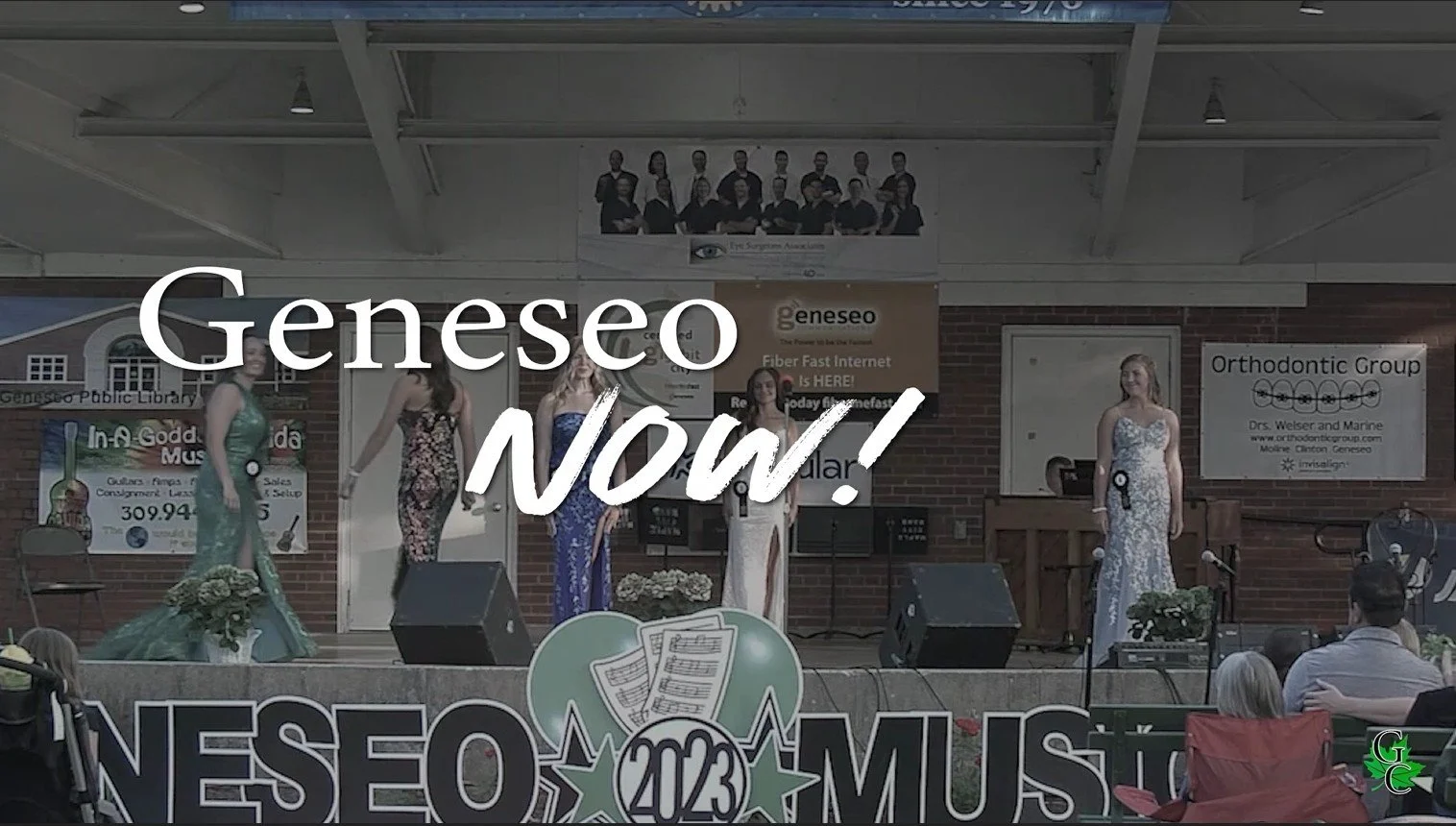
On this episode of Geneseo Now we talk to Geneseo Schools superintendent, Dr. Laura Delgado
Read moreRichmond Hill Players to Present ‘Picasso at the Lapin Agile’, opening Aug. 20
Geneseo’s Richmond Hill Players continue the 2026 season with “Picasso at the Lapin Agile,” a comedy by Steve Martin.
Read more