Can Schools Discipline Students for What They Do Outside School?

by Sarah DeMaranville

The Geneseo Current

Social media, group chats and weekend conflicts can spill into the classroom — but schools’ authority has limits.

A social media post made from a student’s bedroom. A text sent on a Saturday night. An argument at a private gathering. A group chat that erupts over the weekend.

None of this may happen inside a school building.

But by Monday morning, screenshots may be circulating, students may be confronting one another, and administrators may be hearing from concerned parents.

So when does something that happens outside school become a school concern?

There is no single rule. Public schools have responsibilities involving student safety, access to education, and school operations. Students also retain constitutional rights when they are away from school.

When off-campus activity reaches school

Something that happens away from school can become relevant to administrators when it begins affecting what happens at school.

That could include threats, confrontations, absences, interruptions to instruction, or interference with a student's ability to participate in school. Officials may also consider whether students or employees were targeted or whether an athletic team, school organization, account, or device was involved.

Safety concerns are among the clearest examples. Threats against students or employees, information about possible weapons or planned violence, or other credible concerns may require a school response even when the original communication occurred elsewhere.

That response could include a safety assessment, contacting parents, student support, or law enforcement. But responding to a safety concern and disciplining a student for the underlying speech are separate questions.

Bullying can cross into school

Illinois law also addresses cyberbullying, including electronic communication that affects students.

Beginning with the 2026-27 school year, Illinois' definition of cyberbullying includes certain unauthorized digital replicas, sometimes broadly described as deepfakes, when their distribution produces effects covered by the state's bullying law.

But not every rude comment, online disagreement or argument between students qualifies as bullying.

Schools must consider the circumstances, applicable law and district policies.

What counts as disruption?

The U.S. Supreme Court has long recognized that public-school students have First Amendment rights.

In the 1969 case Tinker v. Des Moines Independent Community School District, the Court also recognized that schools may regulate student expression in certain circumstances involving substantial disruption of schoolwork or interference with the rights of others.

That makes what actually happens at school important.

Did classes have to be interrupted? Did students confront one another? Did someone stay home because of safety concerns? Did the incident interfere with a school activity?

Simply being offensive, unpopular, or upsetting does not automatically establish the kind of disruption that allows a public school to restrict otherwise protected speech.

The Supreme Court addressed off-campus social media

The Supreme Court considered the issue more directly in 2021 in Mahanoy Area School District v. B.L.

The case involved a student who posted vulgar comments about her school and cheerleading team on Snapchat while away from school on a weekend. The school suspended her from the junior varsity cheerleading squad.

The Supreme Court ruled in the student's favor.

But the Court did not say schools can never address off-campus speech. Instead, it emphasized that schools generally have less authority over students when they are away from campus and outside school supervision.

The Court also identified circumstances where schools can retain an important interest, including serious bullying or harassment, threats against students or teachers, violations involving schoolwork or online school activities, and breaches of school security.

Geneseo district points to existing policies

Asked how Geneseo CUSD #228 approaches student conduct outside school, Superintendent Dr. Laura Delgado referred The Geneseo Current to existing district policies and student-parent handbooks.

“At this time, the district has no specific comment regarding your questions,” Delgado said. “Instead, we refer you to our existing Board policies and student-parent handbooks, which outline the applicable expectations, procedures, and responsibilities related to student conduct, safety, technology use, bullying and harassment, extracurricular activities, and other relevant matters.”

Delgado said individual circumstances matter.

“Every situation is unique and must be considered based on its individual facts and circumstances. When concerns arise, we commit to thoughtfully and carefully reviewing the circumstances, considering student well-being, safety, educational access, school operations, and the applicable policies and legal requirements.”

What parents and students should know

An incident happening outside school does not automatically put it beyond a school's concern. But something affecting school also does not automatically give administrators unrestricted authority to discipline students for off-campus conduct.

When a situation spills into school, families can preserve complete messages, screenshots, dates, and other context. Immediate safety concerns should be reported promptly.

If discipline is being considered, families can ask which district policy applies, what connection the school believes exists between the conduct and school, and what complaint or appeal procedures are available.

Ultimately, the circumstances matter: what happened, where it happened, who was affected, what happened at school as a result, which policies and laws apply, and what response the school proposes.

More Theme Dress Days at GHS for Homecoming Week

By Claudia Loucks

Geneseo Current

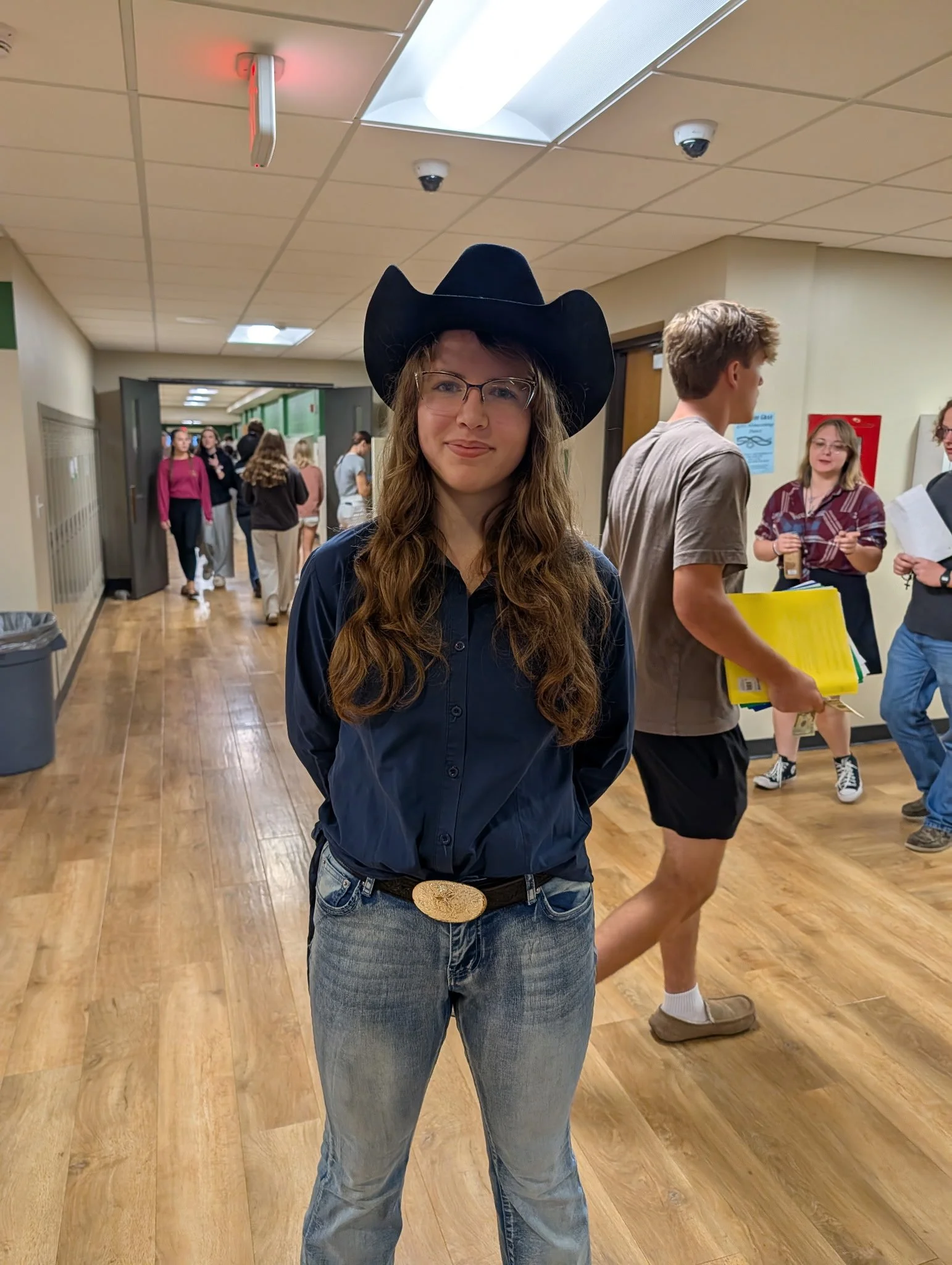
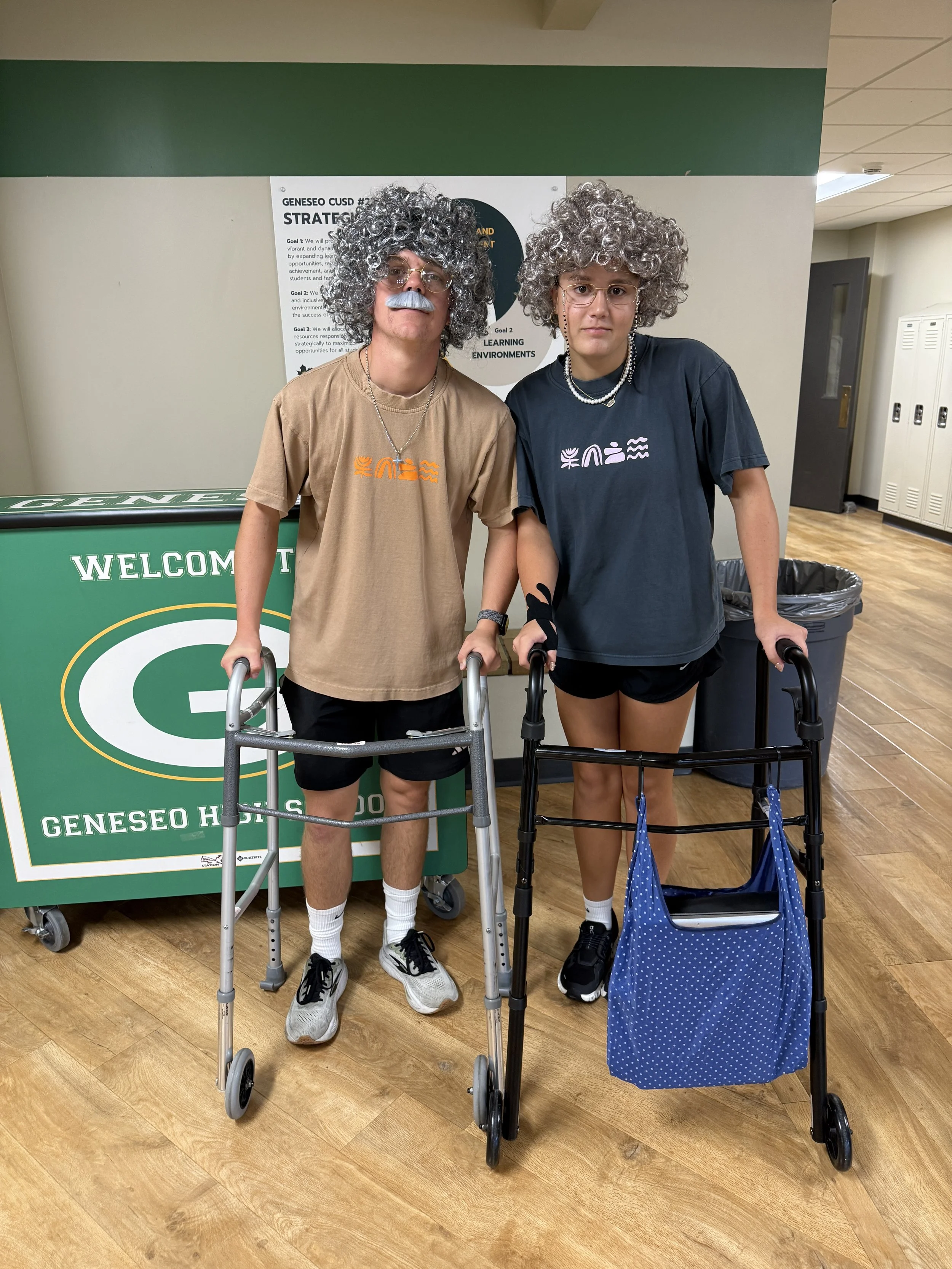
Geneseo High School students and staff kept the Theme Dress Days alive during 2026 Homecoming Week festivities. This year’s homecoming theme is “Mardi Gras.”

Photos from:

  • Wednesday -Sept. 9 – Country vs. Country Club Day

  • Thursday - Sept. 10 – Generations Day:

    • Seniors dress as Senior Citizens

    • Juniors dress as Middle School students

    • Sophomores dress as Toddlers

    • Freshmen dress as Babies

The coronation of the homecoming court will take place at the homecoming dance on Saturday, Sept. 12, in the school gym.

The homecoming parade will be at 3:30 p.m. on Friday, Sept. 11, starting at Geneseo City Park and traveling north through downtown on State Street and to the high school. The varsity football game (Geneseo vs. Moline) will be at 7 p.m. after the frosh-soph game at 5 p.m.

A Closer Look at Geneseo Schools’ FY27 Budget

The Geneseo Community Unit School District 228's proposed FY27 budget outlines how much money the district expects to receive, spend and have remaining during the 2026-27 fiscal year.

The district's finances are divided among several funds. Each fund is used for different types of expenses, such as education, transportation, building operations and debt payments.

The Education Fund is the district's largest operating fund. It pays for much of the day-to-day operation of the schools, including salaries, employee benefits, instructional programs, supplies and special-education expenses.

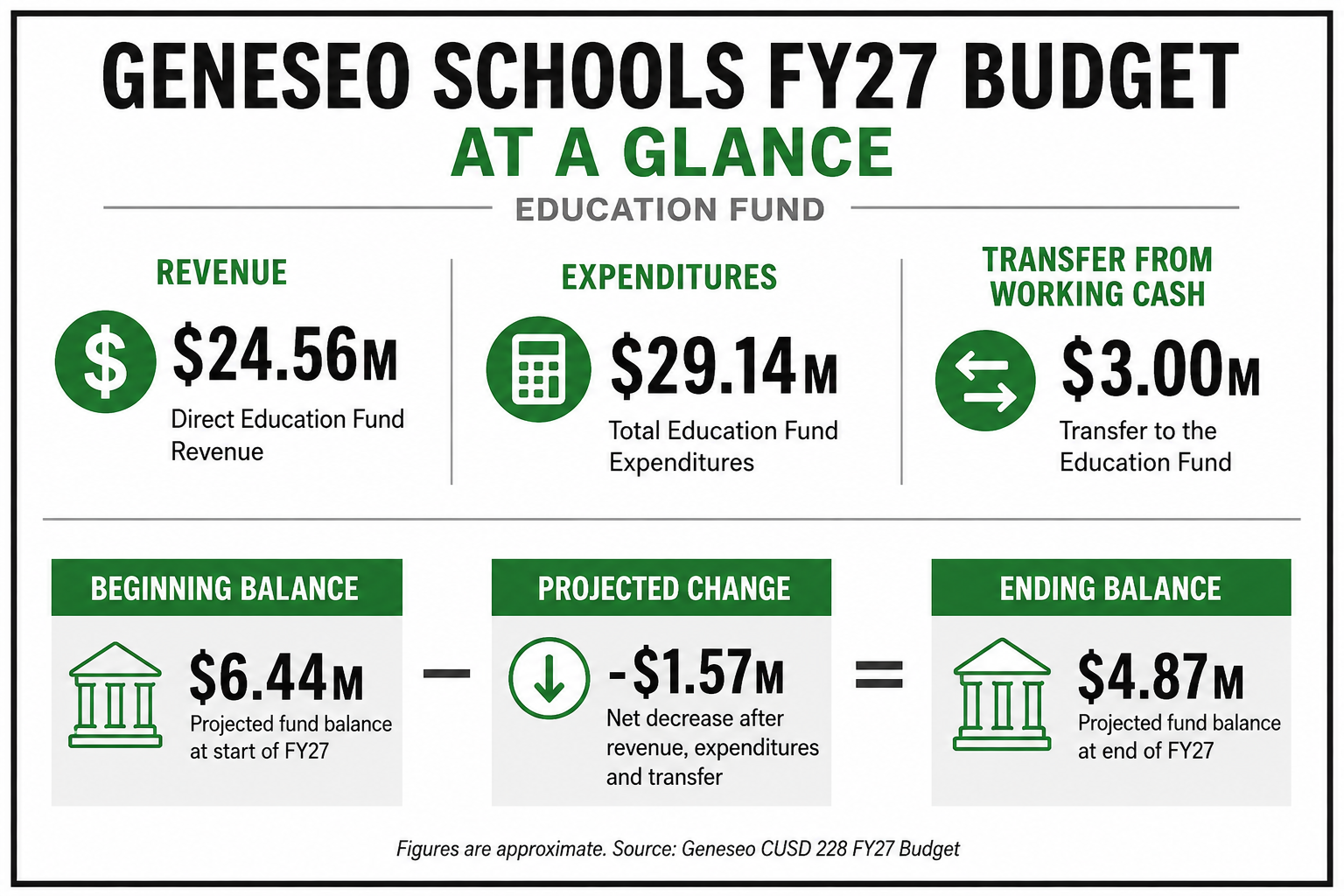
For FY27, the district is budgeting approximately $24.56 million in direct Education Fund revenue and approximately $29.14 million in expenditures.

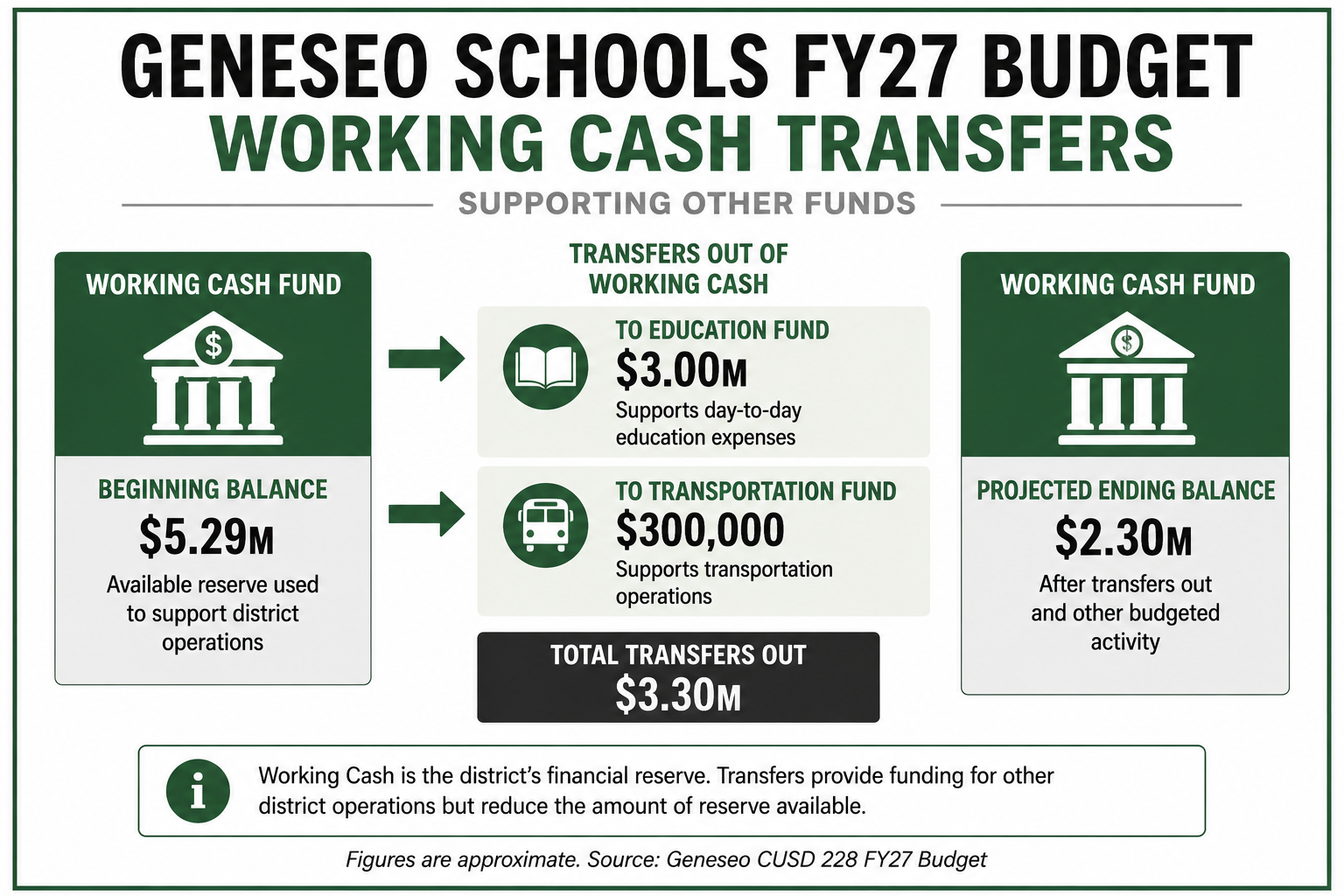
The budget also includes a $3 million transfer from the Working Cash Fund to the Education Fund.

After revenues, expenditures and the transfer are included, the Education Fund is projected to decrease by approximately $1.57 million during FY27.

The Education Fund begins the year with a projected fund balance of approximately $6.44 million and is projected to end the year at approximately $4.87 million.

Where Education Fund revenue comes from

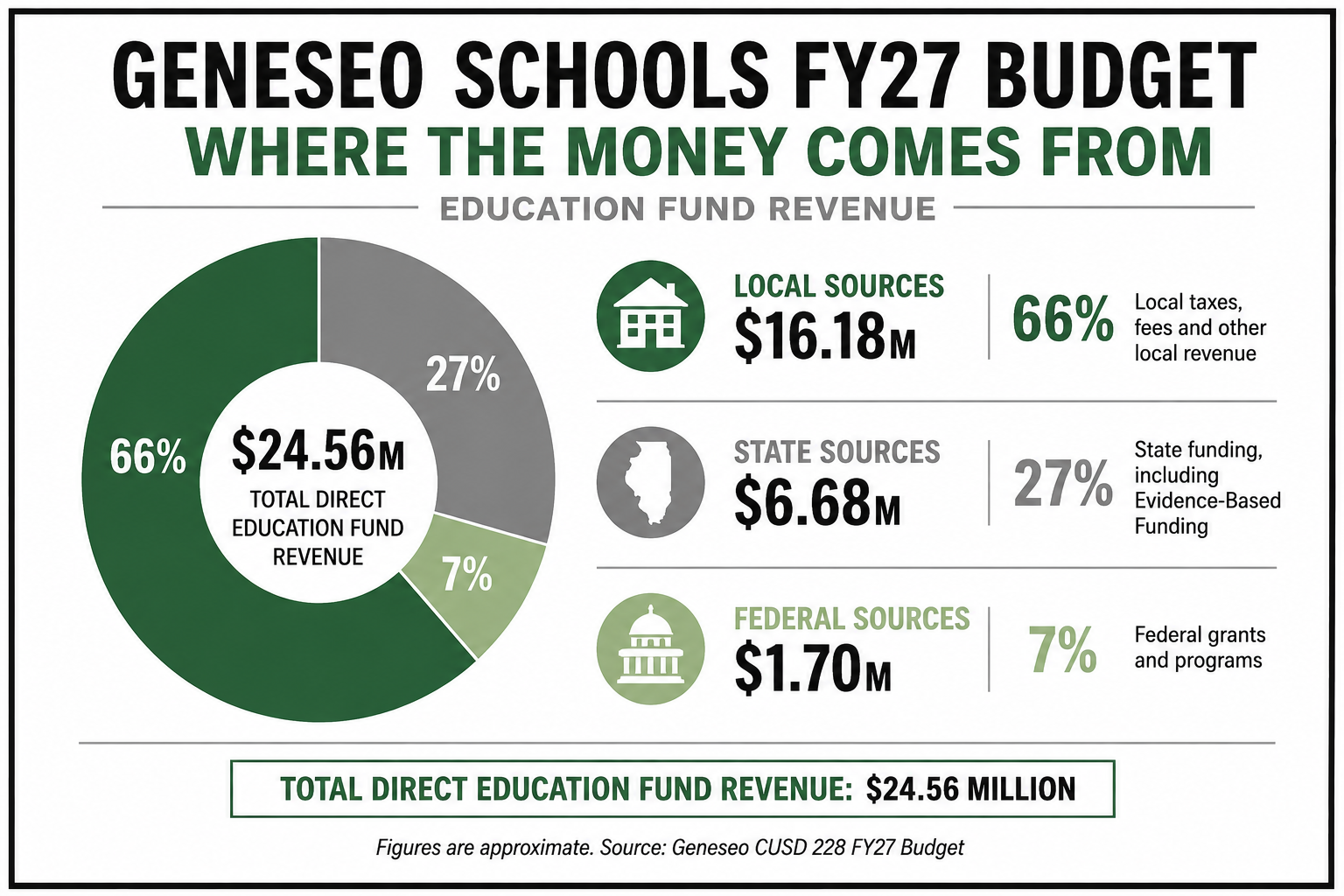
The district expects approximately $16.18 million from local sources.

Approximately $6.68 million is expected from the State of Illinois. That includes approximately $6.15 million in Evidence-Based Funding.

Federal revenue is budgeted at approximately $1.70 million.

Together, those sources account for approximately $24.56 million in direct Education Fund revenue.

Salaries and benefits

Salaries are the largest expenditure category in the district's budget.

Across all district funds, approximately $18.46 million is budgeted for salaries.

Approximately $5.90 million is budgeted for employee benefits.

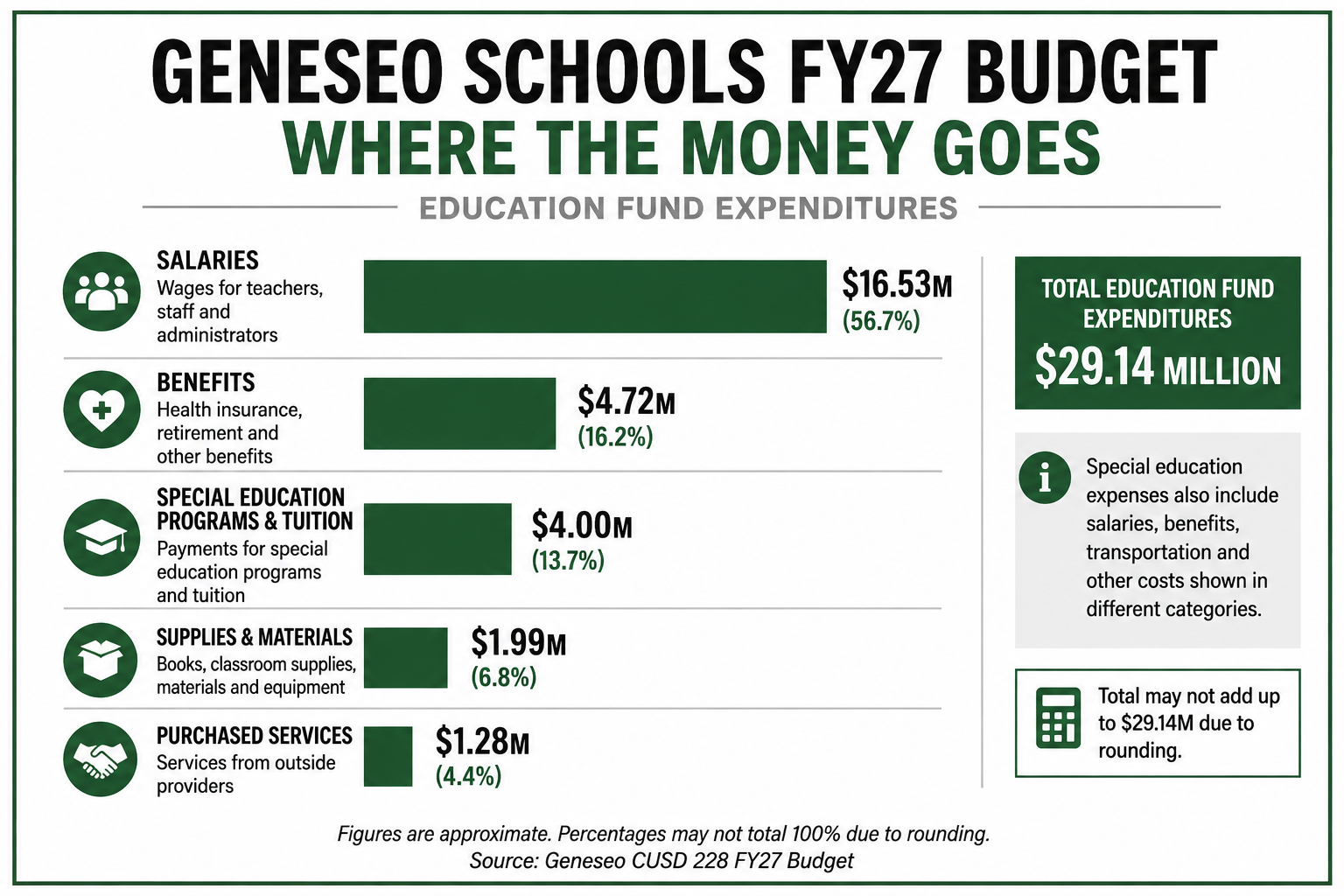
Within the Education Fund, approximately $16.53 million is budgeted for salaries and approximately $4.72 million for employee benefits.

The Education Fund also includes approximately $1.28 million for purchased services and approximately $1.99 million for supplies and materials.

The budget includes approximately $4 million for special-education programs and tuition. Other special-education expenses, including salaries, benefits and transportation, are included elsewhere in the budget.

Transportation Fund

The district expects approximately $2.51 million in direct Transportation Fund revenue and approximately $2.81 million in expenditures.

The budget includes a $300,000 transfer from the Working Cash Fund into the Transportation Fund.

After the transfer and other budgeted activity, the Transportation Fund is projected to end FY27 with approximately $896,608, compared with a beginning balance of approximately $893,968.

The district expects approximately $1.37 million in state transportation funding, including approximately $1.18 million for regular and vocational transportation and approximately $185,000 for special-education transportation.

Operations and Maintenance

The Operations and Maintenance Fund covers expenses associated with district buildings and facilities.

The fund begins FY27 with approximately $2.56 million.

The district projects approximately $2.79 million in direct revenue and approximately $2.74 million in direct expenditures.

The fund is projected to end FY27 with approximately $2.66 million after other budgeted sources are included.

Working Cash Fund

The Working Cash Fund begins FY27 with approximately $5.29 million.

The district's budget calls for transferring a total of $3.3 million from Working Cash during FY27.

Of that amount, $3 million is budgeted for transfer to the Education Fund and $300,000 to the Transportation Fund.

The Working Cash Fund is also projected to receive approximately $310,000 during FY27.

Its projected ending balance is approximately $2.30 million.

Other district funds

The district budget also includes several other funds with specific purposes.

These include the Municipal Retirement/Social Security Fund, Debt Service Fund, Capital Projects Fund, Tort Fund and Fire Prevention and Safety Fund.

Money budgeted within those funds is used for expenses associated with their respective purposes and is reported separately from the Education, Transportation and Operations and Maintenance funds.

Fund balance and cash balance

The state budget form separately reports projected fund balances and projected cash balances.

The Education Fund, excluding student activity funds, is projected to end FY27 with a fund balance of approximately $4.87 million.

Its projected cash balance is approximately $3.79 million.

Approximately $400,000 in student activity funds brings the projected Education Fund cash total, including those funds, to approximately $4.19 million.

The FY27 budget

The FY27 budget is a financial plan for the fiscal year. The figures represent projected revenues, expenditures, transfers and balances rather than final FY27 results.

The School Board will consider the budget as part of its annual budget process before adopting a final FY27 budget.

Geneseo FFA Members Compete, Learn, and Lead Throughout July

Written by Hannah Wildemuth 

VoAg Fair

On July 2, members had the opportunity to compete at the Section 3 Vocational Agriculture Fair at the Cambridge Fairgrounds. They competed in various livestock and crop areas.

Members showed their animals based on their conformation, overall balance, muscling, and the way they move. They also competed in showmanship classes where they were judged on their ability to handle, control, and present their animal. The crops were judged using a separate criteria of quality, cleanliness, maturity, and the condition of the crop. They had fun showing off their projects!

Horse Fair

Annabelle, Hannah, and Ashlynn competed at the Section 3 VoAg Horse Fair at Black Hawk East. They had the opportunity to show off how well they can execute patterns, the conformation of their horses, and how well they can perform different gaits.

They started the morning by showing their horses in halter classes, presenting their horse to be inspected by a judge on their conformation and the quality of their movement. Afterwards they competed in pattern classes where they performed different transitions, pivots, and the ability to effectively communicate with their horse. They were in pleasure classes where they had to smoothly transition from the walk, trot, and canter. They had a great day competing!

Leadership Camp

Henry, Lydia, and Ella had a fun week at the Illinois FFA Leadership Camp. They learned how to be an effective leader and how to better communicate with others.

They were put into groups for the week where they met FFA members from all around the state. They worked together in these groups to complete an obstacle course that taught them about how effective communication is essential when working in a team. These groups also competed in ag olympics that taught them how trust is important when working with others and how different leadership styles impact a team.


FFA coverage is proudly sponsored by Valley Insurance.


School Transportation Costs Continue to Rise as State Aid Covers Only Half the Bill

by Sarah DeMaranville

Every school day, Geneseo CUSD #228 buses travel hundreds of miles transporting students to and from school, athletic events and extracurricular activities. While the State of Illinois helps pay for those services, district financial records show that state funding covers only about half of the district's transportation costs—leaving local taxpayers to make up the difference.

A review of Geneseo's recent Annual Financial Reports and budget documents shows that transportation expenses have continued to rise in recent years, while the state's contribution has remained relatively flat as a share of total costs.

State aid covers about half of transportation expenses

According to the district's FY2025 Annual Financial Report, Geneseo received approximately $1.37 million in state transportation aid while spending nearly $2.64 million operating its Transportation Fund.

That means state transportation aid covered approximately 51.7% of transportation expenditures.

The previous year tells a similar story.

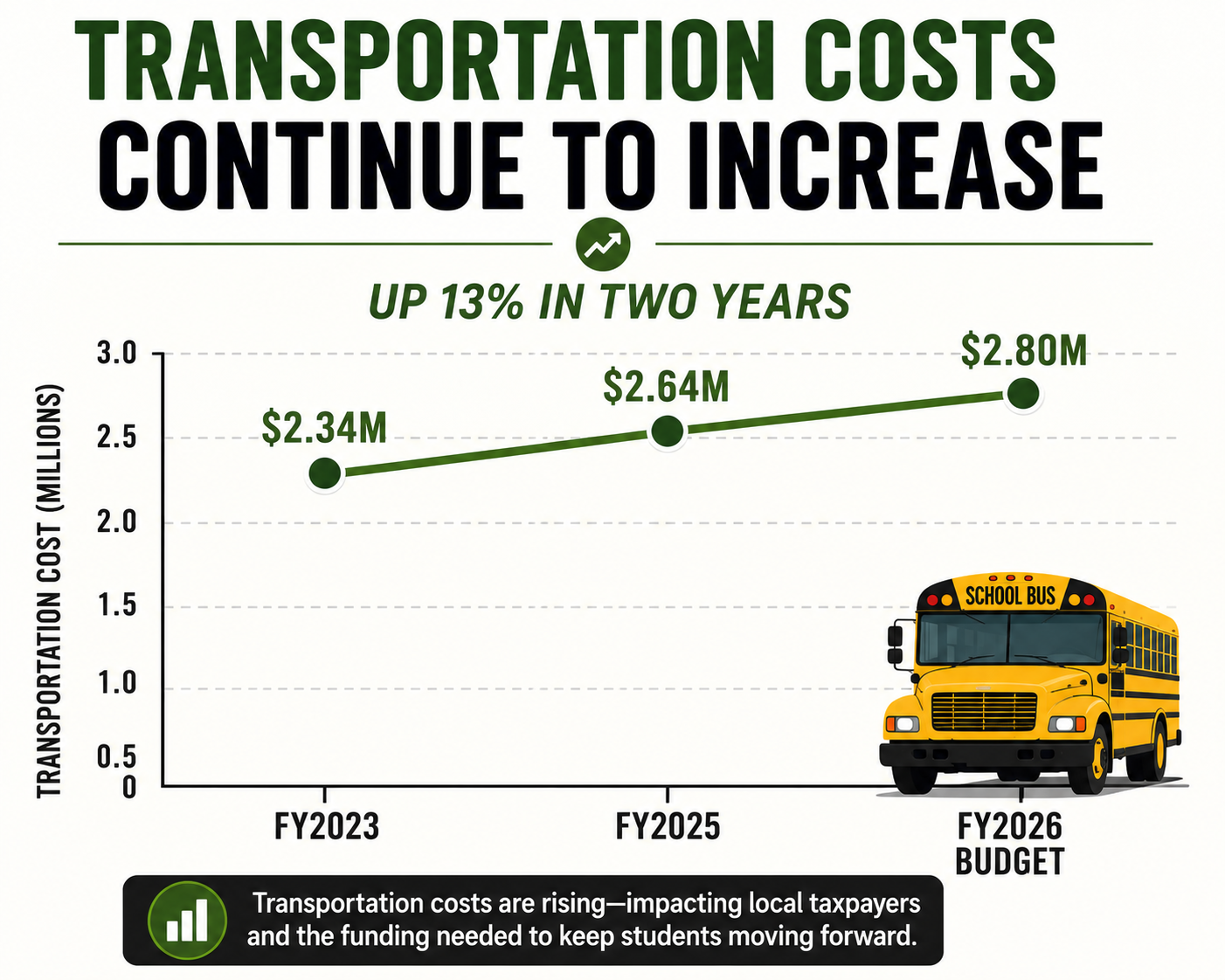
In FY2023, the district received about $1.21 million in transportation aid while spending $2.34 million, with state funding covering approximately 51.9% of transportation costs.

While state funding increased in dollar amounts between FY2023 and FY2025, transportation expenses increased at nearly the same pace. As a result, the state's share of overall transportation costs remained essentially unchanged.

Costs continue to rise

Transportation has become one of the district's steadily growing operational expenses.

Between FY2023 and FY2025:

  • Transportation expenditures increased from $2.34 million to $2.64 million, an increase of approximately 13.2%.

  • State transportation aid increased from $1.21 million to $1.37 million, an increase of approximately 12.7%.

The district has also approved higher transportation contract costs for the current school year, citing increases in route costs, mileage and extracurricular transportation.

For FY2026, the district projects approximately $2.8 million in transportation expenditures.

Transportation fund projected to operate at a deficit

Budget projections show the Transportation Fund is expected to continue facing financial pressure.

For FY2026, the district projects:

  • Transportation Fund revenue: approximately $2.36 million

  • Transportation expenditures: approximately $2.80 million

That leaves a projected operating deficit of approximately $437,000.

Even when accounting for all Transportation Fund revenue—including state aid, local property taxes and other revenue—the district expects expenditures to exceed available revenue.

The Transportation Fund also operated at deficits in previous years, including approximately $255,000 in FY2023 and $243,000 in FY2025.

A long-standing concern

District officials have warned about transportation funding for years.

In its FY2017 budget document, Geneseo noted that Illinois was reimbursing districts for only about 71 to 72 percent of their calculated transportation entitlement, estimating that the district was losing roughly $300,000 annually because state appropriations did not fully fund the statutory formula.

The district cautioned at the time that Transportation Fund balances were expected to continue declining because of the reduced reimbursement.

Although today's funding calculations differ from that earlier entitlement measure, the district's financial records continue to show that transportation remains a significant local budget challenge.

Why it matters

Unlike many other budget areas, student transportation is largely unavoidable.

School buses must continue operating regardless of fluctuations in diesel fuel prices, labor costs, vehicle maintenance expenses or bus replacement costs.

When transportation costs rise faster than available revenue, districts must rely more heavily on local resources or existing fund balances to continue providing the same level of service.

For Geneseo taxpayers, the district's financial reports illustrate an ongoing reality: while the State of Illinois remains an important funding partner, local revenue continues to play a substantial role in ensuring students can safely travel to and from school each day.

Sources

  1. Geneseo CUSD #228 FY2025 Annual Financial Report

  2. Geneseo CUSD #228 FY2023 Annual Financial Report — Full Version

  3. Geneseo CUSD #228 FY2026 Budget Cash Summary

  4. Geneseo CUSD #228 2024 Tax Levy and Financial Projections Presentation

  5. Geneseo CUSD #228 FY2017 Budget Document

  6. Pinks’ Bus Service Transportation Contract Proposal for the 2026–27 School Year

  7. Geneseo CUSD #228 May 2026 Board Materials

Bullying in Geneseo Schools: What District Policy, State Law, and Local Data Show


By Sarah DeMaranville

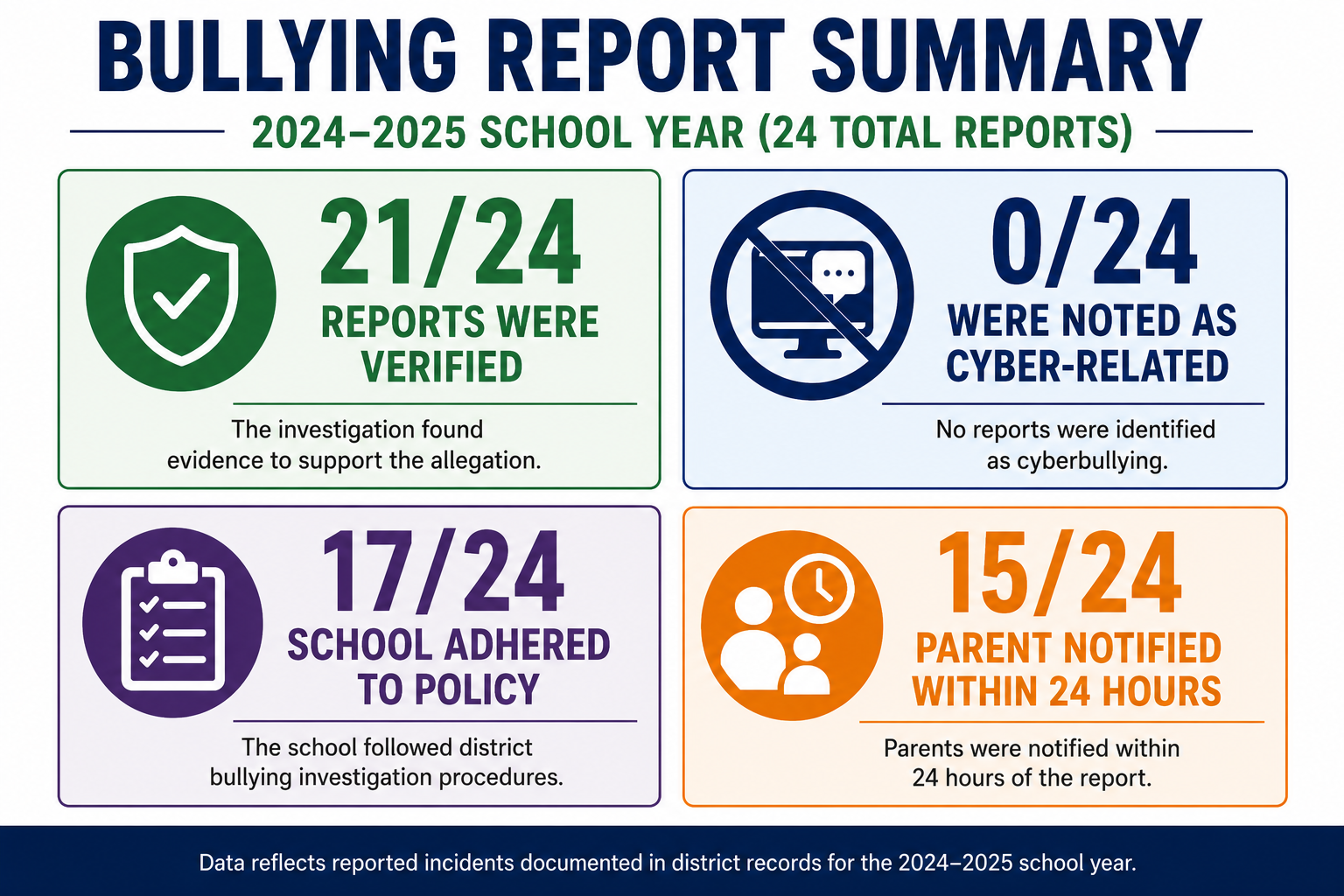
Geneseo Community Unit School District #228 documented 24 bullying-related reports during the 2024–2025 school year, according to records submitted to the Illinois State Board of Education. Twenty-one of those reports were ultimately recorded as verified allegations.

The reports, obtained through district records, provide a snapshot of where bullying complaints occurred, the types of allegations involved, and how the district documented investigations and parent notification requirements.

While the reporting forms do not describe individual incidents or measure the overall climate within the schools, they offer a closer look at how bullying complaints are handled locally.

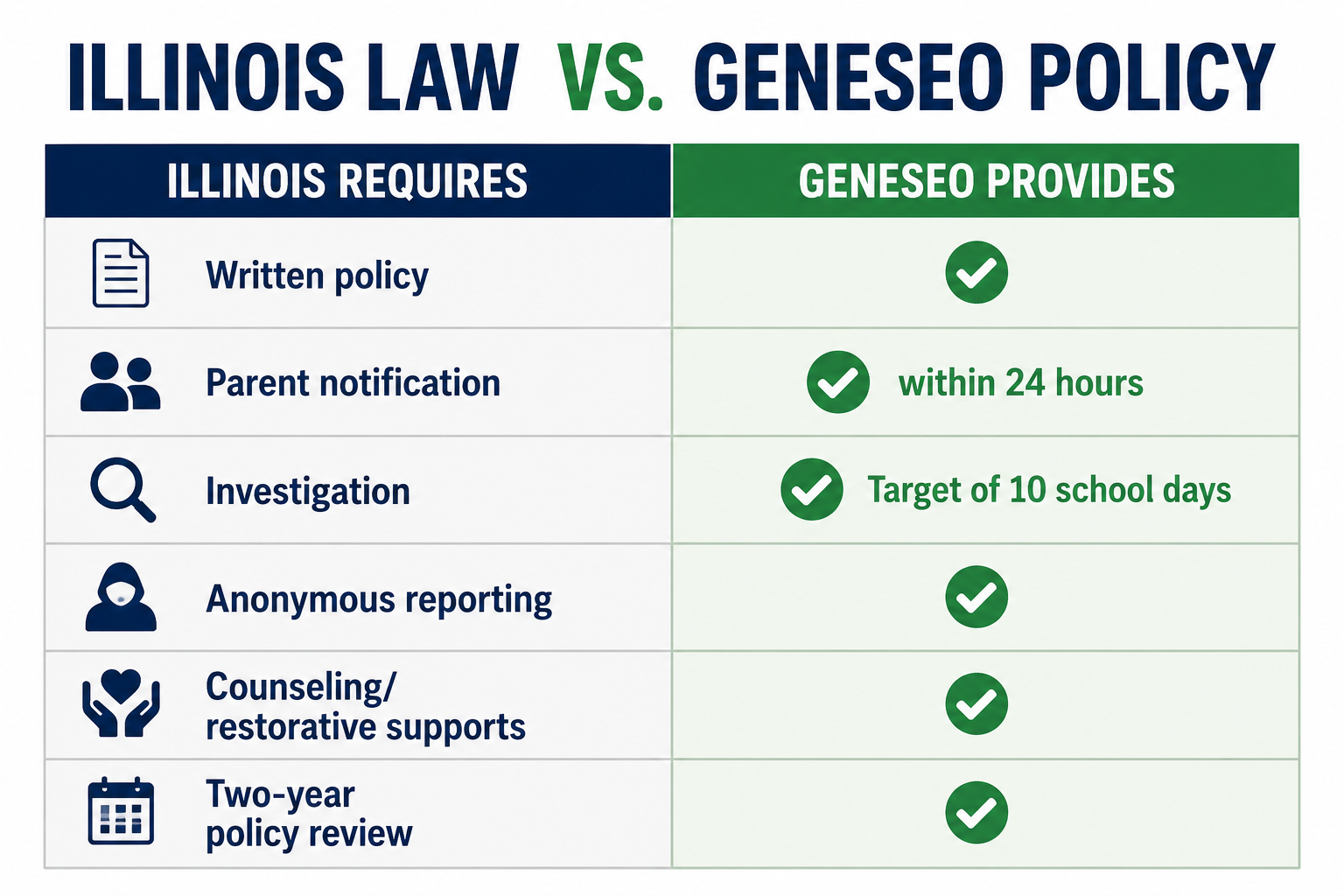
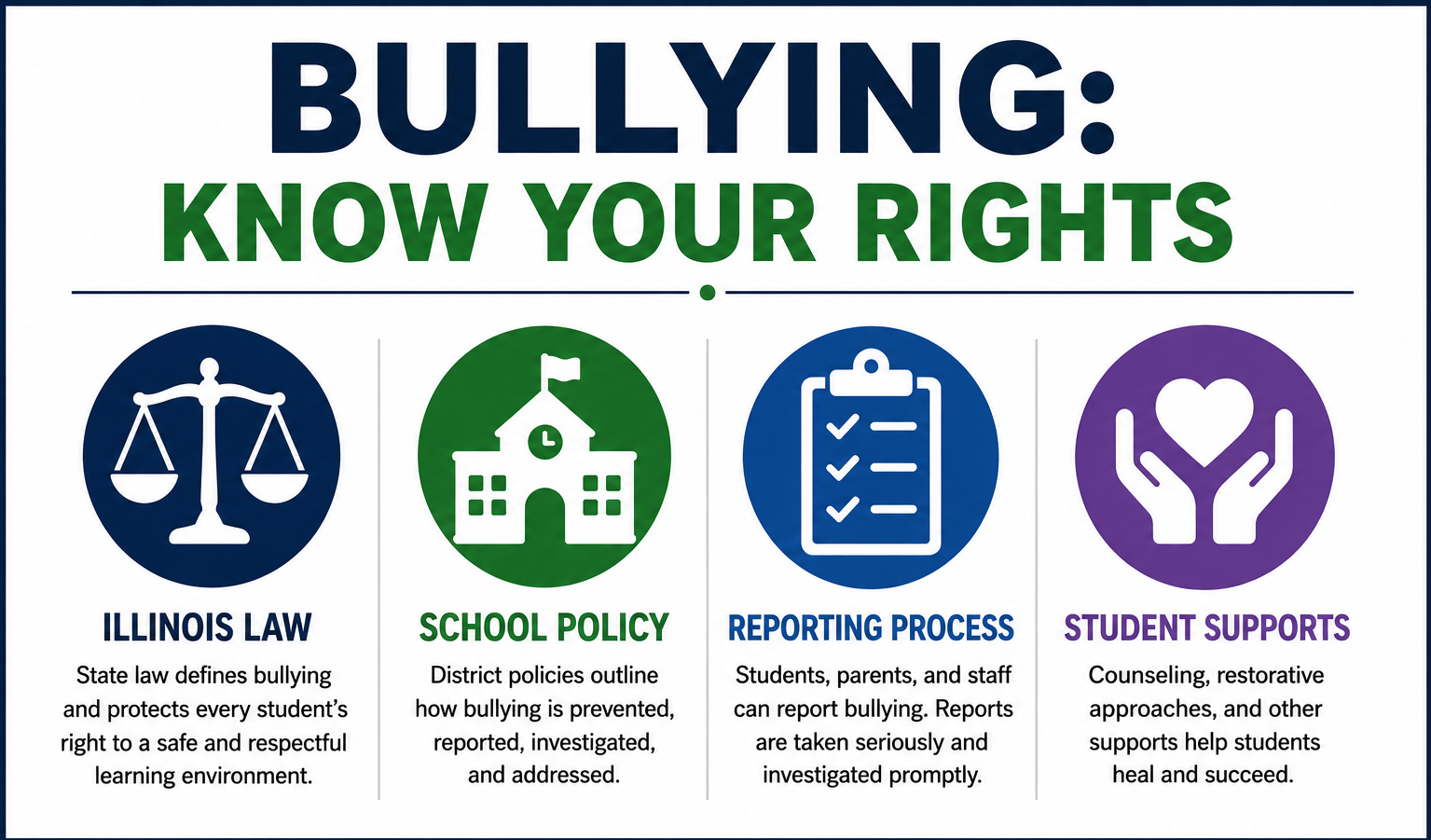
Illinois law requires every public school district to maintain a bullying prevention policy, investigate reports, and establish procedures for reporting incidents. Geneseo Community Unit School District #228 implements those requirements through Board Policy 7:180, which outlines how reports are investigated, how families are notified, and what interventions may be used.

District Superintendent Dr. Laura Delgado said creating a safe learning environment remains one of the district's highest priorities:

"In the Geneseo School District, it is our absolute priority to ensure every student feels safe, respected, and valued at school. Bullying is an issue that every school district in America faces to some degree, and ours is no exception. In our schools, we take every report of bullying seriously and are committed to addressing concerns promptly, fairly, and with compassion. A shared goal among our staff, students, families, and community is to provide learning environments that foster a sense of community, safety, and care. Creating that kind of culture requires all of us working together, and it remains one of our highest priorities."

Here's a closer look at what the district's records show, what Illinois law requires, and what parents should know.

What do Geneseo's records show?

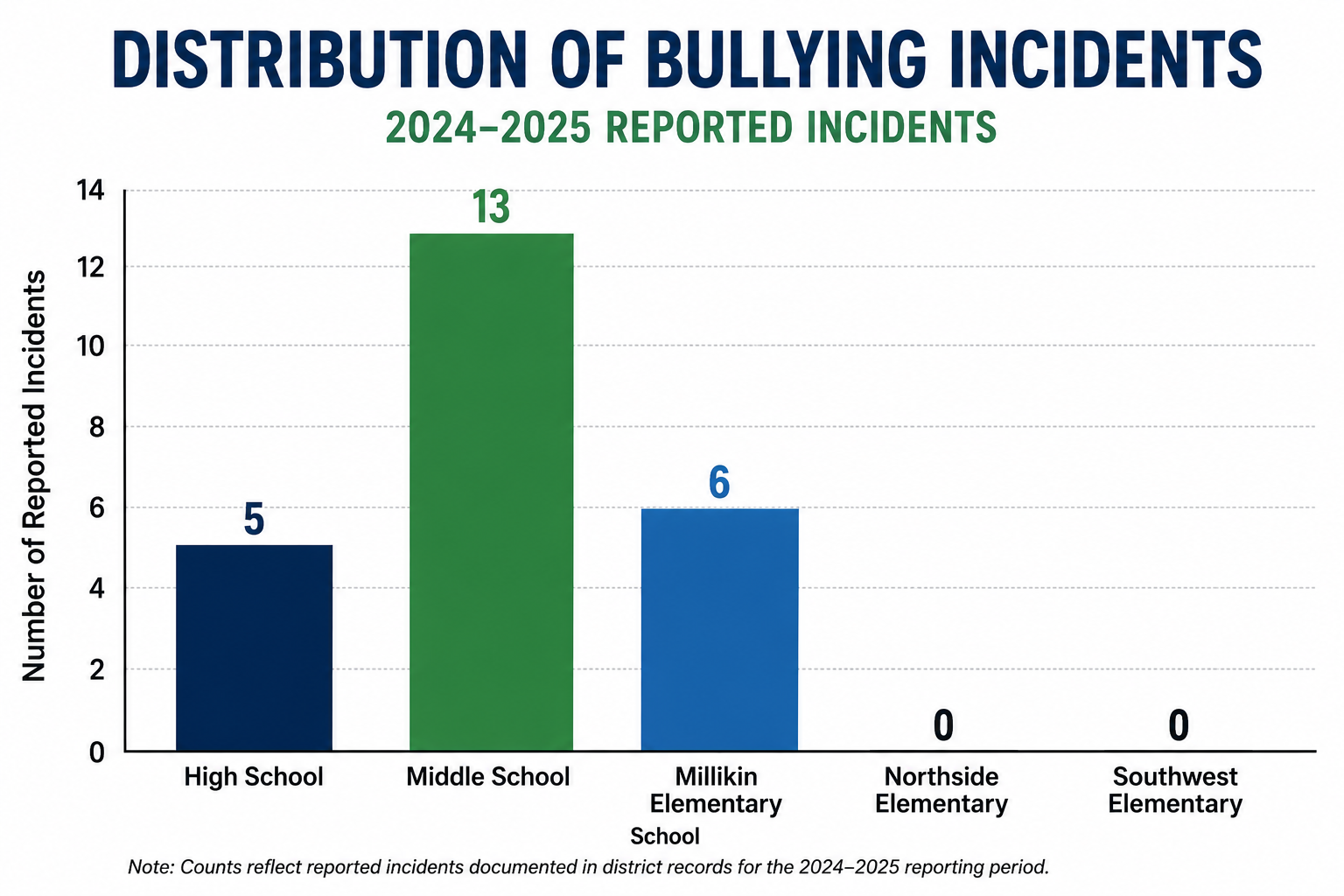
For the 2024–2025 school year, district records document 24 reported bullying-related incidents. Of those reports, 13 occurred at Geneseo Middle School, six at Millikin Elementary School, five at Geneseo High School, and none at Northside or Southwest Elementary Schools.

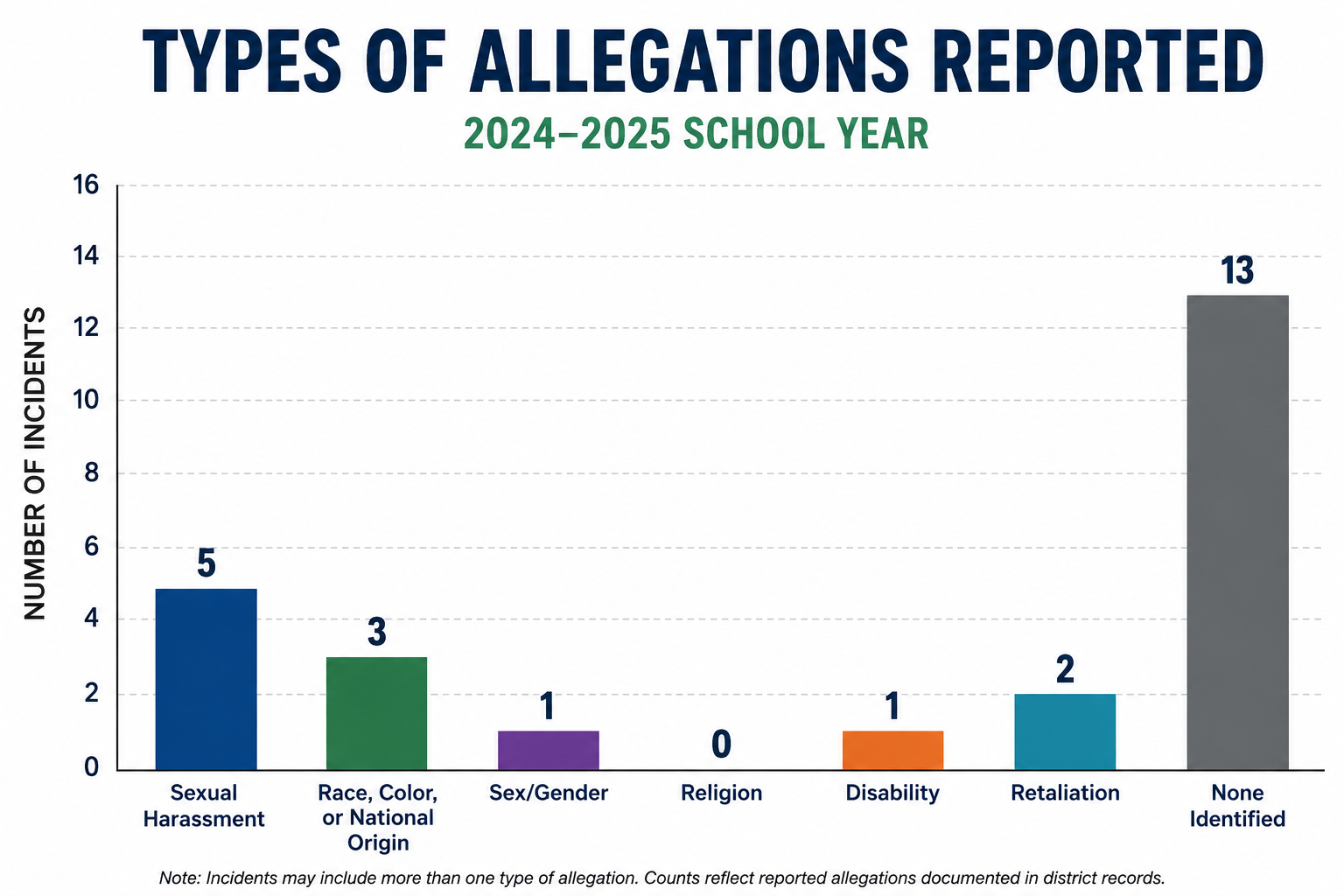
The district's reporting forms also categorize the types of allegations associated with each report. Thirteen reports did not identify a protected-category allegation. Among those that did, the most commonly reported allegation involved sexual harassment (five reports), followed by race, color, or national origin (three), retaliation (two), disability (one), and sex or gender (one). No reports listed religion as the alleged basis.

District records further indicate that 21 of the 24 reports were verified allegations. None were identified as cyber-related. Seventeen reports were marked as adhering to district bullying policy, and 15 documented parent notification within 24 hours.

What is bullying under Illinois law?

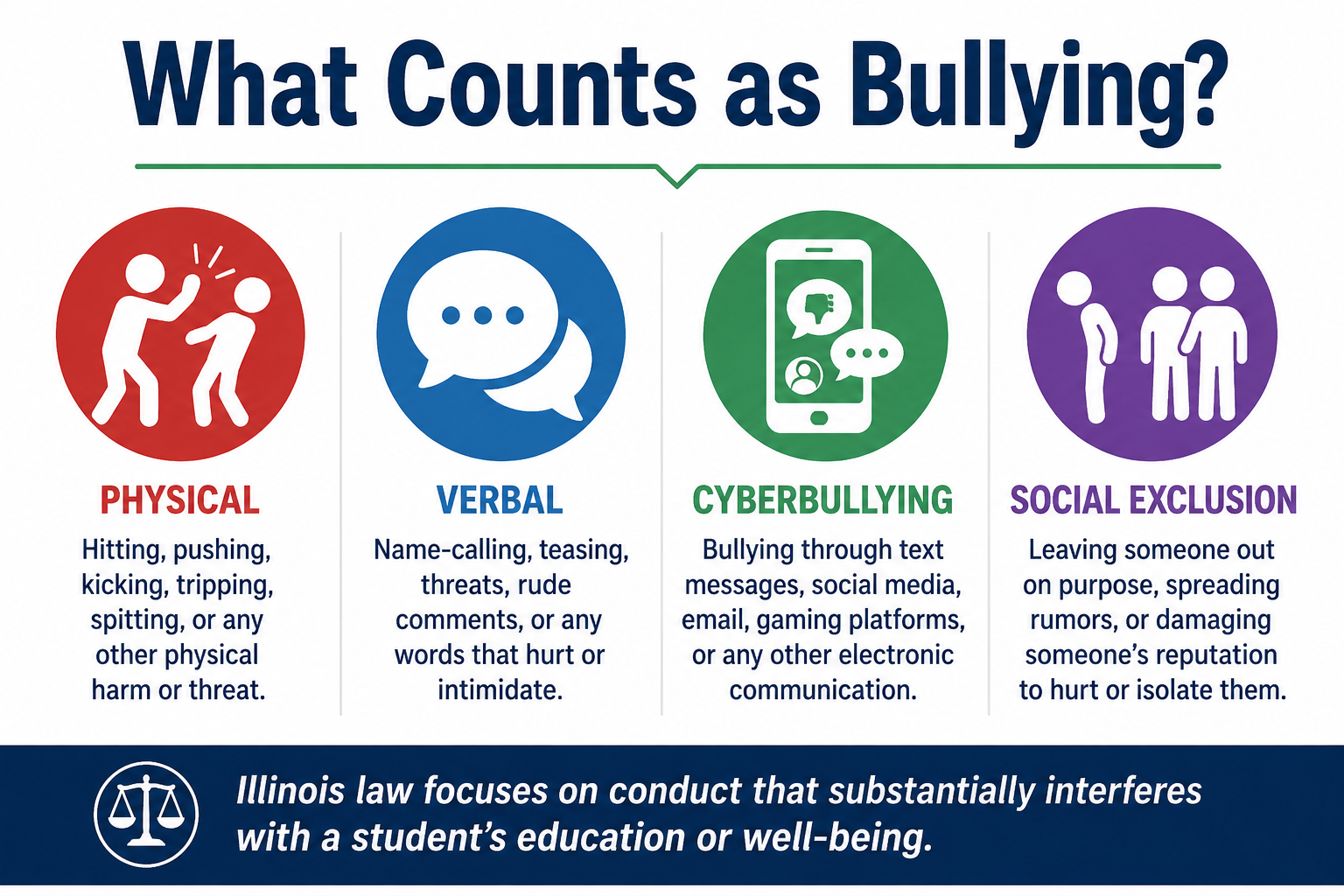
Illinois law defines bullying as severe or pervasive physical or verbal conduct—including written or electronic communications—that can reasonably be expected to:

  • Place a student in reasonable fear of harm.

  • Cause a substantially detrimental effect on a student's physical or mental health.

  • Substantially interfere with academic performance.

  • Substantially interfere with a student's ability to participate in or benefit from school services or activities.

The definition includes cyberbullying, meaning behavior through text messages, email, social media, online gaming, websites, blogs, or other electronic communication.

Illinois law also allows schools to address certain off-campus conduct if it substantially disrupts the educational process or orderly operation of a school. Importantly, the law does not require school employees to monitor students' personal devices or social media. Instead, administrators may investigate after receiving a report.

What does Geneseo's policy say?

Board Policy 7:180 prohibits bullying, intimidation, harassment, and hazing and encourages students, parents, volunteers, and staff members to report suspected incidents. Reports may be made verbally or in writing to administrators or any trusted staff member. Anonymous reports are accepted, although the policy notes anonymous reports alone cannot serve as the sole basis for formal disciplinary action.

Parent notification within 24 hours

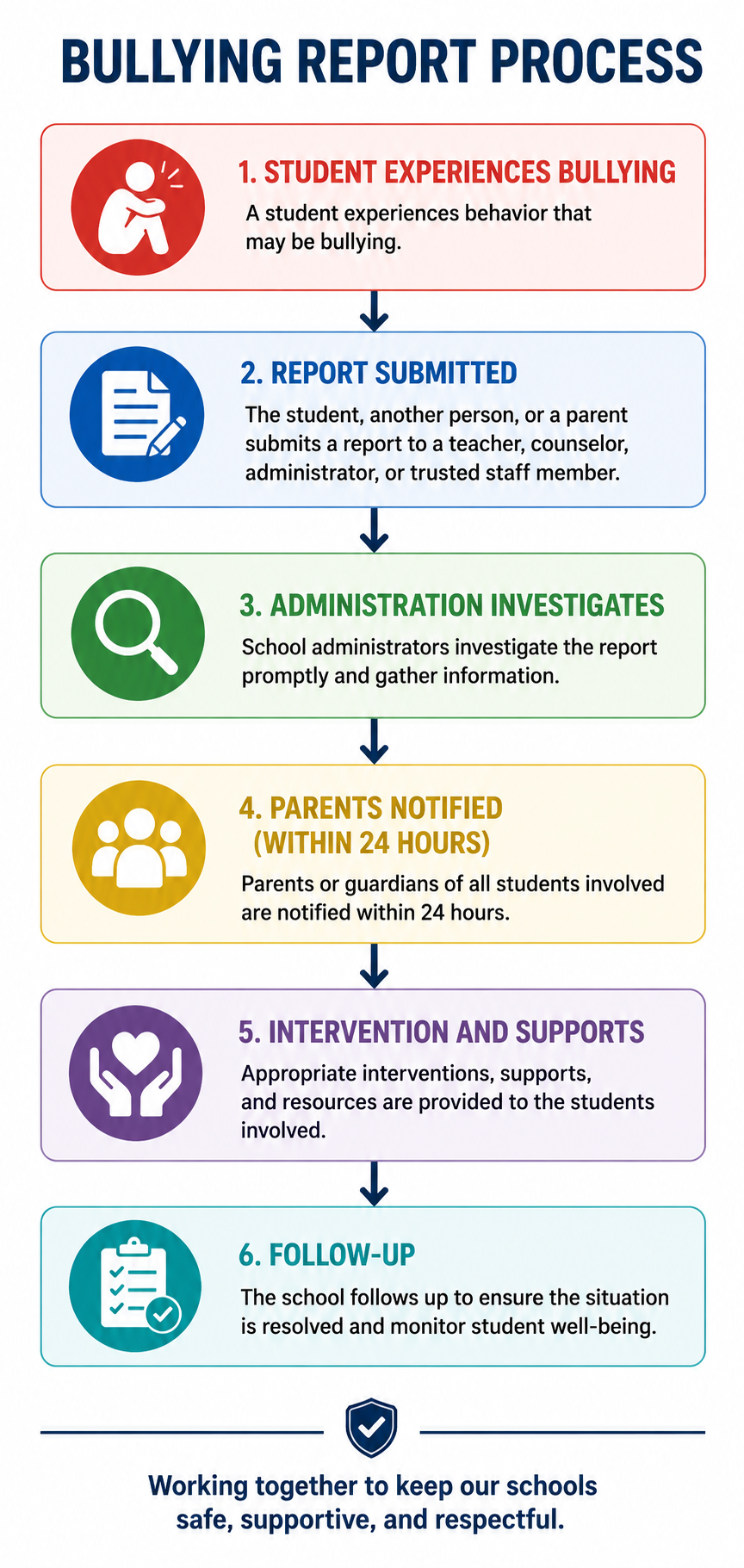
The district states that parents or guardians of all students involved in an alleged bullying incident will be notified within 24 hours after administrators become aware of the student's involvement, consistent with state and federal privacy laws.

When appropriate, families are also informed about counseling, school psychological services, restorative measures, and other available interventions.

Investigations

The policy directs administrators to:

  • Begin investigating promptly.

  • Make reasonable efforts to complete investigations within 10 school days.

  • Notify the building principal as soon as possible.

  • Meet with parents to discuss investigation findings and actions taken.

  • Provide information about available support services for affected students.

Prevention and intervention

Rather than relying solely on discipline, the policy emphasizes interventions such as:

  • Social work services

  • Counseling

  • Restorative measures

  • Social-emotional skill development

  • Community-based services

Retaliation against anyone who reports bullying or participates in an investigation is prohibited.

The Board of Education must also formally review the bullying policy every two years, evaluating information such as:

  • Frequency of victimization

  • Student, family, and staff perceptions of safety

  • Locations where bullying occurs

  • Types of bullying

  • Bystander intervention

Those review results must ultimately be submitted to the Illinois State Board of Education.

Reporting bullying

Students and families can generally report bullying to:

  • Teachers

  • Principals

  • Assistant principals

  • School counselors

  • Other trusted staff members

Anonymous reports are also accepted.

Once a report is received, administrators determine whether the reported conduct meets the legal definition of bullying and what interventions or disciplinary measures, if any, are appropriate.

Beyond discipline: Building a safer school climate

District leaders say bullying prevention extends beyond investigating individual reports.

During a January 14, 2026, Behavioral Interventions Committee meeting, board members and administrators reviewed bullying policies alongside restorative practices, trauma-informed approaches, de-escalation training for staff, and discipline procedures across all grade levels.

According to the meeting summary, committee members also discussed bullying data from the current and previous school years, noting there were "very few incidents in Geneseo." The committee also expressed a goal of collecting and entering data more consistently across school buildings so future data visualizations could help identify trends and guide prevention efforts.

The committee also reviewed the district's online Bullying/Harassment Prevention & Intervention webpage, which provides reporting information, board policies, and a form for reporting incidents.

Know the Difference

Conflict

A disagreement or argument between students that does not necessarily meet the legal definition of bullying.

Bullying

Repeated or severe conduct that substantially interferes with a student's education, safety, or well-being under Illinois law.

Cyberbullying

Bullying carried out through electronic communication that may also be addressed by schools when it substantially disrupts the educational environment.


Follow local education coverage at The Geneseo Current